• Fri frakt över 249 kr
  • •
  • Snabba leveranser
  • •
  • Billiga böcker
Kundservice

Du är på sajten för privatpersoner.

Företag, bibliotek eller offentlig verksamhet?

Du handlar på classic.bokus.com, där alla dina funktioner finns intakta.
Till classic.bokus.com
Bokus logotyp. Gå till startsidan.
  • Erbjudanden
  • Nyheter
  • Student
  • Topplistor
  • Barn & ungdom
  • Bokus Play
  • E-böcker
  • Pocketböcker
  • Spel & pussel

Må bättre, för mindre! Upp till 50% rabatt på hälsoböcker

Sidfot

Mina sidor

    Hjälp

    • Kundservice
    • Vanliga frågor och svar
    • Frakt och leverans
    • Retur vid ångerrätt
    • Reklamera vara
    • Betalning
    • Köpvillkor
    • Allmänna villkor
    • Information om webbplatsens tillgänglighet

    Om Bokus

    • Om oss
    • Pressrum
    • För studenter
    • För företag
    • För bibliotek och offentlig verksamhet
    • För leverantörer
    • Hållbarhet

    Populärt

    • Aktuella erbjudanden
    • Presentkort
    • Studentlitteratur
    • Nya böcker
    • Topplistor
    • Signerade böcker
    • Engelska böcker

    Inspiration

    • Boktips
    • BookTok
    • Populära bokserier
    • Barnbokskaraktärer
    • Populära författare
    Logotyp för Bokus
    Följ oss på Facebook (extern länk)Följ oss på Instagram (extern länk)Följ oss på YouTube (extern länk)Följ oss på TikTok (extern länk)
    bokus @ CookiesAnpassa cookiesIntegritetspolicyKöpvillkor
    Till Citymail hemsida (extern länk)Till Budbee hemsida (extern länk)Till Postnord hemsida (extern länk)Till Schenker hemsida (extern länk)Till Early Bird hemsida (extern länk)Till Walleys hemsida (extern länk)
    1. Samhälle och politik
    2. Samhälle och kultur
    3. Sociala grupper och identitet
    4. Genusvetenskap

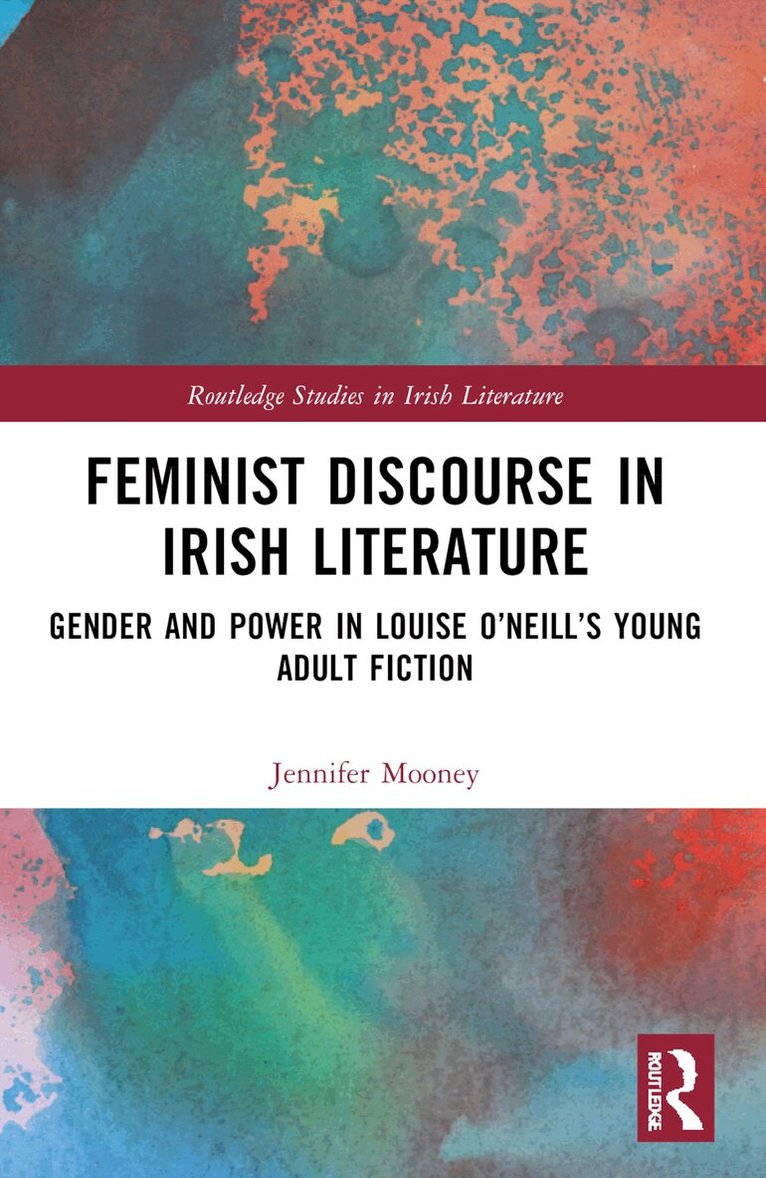
    Feminist Discourse in Irish Literature

    Gender and Power in Louise O’Neill’s Young Adult Fiction

    AvJennifer Mooney

    Häftad, Engelska, 2024

    Del i serien Routledge Studies in Irish Literature

    722 kr

    Beställningsvara. Skickas inom 10-15 vardagar. Fri frakt över 249 kr.

    Fler format och utgåvor

    E-bok

    849 kr

    E-bok

    849 kr

    Inbunden

    2 799 kr

    Beskrivning

    Feminist Discourse in Irish Literature addresses the role of young adult (YA) Irish literature in responding and contributing to some of the most controversial and contemporary issues in today’s modern society: gender, and conflicting views of power, sexism and consent. This volume provides an original, innovative and necessary examination of how “rape culture” and the intersections between feminism and power have become increasingly relevant to Irish society in the years since Irish author Louise O’Neill’s novels for young adults Only Ever Yours and Asking For It were published. In consideration of the socio-political context in Ireland and broader Western culture from which O’Neill’s works were written, and taking into account a selection of Irish, American, Australian and British YA texts that address similar issues in different contexts, this book highlights the contradictions in O’Neill’s works and illuminates their potential to function as a form of literary/social fundamentalism which often undermines, rather than promotes, equality.

    Produktinformation

    • Utgivningsdatum:2024-01-29
    • Mått:152 x 229 x 12 mm
    • Vikt:453 g
    • Format:Häftad
    • Språk:Engelska
    • Serie:Routledge Studies in Irish Literature
    • Antal sidor:202
    • Förlag:Taylor & Francis Ltd
    • ISBN:9781032076867

    Utforska kategorier

    • Genusvetenskap inom Samhälle och politik
    • Litteraturvetenskap inom Skönlitteratur

    Mer om författaren

    Jennifer Mooney is an assistant professor in the School of English, Dublin City University, Ireland. She is deputy chair of its M.A. in Children’s and Young Adult Literature degree programme and co-director of the Centre for Research in Children’s and Young Adult Literature. Jennifer’s teaching and research interests include gender and sexuality in young adult literature and popular culture, recent critical concerns with posthumanism and ecocriticism, and Irish studies. She serves on The Irish Society for the Study of Children’s Literature board.

    Innehållsförteckning

    • Introductioni. Introductionii. The Primary Textsiii. Literary Context and Theoretical Approachiv. Significance of the Researchv. A Note on the Inclusion of International Textsvi. Chapter OverviewChapter One: Historical Contextsi. Introductionii. "Rape Culture" Theory as a Feminist Project: the 1:5 Statisticiii. "Rape Culture" Theory and the 1:5 Statistic in Ireland iv. Failures of "Rape Culture" Theory v. YA Literature as Social-Change-Orientedvi. A Brief History of YA Literaturevii. Theorising YA Literatureviii. YA Literature and Research in the Late-Twentieth and Early Twenty-First Centuriesix. The Rise of Irish YA Literature in the Second Decade of the Twenty-First Century x. The Power of the Past on Irish YA Literature xi. The Role of Irish YA Literature in Addressing Contemporary Issuesxii. Conclusion: The Role of Irish YA in Addressing Contemporary IssuesChapter Two: Louise O’Neill and Feminist Theoryi. Introductionii. Background and Upbringing iii. Public Figure, Political Activist, Feministiv. Critical Responses to O’Neill’s Textsv. Categorising O’Neill’s Textsvi. Feminism and Poststructuralismvii. A Brief History of Feminism viii. Theories of Power and Agency in Second-wave Feminist Thoughtix. The Relevance of Second-Wave Feminism Todayx. Third-Wave Feminism, Post-Feminism and Intersectional Feminismxi. The Relevance of Third-Wave Feminism Today xii. Fourth and Fifth-Wave Contemporary Feminismxiii. Conclusion Chapter Three: Only Ever Yoursi. Introductionii. The Disciplined Body in Only Ever Yoursiii. Inviting a Feminist Reading: Imagery, Intertextuality, and Typographical Playiv. Technology and Posthumanism in Only Ever Yoursv. Technology, Consumerism and Mediavi. Social Media and Simulated Self-Identity in Only Ever Yoursvii. Apocalyptic Feminist Posthumanism in Only Ever Yoursvii. Didactic Feminism in Only Ever Yoursviii. Real-life Women and Girls’ Power ix. Youth Magazines and Media Discoursex. Missed Opportunities?xi. ConclusionChapter Four: Asking For Iti. Introduction ii. Asking For It: Preliminary Feminist Readingiii. Asking For It in Terms of Ireland and "Rape Culture" iv. Asking For It: Resisting or Reinforcing "Rape Myths"?v. Theorizing Rape as Inevitable: Victim-hood Forever in Asking For Itvi. The Problem of Alleged "Rape Culture" as Orthodoxyvii. Overstating the Sexual Double Standard and Essentialising the Male Body as Violent in Asking For It viii. Feminist Criticism on Consent and Alcohol ix. Consent and Alcohol in Asking For Itx. Missed Opportunities?xi. ConclusionChapter Five: Alternatives to the Didacticism of "Rape Culture" i. IntroductionPart One: Irish Authorsii. Siobhán Dowd: A Swift Pure Cryiii. Deirdre Sullivan: Needlework and Perfectly Preventable Deathsiv. Sarah Maria Griffin: Spare and Found Parts and Other Words for Smokev. Moïra Fowley-Doyle: All The Bad ApplesPart Two: Non-Irish Authorsvi. Isabel Quintero: Gabi, a Girl in Piecesvii. Helen Barnes: Killing Auroraviii. ConclusionChapter Six: "Lad"- dishnessi. Introductionii. Masculinity Theory iii. O’Neill’s "Lads"iv. Only Ever Yours "Lads"v. Asking For It "Lads"vi. Sullivan’s, Griffin’s and Fowley-Doyle’s "Lads"vii. Quintero’s "Lads"ix. Barnes’s "Lads"x. Conclusion Chapter Seven: Radical AUTHORityi. Introductionii. Complicating the Line between Young Adult and Adult in O’Neill’s Worksiii. Radical AUTHORity in O’Neill’s Worksiv. Power in The Surface Breakv. Radical AUTHORity in Sullivan’s, Griffin’s and Fowley-Doyle’s Worksvi. Conclusion