• Fri frakt över 249 kr
  • •
  • Snabba leveranser
  • •
  • Billiga böcker
Kundservice

Du är på sajten för privatpersoner.

Företag, bibliotek eller offentlig verksamhet?

Du handlar på classic.bokus.com, där alla dina funktioner finns intakta.
Till classic.bokus.com
Bokus logotyp. Gå till startsidan.
  • Erbjudanden
  • Nyheter
  • Student
  • Topplistor
  • Barn & ungdom
  • Bokus Play
  • E-böcker
  • Pocketböcker
  • Spel & pussel

10% studentrabatt med kod TERM26

Sidfot

Mina sidor

    Hjälp

    • Kundservice
    • Vanliga frågor och svar
    • Frakt och leverans
    • Retur vid ångerrätt
    • Reklamera vara
    • Betalning
    • Köpvillkor
    • Allmänna villkor
    • Information om webbplatsens tillgänglighet

    Om Bokus

    • Om oss
    • Pressrum
    • För studenter
    • För företag
    • För bibliotek och offentlig verksamhet
    • För leverantörer
    • Hållbarhet

    Populärt

    • Aktuella erbjudanden
    • Presentkort
    • Studentlitteratur
    • Nya böcker
    • Topplistor
    • Signerade böcker
    • Engelska böcker

    Inspiration

    • Boktips
    • BookTok
    • Populära bokserier
    • Barnbokskaraktärer
    • Populära författare
    Logotyp för Bokus
    Följ oss på Facebook (extern länk)Följ oss på Instagram (extern länk)Följ oss på YouTube (extern länk)Följ oss på TikTok (extern länk)
    bokus @ CookiesAnpassa cookiesIntegritetspolicyKöpvillkor
    Till Citymail hemsida (extern länk)Till Budbee hemsida (extern länk)Till Postnord hemsida (extern länk)Till Schenker hemsida (extern länk)Till Early Bird hemsida (extern länk)Till Walleys hemsida (extern länk)
    1. Djur och Natur
    2. Naturböcker
    3. Växtböcker

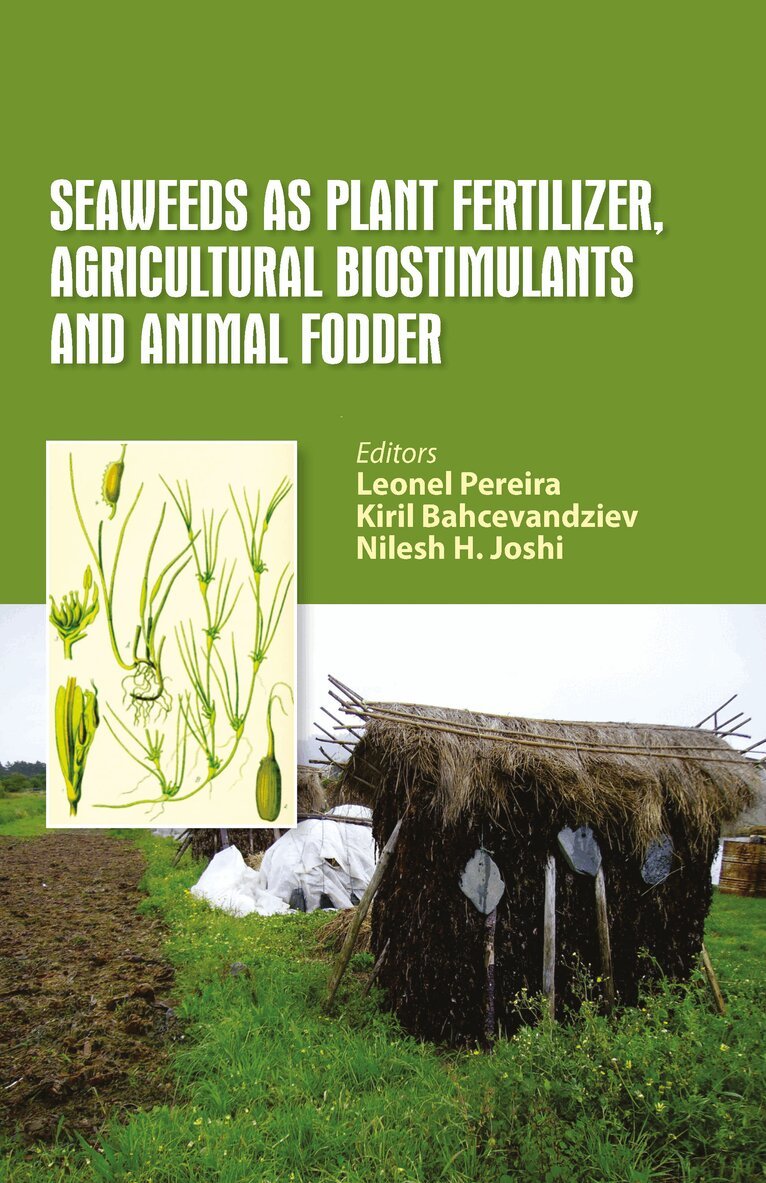
    Seaweeds as Plant Fertilizer, Agricultural Biostimulants and Animal Fodder

    AvLeonel Pereira,Kiril Bahcevandziev

    Häftad, Engelska, 2021

    769 kr

    Beställningsvara. Skickas inom 10-15 vardagar. Fri frakt över 249 kr.

    Beskrivning

    The main effects of Seaweed extracts (Ascophyllum, Fucus, Sargassum, Saccorhiza, Laminaria, Gelidium and others), when used as agricultural fertilizers, are better seed germination and higher quality fruit production, with longer shelf life; better use of soil nutrients; more productive crops and plants with greater resistance to unfavorable environmental conditions.Algae also have a long history of use as animal feed. They have a highly variable composition depending on the species, collection season and habitat, and on external conditions such as water temperature, light intensity and nutrient concentration in water.In relation to ruminal fermentation, a high variability of the digestibility values ​​was found among seaweed species and cannot be attributed only to the composition of different nutrients of the algae. The role of marine algae for reduction of methane production is discussed with particular emphasis on novel algae-based feed strategies that target minimal methane emissions without affecting the functionality of the microbiota and overall animal productivity.Key Features:Sustainable AgricultureNatural FeedingNutrients Liquid SeaweedAgricultural BiostimulantsNatural Pesticides

    Produktinformation

    • Utgivningsdatum:2021-06-30
    • Mått:178 x 254 x 18 mm
    • Vikt:460 g
    • Format:Häftad
    • Språk:Engelska
    • Antal sidor:232
    • Förlag:Taylor & Francis Ltd
    • ISBN:9781032087337

    Utforska kategorier

    • Växtböcker inom Djur och Natur
    • Geovetenskap inom Naturvetenskap och teknik
    • Botanik inom Naturvetenskap och teknik

    Mer om författaren

    Leonel Pereira has a degree in Biology (scientific branch) and a PhD in Biology (Cell Biology specialty) from the Faculty of Science and Technology of the University of Coimbra (Portugal), where he is currently Professor. In addition to teaching at this university, he is also an Investigator in the Marine and Environmental Sciences Centre. His interests are mainly focused on marine biodiversity (algae), marine biotechnology (bioactive compounds of macroalgae) and marine ecology (environmental assessment). Since 2008, he has been the author and editor of the electronic publication MACOI—Portuguese Seaweeds Website (www.uc.pt/seaweeds). He has authored more than 20 books and book chapters, has published more than 40 scientific articles in international journals, and is the editor of 5 books published by international publishers, and he has presented more than a hundred lectures and oral communications in various national and international scientific events. He received the Francisco de Holanda Prize (Honorable Mention) in 1998 and, more recently, the King D. Carlos Award (18th edition), and the CHOICE Award 2016 for Outstanding Academic Title: Edible Seaweeds of the World, CRC Press.Kiril Bahcevandziev has a degree in Agriculture (S.S. Cyril and Methodius University, Skopje, FYR of Macedonia, 1984), a master’s degree in Agricultural Engineering (University of Lisbon, 1992), and a PhD in Agricultural Engineering (University of Lisbon, 2003). He is a member of the Portuguese Society for Plant Physiology, European Association for Research on Plant Breeding (EUCARPIA), International Society for Horticultural Science, American Society for Horticultural Science, and Portuguese Society for Horticulture. He is also member of the Editorial Board of University Bulletins and Reviewer of the Annals of Agricultural and Environmental Sciences, Plant Cell, Tissue & Organ Culture, Plant Biotechnology Journal, World Journal of Agricultural Research, and African Journal of Plant Science. Nilesh H. Joshi is Editorial Board Member of the Journal of Marine Science: Research & Development and Journal of Marine Biology & Oceanography. He is a life member of the Seaweed Research and Utilization Association of India and of the Marine Biological Association of India, and a member of the Indian Science Congress, Kolkata.

    Innehållsförteckning

    • 1. Historical Use of Seaweed as an Agricultural Fertilizer in the European Atlantic Area. 2. Macroalgae Polysaccharides in Plant Defense Responses. 3. Marine Macroalgae: A Potential Source of Plant Growth Regulators. 4. Role of Secondary Metabolites from Seaweeds in The Context of Plant Development and Crop Production. 5. Seaweeds as Plant Biostimulants. 6. Seaweeds in the Control of Plant Diseases and Insects. 7. Algae as a Promising Feed Additive for Horses. 8. Bioactive Algae and Cell Therapies – An Irreversible Perspective in Clinical Nutrition of Horses with Endocrine Disorders. 9. Seaweeds as Fish Feed Additives. 10. Effects of Feeding with Seaweeds on Ruminal Fermentation and Methane Production.