• Fri frakt över 249 kr
  • •
  • Snabba leveranser
  • •
  • Billiga böcker
Kundservice

Du är på sajten för privatpersoner.

Företag, bibliotek eller offentlig verksamhet?

Du handlar på classic.bokus.com, där alla dina funktioner finns intakta.
Till classic.bokus.com
Bokus logotyp. Gå till startsidan.
  • Erbjudanden
  • Nyheter
  • Student
  • Topplistor
  • Barn & ungdom
  • Bokus Play
  • E-böcker
  • Pocketböcker
  • Spel & pussel

10% rabatt på allt med kod: NYSTART10 →

Sidfot

Mina sidor

    Hjälp

    • Kundservice
    • Vanliga frågor och svar
    • Frakt och leverans
    • Retur vid ångerrätt
    • Reklamera vara
    • Betalning
    • Köpvillkor
    • Allmänna villkor
    • Information om webbplatsens tillgänglighet

    Om Bokus

    • Om oss
    • Pressrum
    • För studenter
    • För företag
    • För bibliotek och offentlig verksamhet
    • För leverantörer
    • Hållbarhet

    Populärt

    • Aktuella erbjudanden
    • Presentkort
    • Studentlitteratur
    • Nya böcker
    • Topplistor
    • Signerade böcker
    • Engelska böcker

    Inspiration

    • Boktips
    • BookTok
    • Populära bokserier
    • Barnbokskaraktärer
    • Populära författare
    Logotyp för Bokus
    Följ oss på Facebook (extern länk)Följ oss på Instagram (extern länk)Följ oss på YouTube (extern länk)Följ oss på TikTok (extern länk)
    bokus @ CookiesAnpassa cookiesIntegritetspolicyKöpvillkor
    Till Citymail hemsida (extern länk)Till Budbee hemsida (extern länk)Till Postnord hemsida (extern länk)Till Schenker hemsida (extern länk)Till Early Bird hemsida (extern länk)Till Walleys hemsida (extern länk)
    1. Ekonomi och Ledarskap
    2. Industrier och branscher
    3. Lantbruk, fiske och skogsbruk

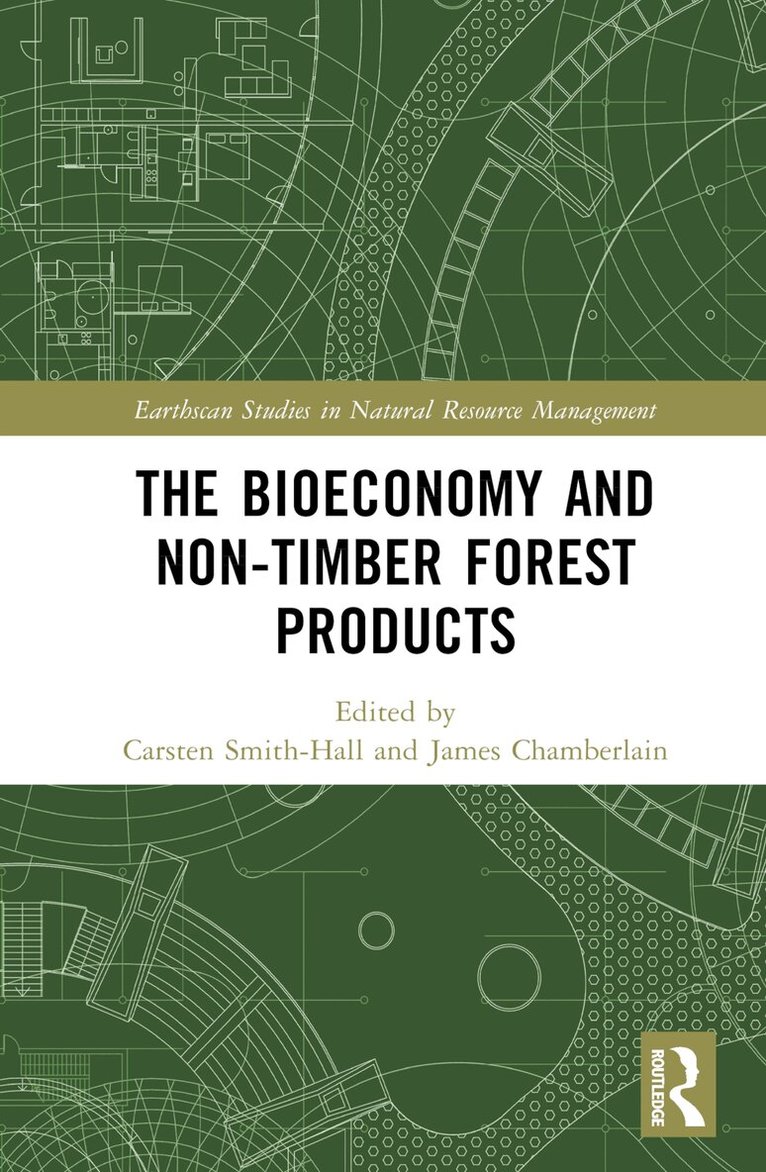
    bioeconomy and non-timber forest products

    AvCarsten Smith-Hall,James Chamberlain

    Inbunden, Engelska, 2022

    Del i serien Earthscan Studies in Natural Resource Management

    2 056 kr

    Beställningsvara. Skickas inom 10-15 vardagar. Fri frakt över 249 kr.

    Beskrivning

    This book provides the first in-depth investigation of how non-timber forest products are an integral part of local, national, and global bioeconomies. While the plants and fungi that produce non-timber forest products are essential to the sustainability of forest ecosystems, peoples' food and livelihood security and sovereignty, and thus the bioeconomy, are often absent from bioeconomic strategies. Presenting a selection of empirical cases from around the world that engage with the bioeconomy and non-timber forest products, this volume reveals how essential these products are to creating a greener and more sustainable future, how to to better integrate them into efforts to transition to and expand the bioeconomy, and how such efforts can be supported and developed. Chapters analyse how and to what degree non-timber forest products promote sustainable resource use, generate employment, and contribute to food and livelihood security and poverty alleviation. The volume develops approaches and identifies interventions and policies to support the integration of non-timber forest products into bioeconomy strategies, including in national reporting schemes to provide recommendations for future research and practical implementation. This book will be of great interest to students and scholars of forest and natural resource management, bioeconomics, circular economy and ecological economics more widely. It will also be of interest to professionals working in sustainable development and the forestry sector.

    Produktinformation

    • Utgivningsdatum:2022-12-16
    • Mått:156 x 234 x 22 mm
    • Vikt:580 g
    • Format:Inbunden
    • Språk:Engelska
    • Serie:Earthscan Studies in Natural Resource Management
    • Antal sidor:270
    • Förlag:Taylor & Francis Ltd
    • ISBN:9781032156262

    Utforska kategorier

    • Lantbruk, fiske och skogsbruk inom Ekonomi och Ledarskap
    • Miljöekonomi inom Ekonomi och Ledarskap
    • Skogsbruk inom Naturvetenskap och teknik

    Mer om författaren

    Carsten Smith-Hall is a Professor in Forest and People in Developing Countries in the Department of Food and Resource Economics at the University of Copenhagen, Denmark. He co-coordinates the Global Task Force on Unlocking the Bioeconomy and Non-Timber Forest Products and serves the World Conservation Union's Medicinal Plant Specialist Group. James L. Chamberlain is a Research Forest Products Technologist for the US Forest Service and an Adjunct Faculty member in the Department of Sustainable Biomaterials at Virginia Polytechnic Institute and State University, USA. He co-coordinates the Global Task Force on Unlocking the Bioeconomy and Non-Timber Forest Products.

    Recensioner i media

    "This timely and seminal investigation enters almost untouched academic territory by combining scholarship on the bioeconomy and non-timber forest products, moving beyond the dominating Western and biotech focus. The book is of high value to students, researchers, and policy practitioners in bioeconomy, forestry, development, livelihoods & poverty around the globe." Lukas Giessen, Professor of Tropical & International Forestry, TU Dresden and Editor-in-Chief of Forest Policy and Economics"Forests play a critical role in supporting the transition from fossil fuels towards a "green" bioeconomy to tackle the climate crisis, biodiversity loss, and land degradation. This book analyses the importance of non-timber forest products in the bioeconomy on five continents, providing a solid scientific basis for insightful recommendations on sustainable management and increased benefits to communities living in and near forests."John Parrotta, President, International Union of Forest Research Organizations (IUFRO)

    Innehållsförteckning

    • Introduction 1. Why focus on non-timber forest products in the bioeconomy? Part 1: Where are we – the starting point 2. Non-timber forest products and the European bioeconomy: status and transition pathways 3. Non-timber forest products in Canada: their role in bioeconomy 4. Commercial fungi, indigenous communities, and the bioeconomy transition in Southwest China 5. The potential for using non-timber forest products to develop the Brazilian bioeconomy 6. Informal markets, marginal populations, and the bioeconomy – the success story of açaí (Euterpe oleracea Mart.) in the Guiana Shield 7. Lessons for the forest-based bioeconomy from non-timber forest products in Mexico 8. Non-timber forest products and bioeconomy transitioning in Cameroon: potentials and challenges Part 2: How do we move on – specific examples 9. An operational transition pathway to a forest-based bioeconomy: lessons from the wild-simulated ginseng industry 10. The potential of non-timber forest products to contribute to the bioeconomy transition: the example of baobab (Adansonia digitata L.) in Malawi 11. A framework supporting the transition to a forest-based bioeconomy and its application to Nepal 12. A national-level approach to integrating non-timber forest products and the bioeconomy: the example of Argentina Part 3: Helpful tools and technologies – tricks of the trade 13. Forest management for sustainable sourcing of non-timber forest products in a bioeconomy 14. Mediterranean stone pine production systems and the emerging bioeconomy in Chile 15. Participatory GIS applications for wild berry utilisation and the Finnish bioeconomy Conclusion 16. The keys to unlocking the bioeconomy with non-timber forest products