• Fri frakt över 249 kr
  • •
  • Snabba leveranser
  • •
  • Billiga böcker
Kundservice

Du är på sajten för privatpersoner.

Företag, bibliotek eller offentlig verksamhet?

Du handlar på classic.bokus.com, där alla dina funktioner finns intakta.
Till classic.bokus.com
Bokus logotyp. Gå till startsidan.
  • Erbjudanden
  • Nyheter
  • Student
  • Topplistor
  • Barn & ungdom
  • Bokus Play
  • E-böcker
  • Pocketböcker
  • Spel & pussel

10% rabatt på allt med kod: NYSTART10 →

Sidfot

Mina sidor

    Hjälp

    • Kundservice
    • Vanliga frågor och svar
    • Frakt och leverans
    • Retur vid ångerrätt
    • Reklamera vara
    • Betalning
    • Köpvillkor
    • Allmänna villkor
    • Information om webbplatsens tillgänglighet

    Om Bokus

    • Om oss
    • Pressrum
    • För studenter
    • För företag
    • För bibliotek och offentlig verksamhet
    • För leverantörer
    • Hållbarhet

    Populärt

    • Aktuella erbjudanden
    • Presentkort
    • Studentlitteratur
    • Nya böcker
    • Topplistor
    • Signerade böcker
    • Engelska böcker

    Inspiration

    • Boktips
    • BookTok
    • Populära bokserier
    • Barnbokskaraktärer
    • Populära författare
    Logotyp för Bokus
    Följ oss på Facebook (extern länk)Följ oss på Instagram (extern länk)Följ oss på YouTube (extern länk)Följ oss på TikTok (extern länk)
    bokus @ CookiesAnpassa cookiesIntegritetspolicyKöpvillkor
    Till Citymail hemsida (extern länk)Till Budbee hemsida (extern länk)Till Postnord hemsida (extern länk)Till Schenker hemsida (extern länk)Till Early Bird hemsida (extern länk)Till Walleys hemsida (extern länk)
    1. Historia och arkeologi
    2. Arkeologi

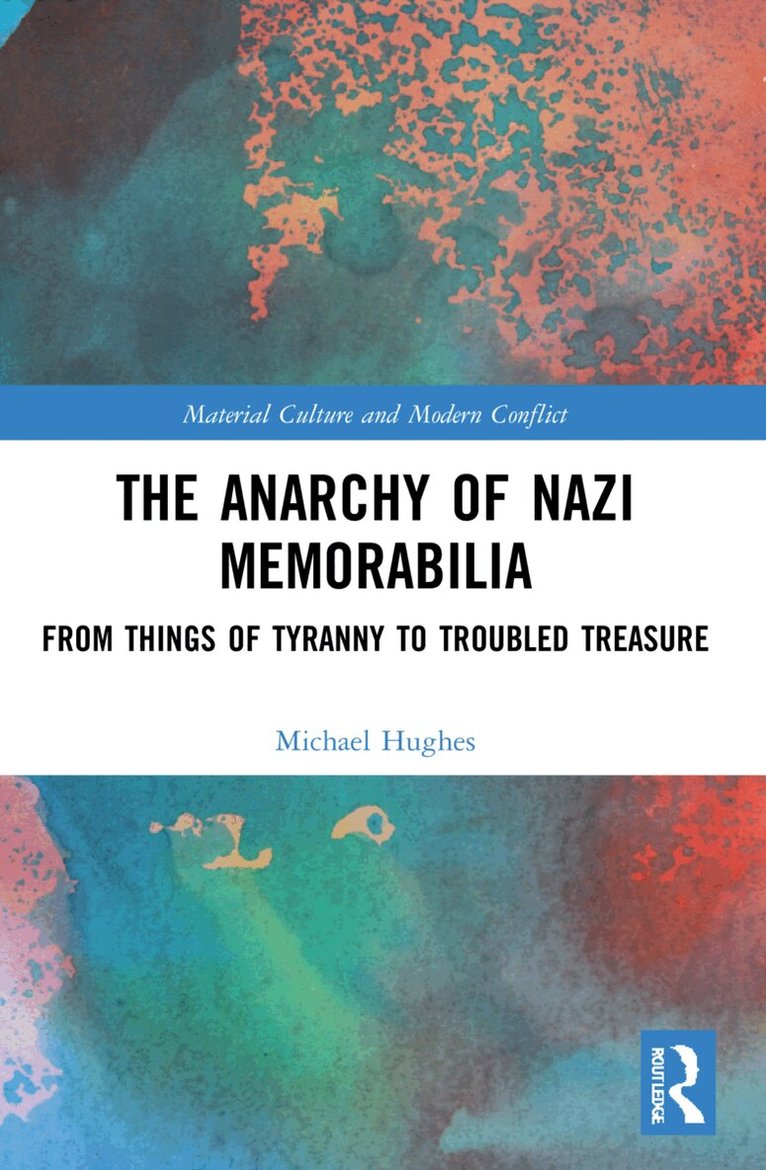
    Anarchy of Nazi Memorabilia

    From Things of Tyranny to Troubled Treasure

    AvMichael Hughes

    Häftad, Engelska, 2023

    Del i serien Material Culture and Modern Conflict

    643 kr

    Beställningsvara. Skickas inom 10-15 vardagar. Fri frakt över 249 kr.

    Fler format och utgåvor

    Inbunden

    2 493 kr

    E-bok

    760 kr

    E-bok

    760 kr

    Beskrivning

    Out of the numerous books and articles on the Third Reich, few address its material culture, and fewer still discuss the phenomenon of Nazi memorabilia. This is all the more surprising given that Nazi symbols, so central to sustaining Hitler’s movement, continue to live long after the collapse of his 12-year Reich. Neither did Nazi ideology die; far-right populists would like to see the swastika flown over the White House or Buckingham Palace. Against a backdrop of right-wing extremism, military re-enactors think nothing of dressing up in Waffen-SS uniforms and romanticising the Third Reich in the name of living history. Auctioneers are prepared to hammer down Nazi artefacts to the highest bidder, but who is buying them, and why do they do so? Should collectors be allowed to decorate their homes with Nazi flags?The Anarchy of Nazi Memorabilia begins by examining the creation and context of Nazi artefacts and symbols during the volatile Weimar Republic to their wider distribution during the Third Reich. There were few people in Nazi Germany who did not wear a badge or uniform of some sort. Whether it be mothers, soldiers or concentration camp inmates, they were all branded. The chapter on the Second World War demonstrates that although German soldiers were cynical about being given medals in exchange for freezing in Russia. They still continued to fight, for which more decorations were awarded. A large proportion of this book is therefore given to the meaning that Nazi symbols had before Nazi Germany was eventually defeated in May 1945. Equally important, however, and one of the characteristics of this book, is the analysis of the meaning and value of Nazi material culture over time. The interpreters of Nazi symbols that this book focuses on are internationally based private collectors and traders. Sustained attention is given in a chapter outlining the development of the collectors’ market for Nazi memorabilia from 1945 onwards. No matter how much collectors go out of their way to paint the hobby in a positive light, their activities do not fully escape the troubled past of the material that they desire. So contested are Nazi symbols that another chapter is devoted to the ethics and morals of destroying or preserving them. The issues surrounding private versus public custody and ownership of Nazi artefacts are also discussed. So far, in this book, the examination of Nazi artefacts has been restricted to physical objects within societies that are generally aware of the consequences of Hitlerism. As we increasingly move into the digital age, however, and there are few survivors of the Second World War left to relay their horrific experiences, the final chapter contemplates the future of Nazi symbols both digitally and physically, fake or real.This book will appeal to all those interested in the Third Reich, Nazi ideology, Neo-Nazism, perceptions of the Nazis post-1945, modern European history and political symbolism. It will also hold particular appeal to those interested in the collecting and trading of contested and highly emotive artefacts. It considers aesthetics, authenticity, commodification, gift exchange, life histories of people and objects, materiality and value theory.

    Produktinformation

    • Utgivningsdatum:2023-09-25
    • Mått:156 x 234 x 17 mm
    • Vikt:480 g
    • Format:Häftad
    • Språk:Engelska
    • Serie:Material Culture and Modern Conflict
    • Antal sidor:240
    • Förlag:Taylor & Francis Ltd
    • ISBN:9781032169712

    Utforska kategorier

    • Arkeologi inom Historia och arkeologi
    • Högerradikalism och högerextremism inom Samhälle och politik
    • Andra världskriget inom Historia och arkeologi

    Mer om författaren

    Michael Hughes obtained his Doctorate in Economic and Social History from the University of Glasgow in 2016. His life changed when he fully lost his eyesight in 1998. It gave him the opportunity, however, to change direction away from Quality Engineering and to devote more time to collecting military artefacts. He subsequently combined his academic ability and interest in the social life and function of military and political symbols to complete his doctorate and conducted further research resulting in this book. He describes himself as a reformed collector and is doing his best to resist accumulating things.

    Recensioner i media

    "This is a corner of the technology of the Third Reich that can still be appropriated, when the larger and more complex technology has for the most part disappeared into museums. Hughes has produced an intelligent and detailed account of a materiality that refuses to become merely a part of the past." - Richard Overy, University of Exeter, Technology and Culture"The book will be of particular interest to scholars following contemporary trends in Nazi-era studies such as the archaeology of everyday sites of genocide, the looting of not only fine arts but an array of objects that constituted the violent transfer of wealth during the war, and the exploration of material culture more broadly. It also complements scholars interested in exploring areas of collecting that are ethically problematic, such as memorabilia from the Confederacy in the American South." - Paul Jaskot, Duke University, Journal of Contemporary Archaeology"Michael Hughes has written a probing, ambitious book that makes plain the quandaries of Nazi memorabilia collections." - Christopher J. McNulty, Northeastern University Boston, Journal of Military History"The Anarchy of Nazi Memorabilia is a well-written and thoroughly researched study offering valuable connections between the present and the past that will appeal to all historians, social scientists, those interested in collecting and in material culture, and likely many more." - Melissa Etzler, Butler University, German Studies Review"An ambitious, engaging, and important work on the origins, histories, and purposes of Nazi medals and badges and their societal contexts during and after World War II." - Robert M. Ehrenreich, United States Holocaust Memorial Museum, Winterthur Portfolio"The material culture of the Third Reich is the subject of The Anarchy of Nazi Memorabilia, a thought-provoking new study by Michael Hughes. For all the scholarly works examining various forms of Nazi propaganda, such as films, art, architecture, radio, and posters, this is the first book of its type, and Hughes deserves praise for his pioneering effort. Without question, this is an expansive subject that warrants further scholarship" - Jeffrey Luppes, Indiana University South Bend, German Politics and Society"Michael Hughes’s The Anarchy of Nazi Memorabilia certainly brings to the fore the huge moral challenge which the existence of these objects in private hands represents and why we should care about this topic, both as scholars and as citizens." - Natalie Scholz, University of Amsterdam, Journal of Central European History"The study is aimed primarily at contemporary historians, extremism researchers, and political scientists..it offers a wealth of interesting material and worthwhile observations. The author repeatedly argues in favour of public ownership of Nazi artifacts, arguing that state museums are obligated to provide (political) education and should strive to break the aura surrounding these exhibits through staging in their displays." - Thomas Weissbrich, Deutsches Historisches Museum, Berlin, H/Soz/Kult December 2024

    Innehållsförteckning

    • 1 Introduction / 2 From Weimar to the Third Reich / 3 The Materiality of the People’s Community / 4 Pre-war Awards: More Than Just Eagles and Swastikas / 5 Medals for Babies: The ‘Honour Cross of the German Mother’ (Ehrenkreuz der Deutschen Mutter) / 6 Wartime Awards: All Ironed Out / 7 Objects as Texts and Trade / 8 Trash or Treasure: How do you solve a problem like Nazi memorabilia? / 9 Collecting Nazi Memorabilia in the 21st Century and Beyond