• Fri frakt över 249 kr
  • •
  • Snabba leveranser
  • •
  • Billiga böcker
Kundservice

Du är på sajten för privatpersoner.

Företag, bibliotek eller offentlig verksamhet?

Du handlar på classic.bokus.com, där alla dina funktioner finns intakta.
Till classic.bokus.com
Bokus logotyp. Gå till startsidan.
  • Erbjudanden
  • Nyheter
  • Student
  • Topplistor
  • Barn & ungdom
  • Bokus Play
  • E-böcker
  • Pocketböcker
  • Spel & pussel

10% rabatt på allt med kod: NYSTART10 →

Sidfot

Mina sidor

    Hjälp

    • Kundservice
    • Vanliga frågor och svar
    • Frakt och leverans
    • Retur vid ångerrätt
    • Reklamera vara
    • Betalning
    • Köpvillkor
    • Allmänna villkor
    • Information om webbplatsens tillgänglighet

    Om Bokus

    • Om oss
    • Pressrum
    • För studenter
    • För företag
    • För bibliotek och offentlig verksamhet
    • För leverantörer
    • Hållbarhet

    Populärt

    • Aktuella erbjudanden
    • Presentkort
    • Studentlitteratur
    • Nya böcker
    • Topplistor
    • Signerade böcker
    • Engelska böcker

    Inspiration

    • Boktips
    • BookTok
    • Populära bokserier
    • Barnbokskaraktärer
    • Populära författare
    Logotyp för Bokus
    Följ oss på Facebook (extern länk)Följ oss på Instagram (extern länk)Följ oss på YouTube (extern länk)Följ oss på TikTok (extern länk)
    bokus @ CookiesAnpassa cookiesIntegritetspolicyKöpvillkor
    Till Citymail hemsida (extern länk)Till Budbee hemsida (extern länk)Till Postnord hemsida (extern länk)Till Schenker hemsida (extern länk)Till Early Bird hemsida (extern länk)Till Walleys hemsida (extern länk)
    1. Naturvetenskap och teknik
    2. Geovetenskap
    3. Regional planering

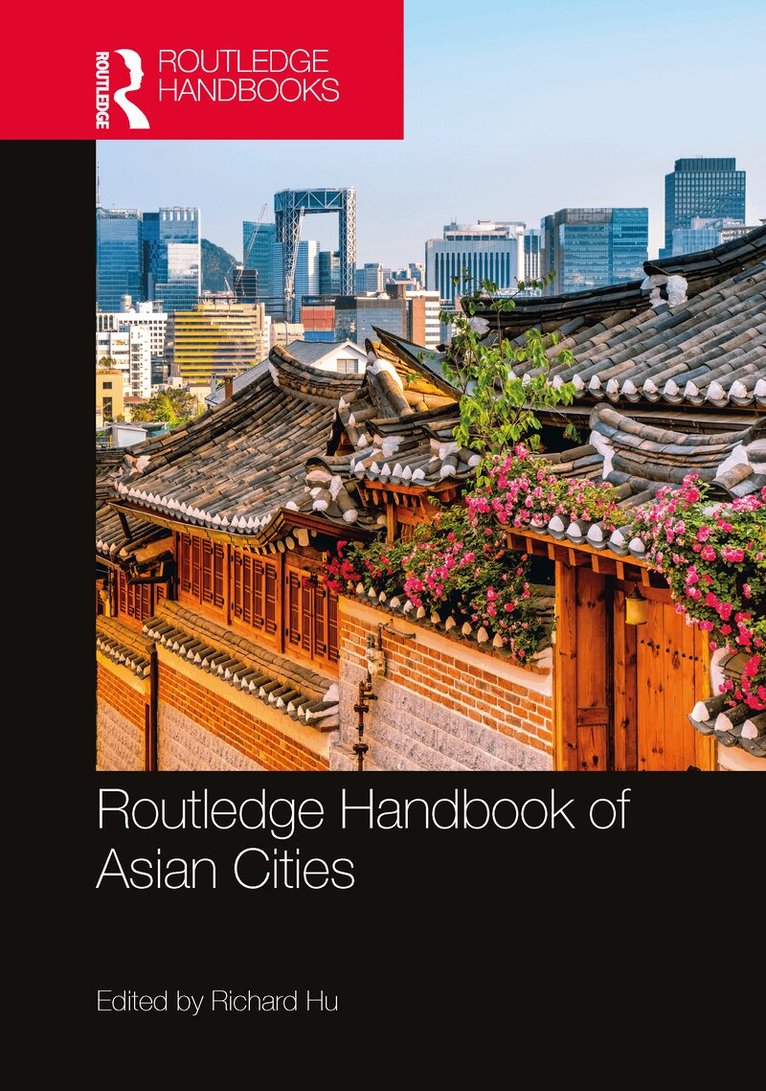
    Routledge Handbook of Asian Cities

    AvRichard Hu

    Häftad, Engelska, 2024

    709 kr

    Beställningsvara. Skickas inom 10-15 vardagar. Fri frakt över 249 kr.

    Beskrivning

    This handbook provides the most comprehensive examination of Asian cities—developed and developing, large and small—and their urban development. Investigating the urban challenges and opportunities of cities from every nation in Asia, the handbook engages not only the global cities like Shanghai, Tokyo, Singapore, Seoul, and Mumbai but also less studied cities like Dili, Malé, Bandar Seri Begawan, Kabul, and Pyongyang. The handbook discusses Asian cities in alignment to the United Nations’ New Urban Agenda and Sustainable Development Goals in order to contribute to global policy debates. In doing so, it critically reflects on the development trajectories of Asian cities and imagines an urban future, in Asia and the world, in the post-sustainable, post-global, and post-pandemic era. Presenting 43 chapters of original, insightful research, this book will be of interest to scholars, practitioners, students, and general readers in the fields of urban development, urban policy and planning, urban studies, and Asian studies.

    Produktinformation

    • Utgivningsdatum:2024-11-29
    • Mått:174 x 246 x 34 mm
    • Vikt:900 g
    • Format:Häftad
    • Språk:Engelska
    • Antal sidor:528
    • Förlag:Taylor & Francis Ltd
    • ISBN:9781032188416

    Utforska kategorier

    • Regional planering inom Naturvetenskap och teknik
    • Geografi inom Naturvetenskap och teknik

    Mer om författaren

    Richard Hu is an urban planner, designer, and critic. His work and interests—both intellectual and professional—integrate built environment, economy, and technology to tackle contemporary urban transformations and challenges, with a focus on the Asia-Pacific region. He is the author of Smart Design: Disruption, Crisis, and the Reshaping of Urban Spaces (2021).

    Innehållsförteckning

    • Part I: Introduction 1. Urban Asia in perspective 2. Smart cities in Asia: Ambiguity, innovation, and evolution 3. Asian cities in and beyond COVID-19 4. Vulnerable resilience in COVID-19: Invisibility and adaptability of the ‘informal’ cities of Southeast Asia 5. Making liveable cities: Experiences from Asia and the Pacific Part II: East Asian cities 6. East Asian cities: Deindustrialisation, greening, and the new geography of urbanisation 7. Hong Kong: One city, three spatial forms, and two possible fates? 8. Pyongyang: An urban metamorphosis under the power of marketisation 9. Seoul: Pursuing and sharing a global city 10. Shanghai: New directions in Chinese metropolitan planning 11. Taipei: Towards a liveable and sustainable city 12. Tokyo: Reinventing the modern Asian metropolis through adaptive strategies 13. Ulaanbaatar: When international plans and local preferences over urban densification collide 14. Xi’an: From an ancient world city to a 21st-century global logistics centre Part III: South Asian cities 15. South Asian cities: Informalisation of ecological and social change 16. Colombo: From colonial outpost to indigenous kleptocratic city 17. Delhi: Rethinking Indian urbanism through the capital’s multi-nuclei development 18. Dhaka: Growth management challenges for a rapidly urbanising megacity 19. Kabul: The 21st century urbanism we did not expect 20. Karachi: Changing institutional landscapes, challenges, and reforms 21. Kathmandu Valley: Unrealised proposals, decades of urban chaos and planning for a better future 22. Malé: Decentralising the world’s densest island capital—plans, determination, and challenges 23. Mumbai: ‘Mess is more’—value and shortcomings of the city’s ad hoc development process 24. Thimphu: Tranquil, peace, and happy city of the Himalayas Part IV: Southeast Asian cities 25. Southeast Asian cities: The imbalances of urban development 26. Bandar Seri Begawan: Why is Brunei’s capital chasing foreign dollars? 27. Bangkok: Creative disorder and the military imagination 28. Dili: Hurdles in constructing the urban from the ground 29. Ho Chi Minh City: Can it avoid the path dependence with Thu Duc City? 30. Jakarta: Seeking the sustainable megacity region 31. Kuala Lumpur: Post-Vision 2020 and post-pandemic futures 32. Manila: Aspiring to be an inclusive, resilient, and sustainable city amidst climate and disaster risks 33. Phnom Penh: Towards a post-dependency metropolisation? 34. Singapore: Planning for healthy ageing 35. Vientiane: Challenges in the policies and practices for sustainable urban development in a ‘least developed’ city 36. Yangon: Displacement urbanism, housing provisionality, and feminist spatial practices—an infrastructure of care at the urban margin Part V: Central Asian cities 37. Central Asian cities: Challenges in balancing global, national, and local development needs 38. Almaty: Modernisation through spatial reordering—urban networks, transport sector reforms, and Eurasianism 39. Ashgabat: The architecture as a showcase of a personal regime 40. Bishkek: Searching for Asianness in a post-Soviet city 41. Dushanbe: Urban transformation, changing spaces, and identities in Tajikistan 42. Tashkent: Aspiring for entrepreneurship and innovation hub Part VI: Conclusion 43. The Asian city in a new urban age