• Fri frakt över 249 kr
  • •
  • Snabba leveranser
  • •
  • Billiga böcker
Kundservice

Du är på sajten för privatpersoner.

Företag, bibliotek eller offentlig verksamhet?

Du handlar på classic.bokus.com, där alla dina funktioner finns intakta.
Till classic.bokus.com
Bokus logotyp. Gå till startsidan.
  • Erbjudanden
  • Nyheter
  • Student
  • Topplistor
  • Barn & ungdom
  • Bokus Play
  • E-böcker
  • Pocketböcker
  • Spel & pussel

10% rabatt på allt med kod: NYSTART10 →

Sidfot

Mina sidor

    Hjälp

    • Kundservice
    • Vanliga frågor och svar
    • Frakt och leverans
    • Retur vid ångerrätt
    • Reklamera vara
    • Betalning
    • Köpvillkor
    • Allmänna villkor
    • Information om webbplatsens tillgänglighet

    Om Bokus

    • Om oss
    • Pressrum
    • För studenter
    • För företag
    • För bibliotek och offentlig verksamhet
    • För leverantörer
    • Hållbarhet

    Populärt

    • Aktuella erbjudanden
    • Presentkort
    • Studentlitteratur
    • Nya böcker
    • Topplistor
    • Signerade böcker
    • Engelska böcker

    Inspiration

    • Boktips
    • BookTok
    • Populära bokserier
    • Barnbokskaraktärer
    • Populära författare
    Logotyp för Bokus
    Följ oss på Facebook (extern länk)Följ oss på Instagram (extern länk)Följ oss på YouTube (extern länk)Följ oss på TikTok (extern länk)
    bokus @ CookiesAnpassa cookiesIntegritetspolicyKöpvillkor
    Till Citymail hemsida (extern länk)Till Budbee hemsida (extern länk)Till Postnord hemsida (extern länk)Till Schenker hemsida (extern länk)Till Early Bird hemsida (extern länk)Till Walleys hemsida (extern länk)
    1. Medicin
    2. Andra medicinska specialiteter
    3. Neurologi och klinisk neurofysiologi

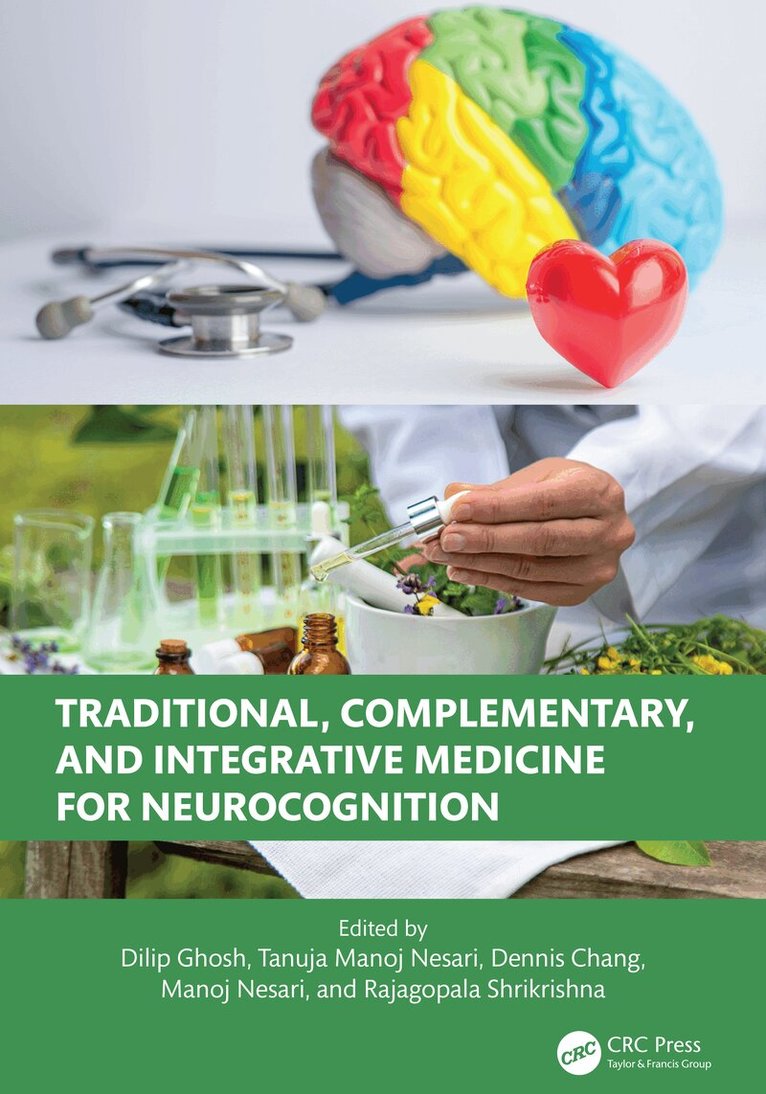
    Traditional, Complementary, and Integrative Medicine for Neurocognition

    AvDilip Ghosh,Tanuja Manoj Nesari

    Inbunden, Engelska, 2025

    3 042 kr

    Beställningsvara. Skickas inom 10-15 vardagar. Fri frakt över 249 kr.

    Beskrivning

    Despite the increased demand for traditional, complementary, and integrative medicine (TCIM) therapies by patients around the world, current guidelines, regulations, and research for TCIM therapies are lacking. Traditional, Complementary, and Integrative Medicine for Neurocognition provides a detailed analysis of clinical and preclinical evidence to support for cognitive diseases, giving the reader a comprehensive overview of the scientific evidence for the key TCIM modalities, and highlighting challenges and opportunities associated with TCIM for the prevention and management of cognitive disorders.The book translates research findings into practical clinical treatment protocols addressing major categories of neurocognitive disorders and covers issues pertaining to safety and research methods used to evaluate safety and efficacy of natural products that are being investigated as potential treatments of neurocognitive disorders. Traditional, Complementary, and Integrative Medicine for Neurocognition will be an excellent resource for researchers and clinicians working with patients diagnosed with neurodegenerative disorders, practitioners of integrative medicine, traditional and complementary medicine (especially Ayurveda and traditional Chinese medicine), and conventional medicine, allied health practitioners, and universities with medical and traditional and complementary medicine courses.

    Produktinformation

    • Utgivningsdatum:2025-11-11
    • Mått:178 x 254 x 30 mm
    • Vikt:1 020 g
    • Format:Inbunden
    • Språk:Engelska
    • Antal sidor:452
    • Förlag:Taylor & Francis Ltd
    • ISBN:9781032258546

    Utforska kategorier

    • Neurologi och klinisk neurofysiologi inom Medicin
    • Alternativ medicin och terapier inom Medicin
    • Tillverkningsteknik inom Naturvetenskap och teknik

    Mer om författaren

    Dilip Ghosh, Tanuja Manoj Nesari, Dennis Chang, Manoj Nesari, Rajagopala ShrikrishnaDr. Dilip Ghosh received his PhD in biomedical science from India and a postdoc from USDAARS, HNRCA at Tufts University, Boston, USA. He is an international speaker, facilitator, and author and is professionally associated with Nutriconnect, Australia. He is also an adjunct-industry fellow with NICM HRI, Western Sydney University; Visiting Professor, Kasturba Health Society, MRC, Mumbai; Jamia Hamdard University at Food Technology, Delhi, India; and Tehran University of Medical Sciences, Iran. He is a fellow of the American College of Nutrition, professional member of the Australian Institute of Food Science & Technology, an advisor and executive board member of Health Foods and Dietary Supplements Association and The Society for Ethnopharmacology, India, and sits on editorial boards of several journals. Dr. Ghosh has published more than 100 papers in peer-reviewed journals, as well as books and numerous articles in food and nutrition magazines. His more recent books include Pharmaceutical to Nutraceutical: A Paradigm Shift in Disease Prevention, Natural Medicines: Clinical Efficacy, Safety and Quality, Nutraceutical in Brain Health and Beyond, and Fenugreek: Traditional and Modern Medicinal Uses, published by CRC Press and Elsevier/Academic. He is a recipient of IASTAM¬Zandu Oration Award 2022–23 and a consultant with the WHO–Global Traditional Medicine Center (GTMC).Dr. Tanuja Nesari has completed her MD and PhD in Dravyaguna Vigyan (Traditional Pharmacology) from Gujarat Ayurved University, Jamnagar in 2000 with Gold Medal and Yagneshwar Gopal Dixit Scholarship. She is a former director and head of Translational Research & Biostatic at All India Institute of Ayurveda, GOI, New Delhi. She was also Chair for Health Sector Subskill Council for AYUSH under MOA, GOI. She has served as CEO, National Medicinal Plant board, Ministry of AYUSH, GOI and Additional Director (Academics) and Medical Superintendent at Ch.Brahm Prakash Ayu. Charak Sansthan, under Government of NCT Delhi. Prior to that, she was Principal and Medical Superintendent of Tilak Ayurvedic College Pune. Dr. Nesari is a Universityapproved Ayurveda professor with 29 years of experience teaching in Dravyaguna and Rsasashastra as well as research in quality, safety, and efficacy of medicinal plants. She was the recipient of the Best Ayurveda Teacher award in 2005. She has guided 33 MD, 20 PhD, and 3 MPhil students through their courses of study. Dr. Nesari is an acclaimed international speaker on Ayurveda and has organized series of national & international seminars, workshops, CME programs, and medicinal plants exhibitions on thrust areas of Ayurveda. For the outstanding academic contributions, she received the best teacher award in 2004 and the Harihar Mukherjee Memorial Award for remarkable contribution in the field of ethnopharmacology in 2019. Dr. Nesari has published 74 original papers and 91 review articles in peer-reviewed journals and has authored and edited 15 books in English and regional languages, including Marathi. She is also an executive sditor and reviewer of many indexed journals.Prof. Dennis Chang has 25 years of experience in complementary medicine as a researcher, educator, and mentor. He is currently Director of NICM Health Research Institute (NICM HRI) at Western Sydney University, Australia’s leader in complementary medicine research and policy development. Prof. Chang was initially trained in medicine and completed his postgraduate training in pharmacology. He is recognized internationally as a leading researcher in pharmacology and clinical research of natural and traditional medicine. He has successfully led several major multicenter clinical trials to evaluate herbal medicine, yoga, and tai chi for the treatment of vascular dementia, mild cognitive impairment, coronary heart disease, metabolic syndrome, and type 2 diabetes. Prof. Chang has also conducted numerous laboratory-based studies to evaluate pharmacokinetic/bioavailability profiles and mechanisms of action of herbal medicines. His research has been widely published in highquality international medical journals with more than 130 peer-reviewed articles, one edited book, and more than 10 book chapters. Prior to his appointment as the NICM HRI director in 2020, Prof. Chang served as the Institute’s Associate Director, International. He played a leading role in the development of the Institute’s international partnership program, which led to substantial collaborations and partnerships with prestigious universities and research institutions around the world. Dr. Manoj Nesari is the Advisor to the Government of India at Ministry of AYUSH to advise on policy matters related to improving health of people, integrating Ayurveda and other Indian traditional systems of medicine in public health care delivery, infrastructure strengthening, and human resources capacity building. He received a PhD on policy research on international laws related to traditional systems of medicine and an MD from Institute of Post Graduate Teaching and Research in Ayurveda (IPGT&RA), Jamnagar, with specialization in internal medicine (Kayachikitsa). He completed his bachelor’s degree in integrative medicine, Ayurveda (BAMS), from R A Podar Medical College (Ayur), Worli, Mumbai. Dr. Nesari has 30 years of experience in Ayurvedic academia, clinical practices, policy planning, international cooperation, and public health. He also has extensive experience developing policy documents, programs, white papers, and vehicles for international negotiations. Many new initiatives for expansion of Ayurveda services and their utilization in public health are to his credit. In addition to his current post, he has worked in different capacities in the past 30 years, including Joint Advisor, Director National Academy of Ayurveda, and Chief Medical Officer at Central Government Health Scheme.Dr. Rajagopala Shrikrishna is specializing in Ayurveda pediatrics. He received his BAMS from Coimbatore Ayurveda College and completed his postgraduation and doctoral studies at IPGT&RA (now Institute of Teaching & Research in Ayurveda, an Institute of National Importance), Gujarat Ayurved University in Gujarat, India. He has more than 30 years of professional experience and more than 20 years of exclusive teaching and research experience at a postgraduate level. Dr. Shrikrishna is currently holding the post of Ayurveda Academic Chair & Visiting Professor at Western Sydney University’s NICM Health Research Institute, Sydney, Australia. He is also Additional Professor and Head, Department of Kaumarabhritya (Ayurveda Paediatrics) at the All India Institute of Ayurveda (AIIA) in New Delhi. He is former Dean of Research and Associate Dean of International Cell at AIIA, and executed the duties of medical superintendent at AIIA Hospital during the COVID-19 pandemic. Dr. Rajagopala has published more than 80 research articles in peer-reviewed journals and contributed more than 25 book chapters. He also delivered more than 45 invited talks and guest lectures at continuing medical education and training seminars at regional, national, and international levels.

    Innehållsförteckning

    • About the EditorsContributorsPrefaceChapter 1 Neurocognitive Herbs of Ayurveda: Facts, Evidence, and ProspectsTanuja Nesari, Apoorva Sangoram, and Shivani GhildiyalChapter 2 Understanding Neurodegenerative Disorders by Ayurveda: Alzheimer’s Disease and Amyotrophic Lateral SclerosisAnup ThakarChapter 3 Concept of Medhya Rasayana in AyurvedaShivani Ghildiyal, Apoorva Sangoram, and Tanuja NesariChapter 4 Integrating Ayurveda in the Management of Cognitive Decline and Dementia: A Medical Practitioner’s PerspectiveTimothy Carr and Vaidya Manohar PalakurthiChapter 5 Preventing and Treating Cognitive Decline: An Ayurvedic PerspectiveBrenda ForanChapter 6 Curcuma: The Indian Herbal Gold and NeurocognitionAsmita WeleChapter 7 Management of Neurocognitive Disorders of Aging: Concept to PracticeSantoshkumar Bhatted and Meera K. BhojaniChapter 8 Panchakarma and NeurocognitionPrasanth Dharmarajan, Tanzeem Shaikh, Abhijeet Dahiya, Y.S. Aswathy,and C.N. YoshithaChapter 9 Food and Actions to Maintain Neurocognitive Health: An Overview ofAncient Ayurveda TextsMedha S. Kulkarni and Meena Shamrao DeogadeChapter 10 Metal- and Mineral-Based Formulations for Neurocognitive Diseases:A Synoptic ViewGalib, Anu Ruhila and Afsha ParveenChapter 11 Enhancing Higher Brain Functions with Ayurveda Interventions: A ReviewR.K. Yadava, R.R. Mahto, and H.S. MythriChapter 12 Neurocognition in ChildrenRajagopala Shrikrishna, Mahapatra Arunkumar, K.P. Karthik, and Abhimanyu KumarChapter 13 Neurocognition: The Principles and Physiology in AyurvedaShalini Rai, Khushal Kumar, and Vaidya Shri Krishna SharmaChapter 14 Perimenopausal Care of Neurocognitive Impairment on Aging Women:A Holistic ApproachSujata Kadam and Meenakshi PandeyChapter 15 Traditional Chinese Medicine for Mild Cognitive ImpairmentIsabella H. K. Leung, Najwa-Joelle Metri, Katerina Christofides,Kayla M. Jaye, Ali Butt, Lauren S. Dewsbury, Ava Murali, Guoyan Yang,and Genevieve Z. Steiner-LimChapter 16 Overview of Chinese Medicine for Prevention and Treatment of CognitiveImpairments and DementiaJackson McPartland, Gabriela Caballero, Guoyan Yang, and Diana KaramacoskaChapter 17 Chinese Herbal Medicine for Alzheimer’s DiseaseIsabella H. K. Leung, Najwa-Joelle Metri, Kayla M. Jaye,Katerina Christofides, Ava Murali, Ali Butt, Guoyan Yang, andGenevieve Z. Steiner-LimChapter 18 Preclinical Studies of Chinese Herbal Medicine for Cognitive ImpairmentsWenting Song, Zhao Ding, Xian Zhou, Dennis Chang, Jianxun Liu,Yehao Zhang, Xiaodi Fan, and Mingjiang YaoChapter 19 Gut Microbiome, Prebiotics, Probiotics, and Postbiotics in Neurocognitive andNeurodegenerative Diseases: An Integrative Medicine PerspectiveAhmad K. Al-Khazaleh, Vu Bao Dang, Indeewarie Hemamali Dissanayake,Radwa A. Eladwy, Kayla Jaye, Dennis Chang, and Deep Jyoti BhuyanChapter 20 Potential Role of Nutrition in Elderly Population: A Neurocognition PerspectiveJoyeta GhoshChapter 21 Lifestyle Medicine and Mental HealthNajwa-Joelle Metri and Jerome SarrisChapter 22 Nutraceuticals and Phytoceuticals for Mental HealthJerome Sarris and Najwa-Joelle MetriChapter 23 Potential of 4-Hydroxyisoleucine, an Amino Acid from Fenugreek Seeds,for Cognitive Neuropsychological ConditionsPrasad Thakurdesai, Pallavi Deshpande, and Padmaja KoreChapter 24 Role of Nutraceuticals in Neurocognition and BeyondDilip GhoshChapter 25 Traditional Korean Medicine for DementiaEunhye Song, Lin Ang, and Myeong Soo LeeChapter 26 Phytocannabinoids for Neurocognitive DisordersGenevieve Z. Steiner-Lim, Madilyn Coles, Najwa-Joelle Metri, Ava Murali,Caitlin Dooley, Zainab Al-Modhefer, Jackson McPartland, Ali Butt,Rose M. Chesworth, and Tim KarlChapter 27 Traditional Medicines Used for the Management of NeurodegenerativeDiseases in Sri LankaJayantha WijayabandaraIndex