• Fri frakt över 249 kr
  • •
  • Snabba leveranser
  • •
  • Billiga böcker
Kundservice

Du är på sajten för privatpersoner.

Företag, bibliotek eller offentlig verksamhet?

Du handlar på classic.bokus.com, där alla dina funktioner finns intakta.
Till classic.bokus.com
Bokus logotyp. Gå till startsidan.
  • Erbjudanden
  • Nyheter
  • Student
  • Topplistor
  • Barn & ungdom
  • Bokus Play
  • E-böcker
  • Pocketböcker
  • Spel & pussel

10% rabatt på allt med kod: NYSTART10 →

Sidfot

Mina sidor

    Hjälp

    • Kundservice
    • Vanliga frågor och svar
    • Frakt och leverans
    • Retur vid ångerrätt
    • Reklamera vara
    • Betalning
    • Köpvillkor
    • Allmänna villkor
    • Information om webbplatsens tillgänglighet

    Om Bokus

    • Om oss
    • Pressrum
    • För studenter
    • För företag
    • För bibliotek och offentlig verksamhet
    • För leverantörer
    • Hållbarhet

    Populärt

    • Aktuella erbjudanden
    • Presentkort
    • Studentlitteratur
    • Nya böcker
    • Topplistor
    • Signerade böcker
    • Engelska böcker

    Inspiration

    • Boktips
    • BookTok
    • Populära bokserier
    • Barnbokskaraktärer
    • Populära författare
    Logotyp för Bokus
    Följ oss på Facebook (extern länk)Följ oss på Instagram (extern länk)Följ oss på YouTube (extern länk)Följ oss på TikTok (extern länk)
    bokus @ CookiesAnpassa cookiesIntegritetspolicyKöpvillkor
    Till Citymail hemsida (extern länk)Till Budbee hemsida (extern länk)Till Postnord hemsida (extern länk)Till Schenker hemsida (extern länk)Till Early Bird hemsida (extern länk)Till Walleys hemsida (extern länk)
    1. Psykologi och pedagogik
    2. Psykologi
    3. Psykologiska teorier och skolor

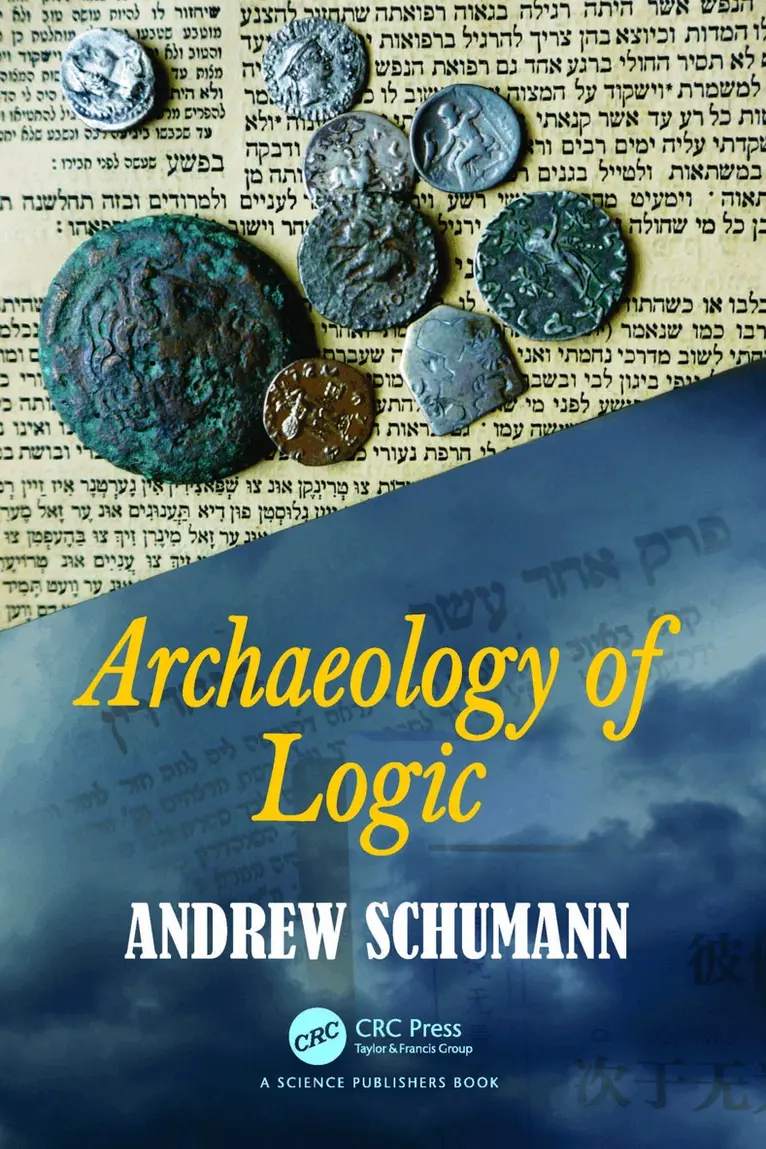
    Archaeology of Logic

    AvAndrew Schumann

    Inbunden, Engelska, 2023

    2 954 kr

    Beställningsvara. Skickas inom 10-15 vardagar. Fri frakt över 249 kr.

    Fler format och utgåvor

    E-bok

    1 207 kr

    E-bok

    1 207 kr

    Häftad

    989 kr

    Beskrivning

    The question arises whether logic was given to us by God or whether it is the result of human evolution. I believe that at least the modus ponens rule ( A and if A then B implies B) is inherent in humans, but probably many other modern systems (e.g., resource logic, non - monotonic logic etc.) are the result of humans adapating to the environment. It is therefore of interest to study and compare the way logic is used in ancient cultures as well as the way logic is going to be used in our 21st century. This welcome book studies and compares the way formation of logic in three cultures: Ancient Greek (4th century B.C.), Judaic (1st century B.C. – 1st century A.D.) and Indo-Buddhist (2nd century A.D.) The book notes that logic became especially popular during the period of late antiquity in countries covered by the international trade of the Silk Road. This study makes a valuable contribution to the history of logic and to the very understanding of the origions and nature of logical thinking. -Prof. Dov Gabbay, King's College London, UKAndrew Schumann in his book demonsrates that logic step-by-step arose in different places and cultural circles. He argues that if we apply a structural-genealogical method, as well as turn to various sources, particularly, religious, philosophical, linguistic, etc., then we can obtain a more general and more adequate picture of emengence and development of logic. This book is a new and very valuable contribution to the history of logic as a manifestation of the human mind. - Prof. Jan Wolenski, Jagiellonian University, Poland The author of the Archaeology of Logic defends the claim, calling it "logic is aftter all", which sees logical competence as a practical skill that people began to learn in antiquity, as soom as they realized that avoiding cognitive biases in their reasoning would make their daily activities more successful. The in-depth reading of the book with its diving into the comparative quotations in the long dead or hardly known to most of us languages like Sumerian-Akkadian, Aramatic, Hebrew and etc, will be rewarded by the response that the logical competence is diverse and it can be trained, despite the inevitabilitiy of the reasoning fallacies; and that critical discussions and agaonal character of the social lide are the necessary tools for that. - Prof. Elena Lisanyuk

    Produktinformation

    • Utgivningsdatum:2023-04-27
    • Mått:156 x 234 x undefined mm
    • Vikt:820 g
    • Format:Inbunden
    • Språk:Engelska
    • Antal sidor:420
    • Förlag:Taylor & Francis Ltd
    • ISBN:9781032327341

    Utforska kategorier

    • Psykologiska teorier och skolor inom Psykologi och pedagogik
    • Filosofiska discipliner inom Filosofi och religion
    • Kognitiv psykologi inom Psykologi och pedagogik

    Mer om författaren

    Andrew Schumann has a PhD from the Belarusian State University, Minsk, Belarus. He is Professor and Head of the Department of Cognitive Science, and Mathematical Modelling at the University of Information Technology and Management in Rzeszow, Poland. He has participated in the project Physarum Chip: Growing Computers from Slime Mould supported by the Seventh Framework Programme (FP7-ICT-2011-8). The main objectives are to design and fabricate a distributed biomorphic computing device built and operated by slime mould Physarum polycephalum.

    Innehållsförteckning

    • Introduction. Philosophical and Methodological Foundations for Studying the History of Logic of Various Religious and Philosophical Schools. Some Ways of Discovering the Logical Competence in Social Practices. Conditions and Reasons for the Emergence of Logical Competence in the Sumerian-Akkadian Culture. Directions of the Development of Logical Competence in the Hellenistic Period, which Covered the Cultures of Greece, the Middle East and North India. Some Prospects for the Practical Application of the Theory of Logical Competence in the Modern Legal Culture. Conclusion.