• Fri frakt över 249 kr
  • •
  • Snabba leveranser
  • •
  • Billiga böcker
Kundservice

Du är på sajten för privatpersoner.

Företag, bibliotek eller offentlig verksamhet?

Du handlar på classic.bokus.com, där alla dina funktioner finns intakta.
Till classic.bokus.com
Bokus logotyp. Gå till startsidan.
  • Erbjudanden
  • Nyheter
  • Student
  • Topplistor
  • Barn & ungdom
  • Bokus Play
  • E-böcker
  • Pocketböcker
  • Spel & pussel

10% rabatt på allt med kod NYSTART10 →

Sidfot

Mina sidor

    Hjälp

    • Kundservice
    • Vanliga frågor och svar
    • Frakt och leverans
    • Retur vid ångerrätt
    • Reklamera vara
    • Betalning
    • Köpvillkor
    • Allmänna villkor
    • Information om webbplatsens tillgänglighet

    Om Bokus

    • Om oss
    • Pressrum
    • För studenter
    • För företag
    • För bibliotek och offentlig verksamhet
    • För leverantörer
    • Hållbarhet

    Populärt

    • Aktuella erbjudanden
    • Presentkort
    • Studentlitteratur
    • Nya böcker
    • Topplistor
    • Signerade böcker
    • Engelska böcker

    Inspiration

    • Boktips
    • BookTok
    • Populära bokserier
    • Barnbokskaraktärer
    • Populära författare
    Logotyp för Bokus
    Följ oss på Facebook (extern länk)Följ oss på Instagram (extern länk)Följ oss på YouTube (extern länk)Följ oss på TikTok (extern länk)
    bokus @ CookiesAnpassa cookiesIntegritetspolicyKöpvillkor
    Till Citymail hemsida (extern länk)Till Budbee hemsida (extern länk)Till Postnord hemsida (extern länk)Till Schenker hemsida (extern länk)Till Early Bird hemsida (extern länk)Till Walleys hemsida (extern länk)
    1. Juridik
    2. Särskilda rättsområden
    3. Författningsrätt och förvaltningsrätt
    4. Mänskliga och medborgerliga rättigheter

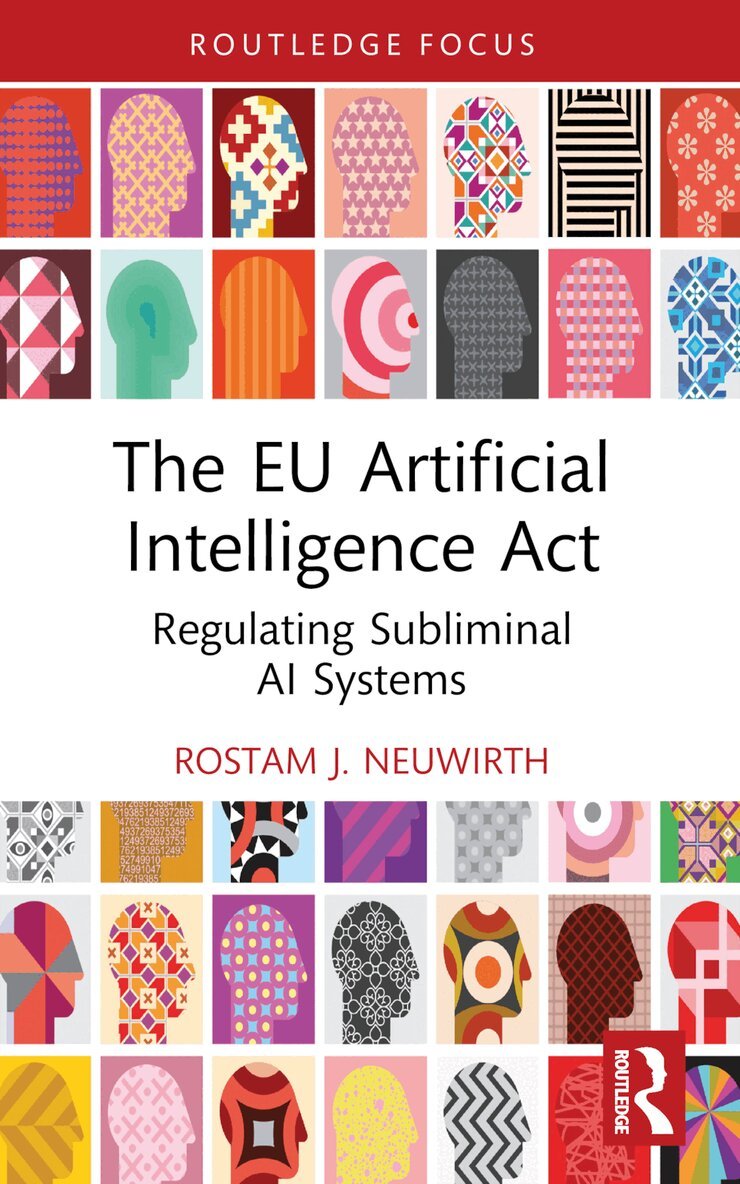
    EU Artificial Intelligence Act

    Regulating Subliminal AI Systems

    AvRostam J. Neuwirth

    Häftad, Engelska, 2024

    Del i serien Routledge Research in the Law of Emerging Technologies

    614 kr

    Beställningsvara. Skickas inom 10-15 vardagar. Fri frakt över 249 kr.

    Fler format och utgåvor

    E-bok

    725 kr

    E-bok

    725 kr

    Inbunden

    885 kr

    Beskrivning

    AI in combination with other innovative technologies promises to bring unprecedented opportunities to all aspects of life. These technologies, however, hold great dangers, especially for the manipulation of the human mind, which have given rise to serious ethical concerns. Apart from some sectoral regulatory efforts to address these concerns, no regulatory framework for AI has yet been adopted though in 2021 the European Commission of the EU published a draft Act on Artificial Intelligence and UNESCO followed suit with a Recommendation on the Ethics of Artificial Intelligence.The book contextualises the future regulation of AI, specifically addressing the regulatory challenges relating to the planned prohibition of the use of AI systems that deploy subliminal techniques. The convergence of AI with various related technologies, such as brain–computer interfaces, functional magnetic resonance imaging, robotics and big data, already allows for "mind reading" or "dream hacking" through brain spyware, as well as other practices that intrude on cognition and the right to freedom of thought. Future innovations will enhance the possibilities for manipulating thoughts and behaviour, and they threaten to cause serious harm to individuals as well as to society as a whole.The issue of subliminal perception and the ability to deceive and manipulate the mind below the threshold of awareness causes severe difficulties for law and democracy and raises important questions for the future of society. This book shows how cognitive, technological, and legal questions are intrinsically interwoven, and aims to stimulate an urgently needed transdisciplinary and transnational debate between students, academics, practitioners, policymakers and citizens interested not only in the law but also in disciplines including computer science, neuroscience, sociology, political science, marketing and psychology.

    Produktinformation

    • Utgivningsdatum:2024-05-27
    • Mått:140 x 216 x 8 mm
    • Vikt:173 g
    • Format:Häftad
    • Språk:Engelska
    • Serie:Routledge Research in the Law of Emerging Technologies
    • Antal sidor:130
    • Förlag:Taylor & Francis Ltd
    • ISBN:9781032333830

    Utforska kategorier

    • Mänskliga och medborgerliga rättigheter inom Juridik
    • IT-rätt och kommunikationsrätt inom Juridik

    Mer om författaren

    Rostam Josef Neuwirth is Professor of Law and Head of the Department of Global Legal Studies at the Faculty of Law of the University of Macau. Previously, he taught at the West Bengal University of Juridical Sciences (NUJS) in Kolkata and the Hidayatullah National Law University (HNLU) in Raipur (India), and worked as a legal adviser in the Department of European Law of the International Law Bureau of the Austrian Federal Ministry for Foreign Affairs. He received his PhD degree from the European University Institute (EUI) in Florence (Italy), and also holds a Master’s degree in Law (LL.M.) from the Faculty of Law of McGill University in Montreal (Canada). As an undergraduate he studied at the University of Graz (Austria) and the Université d’Auvergne (France). He is the author of Law in the Time of Oxymora: A Synaesthesia of Language, Logic and Law (Routledge 2018) and numerous other publications that focus on contemporary global legal problems by exploring the intrinsic linkages between law, on the one hand, and language, cognition, art, culture, society and technology, on the other.

    Recensioner i media

    Foremost expert in the international field of legal synaesthesia, Rostam Neuwirth reminds us in this engagingly complex critique of proposed EU regulation in AI systems, that in this age of paradox and oxymora, the mind, with its elaborately interactive sensory intersectionality involving cognition, knowledge, and reality, is a site precariously positioned for manipulation through systems of artificial intelligence that seek to control awareness and perception through subliminal techniques emboldened by irresponsible regulation. Law must protect our foundational freedom as humans to think, to feel, and engage with thoughts, feelings, and the reality that comes from this chaotic overlap.Sarah Marusek, University of Hawai‘i Hilo (USA) and author of "Synesthetic Legalities: Sensory Dimensions of Law and Jurisprudence"Rostam J. Neuwirth’s book on the subliminal effects of AI is both original and timely. It is original because Neuwirth combines discourses from the fields of vulnerability theory, AI and neuroscience in a unique manner. The book is timely because the earlier one understands AI’s subliminal effects, the higher is the chance that we can avoid that the concept of ‘private thought’ becomes an oxymoron. Neuwirth’s latest book is thus essential reading for anyone committed to the protection of human dignity and human autonomy in the digital realm.Valentin Jeutner, Lund University (Sweden) and author of "Irresolvable Norm Conflicts in International Law: The Concept of a Legal Dilemma"The global challenges of the XXI century spur humans to deal with Complex Systems. In my book, entitled "Untangling Complex Systems: A Grand Challenge for Science", I show that Artificial Intelligence (AI) turns out to be a valuable tool to tackle Complexity. The development of AI brings humanity to the brink of a fourth technological revolution that will fundamentally alter the way humans live, work, and conceive themselves. There are intelligent machines that "assist", others that "augment" humans, and finally others that are "autonomous". These intelligent machines, which interact with humans, help face complex scenarios but raise ethical questions. The brilliant and farsighted Neuwirth’s book presents the general context of the future regulation of AI. It specifically addresses the regulatory challenges related to the planned prohibition of "the use of an AI system that deploys subliminal techniques beyond a person’s consciousness". Through a transdisciplinary examination of AI's legal, technological, linguistic and cognitive aspects, Neuwirth legitimately concludes that control of the mind should remain the personal domain of every human and the term "private thought" should not become an oxymoron. Neuwirth’s book is a "must-read" for anyone who wants to know more about the regulation of subliminal AI systems.Pier Luigi Gentili, Department of Chemistry, Biology and Biotechnology, University of Perugia (Italy)A highly important and timely discussion of the concept of subliminal manipulation at a time when the EU prepares to be one of the first major regulators of artificial intelligence. It is crucial that more experts like Professor Neuwirth contribute to the topic of reducing the risks of AI manipulation.Risto Uuk, Policy Researcher, Future of Life Institute (FLI)

    Innehållsförteckning

    • PrefaceIntroduction1. The European Union’s Proposed Artificial Intelligence Act (AIA)A. Background and ContextB. The Prohibition of AI Systems Deploying Subliminal TechniquesC. The Scope and Nature of AI Systems with Subliminal Aspects2. Subliminal Perception and the LawA. Motivational Research and "Hidden Persuaders"B. Laws Prohibiting Subliminal AdvertisingC. Subliminal Perception and the Senses: Between Individuality and Unity3. The Future Regulation of Subliminal AI SystemsA. The Prohibition of Subliminal Techniques in AI Systems, RevisitedB. Wider Ramifications for Law: Towards a Right to Cognitive FreedomC. Legal Synaesthesia: Greater Unity of the Senses Leads to Greater Unity of Law?Conclusion