• Fri frakt över 249 kr
  • •
  • Snabba leveranser
  • •
  • Billiga böcker
Kundservice

Du är på sajten för privatpersoner.

Företag, bibliotek eller offentlig verksamhet?

Du handlar på classic.bokus.com, där alla dina funktioner finns intakta.
Till classic.bokus.com
Bokus logotyp. Gå till startsidan.
  • Erbjudanden
  • Nyheter
  • Student
  • Topplistor
  • Barn & ungdom
  • Bokus Play
  • E-böcker
  • Pocketböcker
  • Spel & pussel

Må bättre, för mindre! Upp till 50% rabatt på hälsoböcker

Sidfot

Mina sidor

    Hjälp

    • Kundservice
    • Vanliga frågor och svar
    • Frakt och leverans
    • Retur vid ångerrätt
    • Reklamera vara
    • Betalning
    • Köpvillkor
    • Allmänna villkor
    • Information om webbplatsens tillgänglighet

    Om Bokus

    • Om oss
    • Pressrum
    • För studenter
    • För företag
    • För bibliotek och offentlig verksamhet
    • För leverantörer
    • Hållbarhet

    Populärt

    • Aktuella erbjudanden
    • Presentkort
    • Studentlitteratur
    • Nya böcker
    • Topplistor
    • Signerade böcker
    • Engelska böcker

    Inspiration

    • Boktips
    • BookTok
    • Populära bokserier
    • Barnbokskaraktärer
    • Populära författare
    Logotyp för Bokus
    Följ oss på Facebook (extern länk)Följ oss på Instagram (extern länk)Följ oss på YouTube (extern länk)Följ oss på TikTok (extern länk)
    bokus @ CookiesAnpassa cookiesIntegritetspolicyKöpvillkor
    Till Citymail hemsida (extern länk)Till Budbee hemsida (extern länk)Till Postnord hemsida (extern länk)Till Schenker hemsida (extern länk)Till Early Bird hemsida (extern länk)Till Walleys hemsida (extern länk)
    1. Psykologi och pedagogik
    2. Psykologi
    3. Socialpsykologi och gruppsykologi

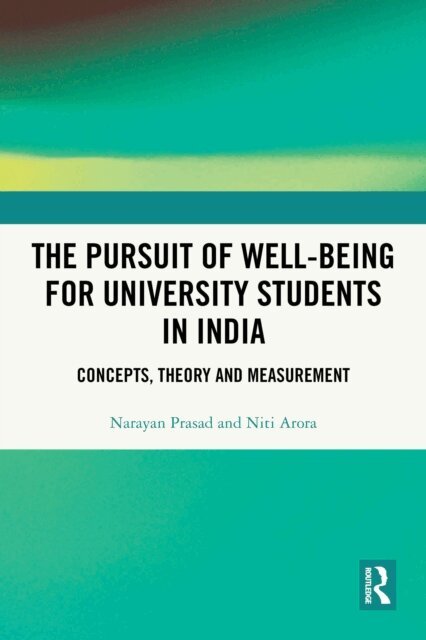
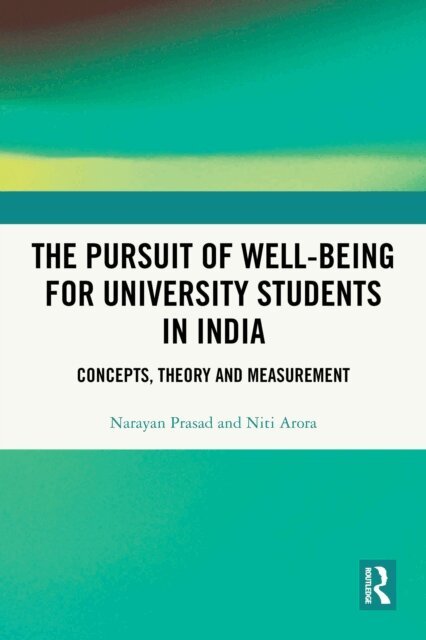
    Pursuit of Well-being for University Students in India

    Concepts, Theory and Measurement

    AvNarayan Prasad,Niti Arora

    Inbunden, Engelska, 2025

    2 352 kr

    Beställningsvara. Skickas inom 10-15 vardagar. Fri frakt över 249 kr.

    Beskrivning

    This book details the concept, theory, and measurement of “human wellbeing,” in general, with a focus on university students in India. It investigates the experiences and correlates of wellbeing of Indian undergraduate students with the aim of enabling policymakers to plan and implement policies in the pursuit of a better quality of university life for students.The book analyses the status and experience of wellbeing of university students in a holistic manner by studying the various dimensions of their wellbeing. It identifies the areas of deficiency and addresses the issues of unrest faced by them. The framework encompasses six dimensions of student wellbeing, namely educational wellbeing, perceived economic wellbeing, health wellbeing, social wellbeing, wellbeing in the personal domain and factors contributing to psychological distress (a negative indicator). It examines the differences in the status of wellbeing with respect to their gender, place of origin and the social groups they belong to. It proposes recommendations to strengthen their wellbeing and presents a roadmap suggesting further scope of research in this area.This volume will be of interest to students, teachers and researchers of psychology, social psychology, sociology, mental health and wellbeing and economic psychology. It will also be useful to policymakers, counsellors, psychologists, academicians and those interested in wellbeing in general.

    Produktinformation

    • Utgivningsdatum:2025-11-28
    • Mått:156 x 234 x 15 mm
    • Vikt:520 g
    • Format:Inbunden
    • Språk:Engelska
    • Antal sidor:174
    • Förlag:Taylor & Francis Ltd
    • ISBN:9781032348360

    Utforska kategorier

    • Socialpsykologi och gruppsykologi inom Psykologi och pedagogik
    • Sociologi inom Samhälle och politik

    Mer om författaren

    Narayan Prasad has been Professor of Economics in the School of Social Sciences. Indira Gandhi National Open University, New Delhi, since 2006. He has also worked as the Director of the Research Unit and the Director of the Academic Coordination Division of the same. He has designed and developed research methodology courses for MPhil and PhD students (21 students have been awarded PhD degrees under his supervision), has published six books and has presented and published research papers in several international and national forums. He has delivered lectures in New York, Washington and Los Angeles, amongst others, and has also been invited to deliver lectures on various aspects of research methodology, including on Knowledge Generation in West and Bharat: Philosophical Perspectives, by various universities in India. His areas of research interest are: Human Wellbeing, Human Development, Spiritual Economics and the philosophical foundation of Economics.Niti Arora is an Associate Professor of Economics at Mata Sundri College for Women, University of Delhi. She holds an MPhil and PhD in Economics from Indira Gandhi National Open University (IGNOU) and is an alumna of Delhi School of Economics, University of Delhi. She has presented and published research papers in numerous national and international conference proceedings and has been actively involved in research projects. She regularly contributes to academic discourse as a coordinator, moderator and panellist at seminars and conferences. Her academic interests include Behavioural Economics, Development Economics and Human Development.

    Innehållsförteckning

    • List of Figures List of Tables List of Boxes Foreword Preface Brief Overview Acknowledgements PART I: Concept, Theory and Measurement of Human Wellbeing: An Overview 1 Human Wellbeing: Concept and Theory 2 Measurement Approaches to Human Wellbeing PART II: University Students’ Wellbeing: Conceptual and Theoretical Framework 3 Youth Wellbeing: A Global Perspective 4 Research Methodology PART III: Measurement of University Students’ Wellbeing 5 Educational Wellbeing 6 Perceived Economic Wellbeing 7 Health Wellbeing: Physical and Psychological Health 8 Social Connectedness and Personal-Choice Domain 9 Overall Wellbeing of University Students PART IV: Conclusion and Discussion 10 Summary, Findings and Recommendations Bibliography Annexure A: Designing Framework for Measuring Wellbeing Annexure B: Design of the Questionnaire Annexure C: Questionnaire Index