• Fri frakt över 249 kr
  • •
  • Snabba leveranser
  • •
  • Billiga böcker
Kundservice

Du är på sajten för privatpersoner.

Företag, bibliotek eller offentlig verksamhet?

Du handlar på classic.bokus.com, där alla dina funktioner finns intakta.
Till classic.bokus.com
Bokus logotyp. Gå till startsidan.
  • Erbjudanden
  • Nyheter
  • Student
  • Topplistor
  • Barn & ungdom
  • Bokus Play
  • E-böcker
  • Pocketböcker
  • Spel & pussel

Må bättre, för mindre! Upp till 50% rabatt på hälsoböcker

Sidfot

Mina sidor

    Hjälp

    • Kundservice
    • Vanliga frågor och svar
    • Frakt och leverans
    • Retur vid ångerrätt
    • Reklamera vara
    • Betalning
    • Köpvillkor
    • Allmänna villkor
    • Information om webbplatsens tillgänglighet

    Om Bokus

    • Om oss
    • Pressrum
    • För studenter
    • För företag
    • För bibliotek och offentlig verksamhet
    • För leverantörer
    • Hållbarhet

    Populärt

    • Aktuella erbjudanden
    • Presentkort
    • Studentlitteratur
    • Nya böcker
    • Topplistor
    • Signerade böcker
    • Engelska böcker

    Inspiration

    • Boktips
    • BookTok
    • Populära bokserier
    • Barnbokskaraktärer
    • Populära författare
    Logotyp för Bokus
    Följ oss på Facebook (extern länk)Följ oss på Instagram (extern länk)Följ oss på YouTube (extern länk)Följ oss på TikTok (extern länk)
    bokus @ CookiesAnpassa cookiesIntegritetspolicyKöpvillkor
    Till Citymail hemsida (extern länk)Till Budbee hemsida (extern länk)Till Postnord hemsida (extern länk)Till Schenker hemsida (extern länk)Till Early Bird hemsida (extern länk)Till Walleys hemsida (extern länk)
    1. Ekonomi och Ledarskap
    2. Nationalekonomi

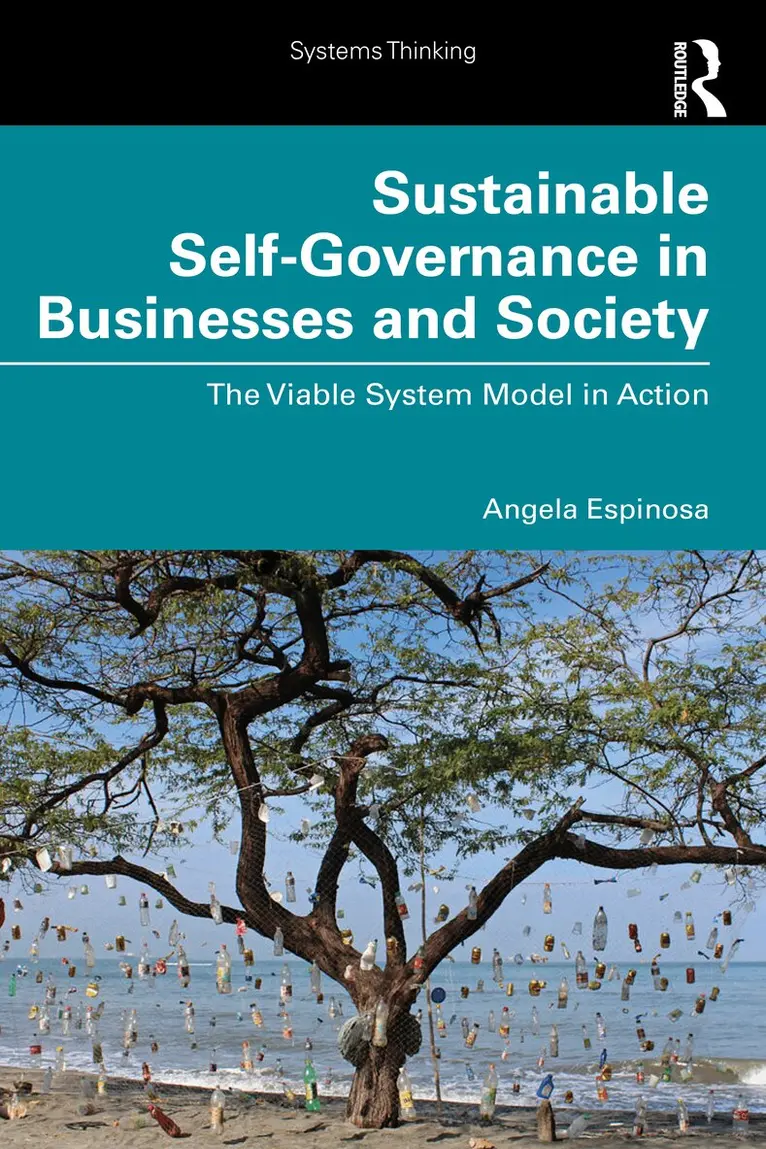
    Sustainable Self-Governance in Businesses and Society

    The Viable System Model in Action

    AvAngela Espinosa

    Häftad, Engelska, 2022

    Del i serien Systems Thinking

    542 kr

    Beställningsvara. Skickas inom 10-15 vardagar. Fri frakt över 249 kr.

    Fler format och utgåvor

    E-bok

    639 kr

    E-bok

    639 kr

    Inbunden

    2 117 kr

    Beskrivning

    Sustainable Self-Governance in Businesses and Society offers a sound introduction to Stafford Beer’s Viable System Model (VSM) and clarifies its relevance to support organisational sustainability and self-governance. While the VSM has been known since the early 1980s, it hasn’t been always easy to understand and to apply. It explains the self-transformation methodology to analyse the way organisations manage (or not) their complexity and govern themselves. The work is supported by multiple examples of application in organisations of all scales – from small to multi-national corporations and from organised social networks to communities and national organisations. It clarifies the relevance of Beer’s theory to support systemic learning and change in organisations, and to coach them to self-organise and self-govern. Readers interested in further understanding insights from complex systems and cybernetics theories for designing and transforming organisations will benefit from this book, as it works to offer very detailed insights on how to put the VSM theory into practice. It clarifies how it improves adaptive capabilities, agile and self-regulated structures, more capable of fully implementing corporate sustainability strategies and self-governing themselves. The chapters provide key reading for managers, consultants, practitioners, and post-graduate students working in organisational transformation, governance, and sustainability.

    Produktinformation

    • Utgivningsdatum:2022-12-19
    • Mått:156 x 234 x 20 mm
    • Vikt:1 320 g
    • Format:Häftad
    • Språk:Engelska
    • Serie:Systems Thinking
    • Antal sidor:286
    • Förlag:Taylor & Francis Ltd
    • ISBN:9781032354972

    Utforska kategorier

    • Nationalekonomi inom Ekonomi och Ledarskap
    • Ledarskap och motivation inom Ekonomi och Ledarskap
    • Projektledning inom Ekonomi och Ledarskap

    Mer om författaren

    Angela Espinosa is Emeritus Fellow at Hull University Business School, University of Hull, UK.

    Recensioner i media

    "Lots of people have been waiting for this book. Angela Espinosa is a noted authority on organisational cybernetics and worked closely with Stafford Beer. Her work deepens our understanding of the ‘viable system model’ and offers significant insight into how best to use it in practice."- Professor Michael C. Jackson, OBE"It is a pleasure to recommend this book that brings multiple applications of the Viable Systems Model (sometimes combined with other systems approaches) to practical problems in society. Too often, new methodologies remain within academia and their potential goes unrealized but this book gives numerous examples of work that combines an empathetic approach to people trying to make their institutions work while maintaining the rigor of the science behind them."- Dr. Allena Leonard, Cybernetician, Director Team Syntegrity International, President Metaphorum. Former President of the American Society for Cybernetics and the International Society for the Systems Sciences"The functioning of our society depends strongly on the functioning of its organizations. Angela Espinosa's book, based on great application experience, shows in a practical way how to apply the Viable System Model so that we can finally make organizations work, however complex and dynamic their environment. A must read for all leaders dealing with organizational issues."- Dr. Martin Pfiffner, Board of Trustees Fondation Oroborus

    Innehållsförteckning

    • List of FiguresList of TablesPrefaceAcknowledgmentsList of AbbreviationsList of ContributorsIntroduction1. Towards Self-Governed Businesses and SocietiesSystems, Complexity, and Cybernetics SciencesOrganisational CyberneticsComplex Systems SciencesComplexification in the 21st CenturyUnderstanding Complexity (and Variety)What is Complexity and Variety?Organisational Elements (O, M, E)Ashby's Law of Requisite VarietyViability vs Complexity ManagementManaging Variety and LearningOrganisational Learning and DevelopmentManaging Complexity in OrganisationsWhy We Need to Evolve Towards Sustainable Self-Governed OrganisationsSummary2. Organisational Viability (and Sustainability)The Need for More Resilient Organisations and SocietiesWhat is a Viable and Sustainable (v&s) Organisation?The Physiological InspirationThe Viable System ModelSystem 1 (S1)System 2 (S2)System 3 (S3)S3: Generating SynergiesAligning Meta-Systemic and Operational ManagementComplementarity of S3 and S2 RolesThe Control DilemmaSystem 3* (S3*)System 4 (S4)System 5 (S5)The Recursive Viable System TheoremManaging Complexity: Organisational PrinciplesResponsible AutonomySelf-RegulationAdaptationSelf-GovernanceSustainable Self-GovernanceLeaving Behind Earlier Critics of the VSM3. A Methodology to Support Self-transformation Towards Viability and SustainabilityOn VSM MethodologiesDeveloping the Self-Transformation Methodology (STM)The Ontology of the ObserverThe STM: A Systemic Methodology to Facilitate Organisation LearningOn VSM EpistemologyThe Self-Transformation Methodology in a NutshellDesigning and Starting a v&s ProjectAgreements on Organisational IdentityRich Pictures - The Organisational LandscapeStatement of Organisational IdentityRecursive AnalysisVSM Preliminary DiagnosisMapping the Viable System of the System in FocusDoing a VSM Preliminary DiagnosisComplete VSM DiagnosisMapping v&s Roles and MechanismsIdentifying and Mapping Diagnostic IssuesAssessing System 1’s InteractionsThe Inside and Now (Systems 1, 2, and 3)The Outside and Then (Systems 3, 4, and 5)Aligning Strategy, Structure, and Information SystemsAligning Strategy and StructureStrategic Information ManagementSelf-Transformation Projects and PlanMonitoring and Assessing PerformanceTeam SyntegritySummary4. Towards More Resilient and Healthier Organisations and SocietiesOrganisational Health, Resilience, and Self-GovernanceEarly Alarms from the COVID-19 PandemicTowards More Resilient IndividualsRepresenting an Individual as a Viable (and Sustainable) SystemTowards More Viable and Sustainable IndividualsEarly Alarms to Businesses v&sTowards More Resilient BusinessesCase study – M*Clean (with A.C. Martinez)Towards More Resilient Health ProvidersPreliminary VSM Analysis of the NHS in EnglandVSM Diagnosis of a Surgery Unit in a Local English Health Trust (with J. Walker and K. Grover)Conclusions5. 'Fits like a Glove': The VSM for Supporting More Systemic Educational OrganisationsFrom Non-Systemic to Systemic Education and Educational InstitutionsWhat Is a Non-Systemic Approach to Education?Towards More Systemic Educational InstitutionsSelf-Transformation of ELF – The Whole Story (with Jon Walker and Vladimir Pop)Clarifying the School’s IdentityRecursive AnalysisVSM DiagnosisAligning Strategy, Structure, and Information SystemsSelf-Transformation Projects and PlanMonitoring and Assessing PerformanceReviewing Elf’s Self-TransformationDesigning TINTA, a Systemic Education Online Provider (with G. Ramirez)TINTA’s Approach to Systemic EducationAgreeing on TINTA’s IdentityRecursive Analysis - TINTA’s Primary ServicesDesigning TINTA’s Organisation with VSM CriteriaTINTA Coming to Life: First Self-AssessmentSystemic Education in Higher Education InstitutionsSystemic Management in Universities around the WorldMagdalena University (v&s) Case StudySelf-Transformation of Educational Institutions - Post-COVID-196. v&s in Organisational NetworksComplex Organisational Systems as Social NetworksThe Rise of Social Networks (21st Century)What is a v&s Network?Background Research on VSM and Social NetworksExample: A v&s Industrial NetworkDesigning a State-Owned Enterprise on a Complex Environment (with A. Al Hinai and J. Walker)Complexity Challenges to Design a National Broadband NetworkVSM Design of the OBCVSM DesignSocial Network AnalysisFive Years LaterRedesigning a Latin-American 2nd Generation Broadband Network (with M. Giraldo and J. Walker)The N2BN IdentityRecursive AnalysisVSM DiagnosisAligning Strategy and StructureDesigning Strategies for Supply Chain Integration at the UK Offshore Wind Industry (with Julija Danilova)Analysing SCI with the STMVSM FindingsSuggested Reorganisation StrategiesLearning from the ResearchDilemmas of Self-Governance in Organisational Networks7. Sustainable Self-GovernanceContemporary Approaches to GovernanceTraditional Approaches to GovernanceCollaborative Approaches to GovernanceSustainable Self-Governance (v&s)Towards Sustainable Self-GovernanceA Framework to Assess Sustainable Self-GovernanceExample: Sustainable Self-Governance in a Socio-Ecological SystemAssessing Self-Governance in an Indigenous Community in the Amazon (with C. Duque)Background on Their Governance StructuresVSM Analysis of Their Governance StructuresLearning from the v&s Project (by C. Duque)Sustainable Self-Governance in an Afro-Caribbean Community (with C. Duran)Past and Present of the Orika Community Council (OCC)Assessing Sustainable Self-Governance at OrikaLearning from the Case Study (by C. Duran)Conclusions8. Facilitating Systemic Change with the VSMSystemic Change: What It Is and How It Can Be DoneThe Cybersyn ProjectStrategic Information Management at the Colombian President’s Office (1990-1992)Re-Engineering the National Auditing Office (NAO) in ColombiaRedesigning the NAOThe Model of the StateImplementing the ‘Systemic Auditing Process’Learning from the ProjectMonitoring the Impact of National Programs to Reduce Poverty in ColombiaRedesigning the National School System (NSS) in ColombiaDeveloping the National Environmental System (NES) in ColombiaThe Relevance of Beers’ Legacy to Facilitate Systemic ChangeThe Need for Massive Systemic Changes to Improve Response to the COVID-19 Pandemic9. An Idea Whose Time Has ComeLessons on Using the VSM for Sustainable Self-GovernanceDeveloping VSM-Related Methodologies and ToolsVSM and MultimethodologyVSM and Team SyntegrityAddressing Traditional Criticisms to the VSMVSM Research LandscapeConclusionsIndex