• Fri frakt över 249 kr
  • •
  • Snabba leveranser
  • •
  • Billiga böcker
Kundservice

Du är på sajten för privatpersoner.

Företag, bibliotek eller offentlig verksamhet?

Du handlar på classic.bokus.com, där alla dina funktioner finns intakta.
Till classic.bokus.com
Bokus logotyp. Gå till startsidan.
  • Erbjudanden
  • Nyheter
  • Student
  • Topplistor
  • Barn & ungdom
  • Bokus Play
  • E-böcker
  • Pocketböcker
  • Spel & pussel

10% rabatt på allt med kod: NYSTART10 →

Sidfot

Mina sidor

    Hjälp

    • Kundservice
    • Vanliga frågor och svar
    • Frakt och leverans
    • Retur vid ångerrätt
    • Reklamera vara
    • Betalning
    • Köpvillkor
    • Allmänna villkor
    • Information om webbplatsens tillgänglighet

    Om Bokus

    • Om oss
    • Pressrum
    • För studenter
    • För företag
    • För bibliotek och offentlig verksamhet
    • För leverantörer
    • Hållbarhet

    Populärt

    • Aktuella erbjudanden
    • Presentkort
    • Studentlitteratur
    • Nya böcker
    • Topplistor
    • Signerade böcker
    • Engelska böcker

    Inspiration

    • Boktips
    • BookTok
    • Populära bokserier
    • Barnbokskaraktärer
    • Populära författare
    Logotyp för Bokus
    Följ oss på Facebook (extern länk)Följ oss på Instagram (extern länk)Följ oss på YouTube (extern länk)Följ oss på TikTok (extern länk)
    bokus @ CookiesAnpassa cookiesIntegritetspolicyKöpvillkor
    Till Citymail hemsida (extern länk)Till Budbee hemsida (extern länk)Till Postnord hemsida (extern länk)Till Schenker hemsida (extern länk)Till Early Bird hemsida (extern länk)Till Walleys hemsida (extern länk)
    1. Samhälle och politik
    2. Samhälle och kultur
    3. Kultur och medier
    4. Referensverk och tvärvetenskap

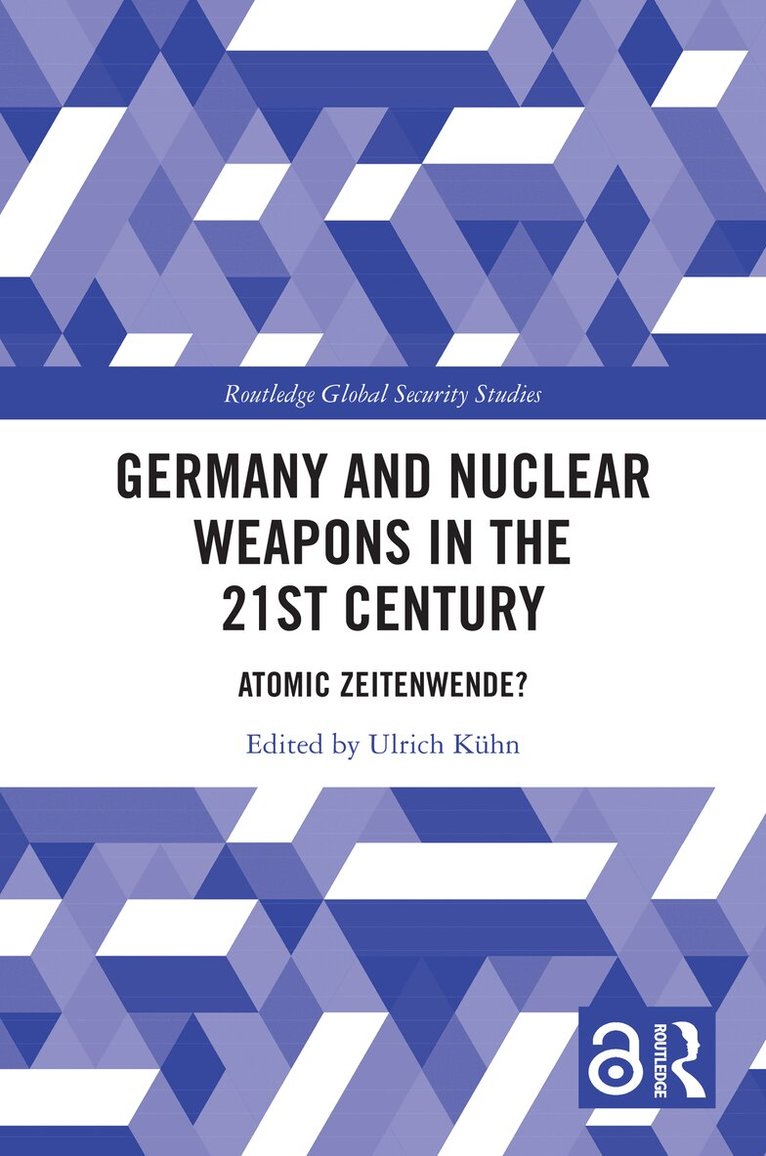
    Germany and Nuclear Weapons in the 21st Century

    Atomic Zeitenwende?

    AvUlrich Kühn

    Inbunden, Engelska, 2024

    Del i serien Routledge Global Security Studies

    2 421 kr

    Beställningsvara. Skickas inom 10-15 vardagar. Fri frakt över 249 kr.

    Beskrivning

    This book is the first scholarly book to take a comprehensive look at Germany’s nuclear weapons policies in the 21st century.German foreign and security policy is facing a profound reorientation. Great power competition between the United States and both a revanchist Russia and a rising China, the return of war and nuclear threats to Europe, and the emergence of new technologies all force Germany to adapt. German policymakers and scholars increasingly speak of a pivotal Zeitenwende, an epochal turning point in history. How does Germany adapt its nuclear policies to these changing conditions?The volume brings together internationally renowned nuclear scholars and policy analysts from Germany and abroad. Focussing on German nuclear deterrence, arms control and disarmament as well as nonproliferation policies, the contributors assess how German leaders have navigated continuity and change, domestically and abroad. The volume concludes that Germany remains bound by dependence on the United States and its own conservatism. Within these parameters, German leaders have adapted slowly to change and continue to balance seemingly contradictory deterrence and disarmament goals.This book will be of much interest to students of nuclear proliferation, security studies, German politics and International Relations, as well as policymakers.

    Produktinformation

    • Utgivningsdatum:2024-03-12
    • Mått:156 x 234 x 26 mm
    • Vikt:840 g
    • Format:Inbunden
    • Språk:Engelska
    • Serie:Routledge Global Security Studies
    • Antal sidor:324
    • Förlag:Taylor & Francis Ltd
    • ISBN:9781032376394

    Utforska kategorier

    • Referensverk och tvärvetenskap inom Samhälle och politik
    • Kärnvapen inom Samhälle och politik
    • Internationella relationer inom Samhälle och politik

    Mer om författaren

    Ulrich Kühn is Director of the Arms Control and Emerging Technologies Program at the Institute for Peace Research and Security Policy at the University of Hamburg, Germany, and a Nonresident Scholar with the Nuclear Policy Program of the Carnegie Endowment for International Peace in Washington, DC.

    Recensioner i media

    'Ulrich Kühn’s comprehensive volume covers Germany‘s complicated relationship with Russia, perceptions of U.S. credibility, and the value of being in a nuclear alliance. A must read for NATO policymakers and scholars of nuclear studies.'Heather Williams, Project on Nuclear Issues, Center for Strategic and International Studies, Washington, DC, USA'This timely volume fills a gap in research that existed for too long. How Germany, a vital U.S. ally, deals with the changing nature of nuclear weapons policies is crucial to understanding the challenges of the new nuclear age.'Tristan Volpe, Naval Postgraduate School, Monterey, CA, USA‘This volume, edited by a senior policy expert, assembles leading analysts to debate Germany’s strategic options, with particular attention to the level of leadership its fractious political parties might be willing and able to provide.’Andrew Moravcsik, Foreign Affairs, September/October 2024'Overall, this is a carefully edited, thoroughly researched and analytically rich assessment of German nuclear policies.'Hanns W. Maull, Survival, 66:6, December 2024

    Innehållsförteckning

    • Foreword Introduction Part I: Sources of Change 1. Germany and Four Futures 2. The End of Civilian Power: Russia's War Is Changing German Policy 3. Technological Change, Innovation, and German National Security Part II: Deterrence 4. Nuclear Zeitenwende(n): Germany and NATO’s Nuclear Posture 5. German Musings about a Franco-German or German Bomb 6. German Public Opinion on Nuclear Weapons: Before and after Russia’s Invasion of Ukraine Part III: Arms Control and Disarmament 7. German Efforts to Halt the Disintegration of Nuclear and Conventional Arms Control 8. The Greens and Nuclear Weapons: Torn Between Disarmament Aspirations and Pragmatism 9. The Treaty on the Prohibition of Nuclear Weapons: Changing Disarmament Discourses in Germany? Part IV: Nonproliferation 10. Germany and the Nonproliferation Treaty 11. Germany and the Puzzling End of Nuclear Latency 12. Germany’s Role in the Success and Failure of the Iran Nuclear Deal Of Dependence and Conservatism: Conclusions for German Nuclear Policies in the 21st Century