• Fri frakt över 249 kr
  • •
  • Snabba leveranser
  • •
  • Billiga böcker
Kundservice

Du är på sajten för privatpersoner.

Företag, bibliotek eller offentlig verksamhet?

Du handlar på classic.bokus.com, där alla dina funktioner finns intakta.
Till classic.bokus.com
Bokus logotyp. Gå till startsidan.
  • Erbjudanden
  • Nyheter
  • Student
  • Topplistor
  • Barn & ungdom
  • Bokus Play
  • E-böcker
  • Pocketböcker
  • Spel & pussel

10% rabatt på allt med kod: NYSTART10 →

Sidfot

Mina sidor

    Hjälp

    • Kundservice
    • Vanliga frågor och svar
    • Frakt och leverans
    • Retur vid ångerrätt
    • Reklamera vara
    • Betalning
    • Köpvillkor
    • Allmänna villkor
    • Information om webbplatsens tillgänglighet

    Om Bokus

    • Om oss
    • Pressrum
    • För studenter
    • För företag
    • För bibliotek och offentlig verksamhet
    • För leverantörer
    • Hållbarhet

    Populärt

    • Aktuella erbjudanden
    • Presentkort
    • Studentlitteratur
    • Nya böcker
    • Topplistor
    • Signerade böcker
    • Engelska böcker

    Inspiration

    • Boktips
    • BookTok
    • Populära bokserier
    • Barnbokskaraktärer
    • Populära författare
    Logotyp för Bokus
    Följ oss på Facebook (extern länk)Följ oss på Instagram (extern länk)Följ oss på YouTube (extern länk)Följ oss på TikTok (extern länk)
    bokus @ CookiesAnpassa cookiesIntegritetspolicyKöpvillkor
    Till Citymail hemsida (extern länk)Till Budbee hemsida (extern länk)Till Postnord hemsida (extern länk)Till Schenker hemsida (extern länk)Till Early Bird hemsida (extern länk)Till Walleys hemsida (extern länk)
    1. Naturvetenskap och teknik
    2. Geovetenskap
    3. Miljövetenskap och miljöpolitik

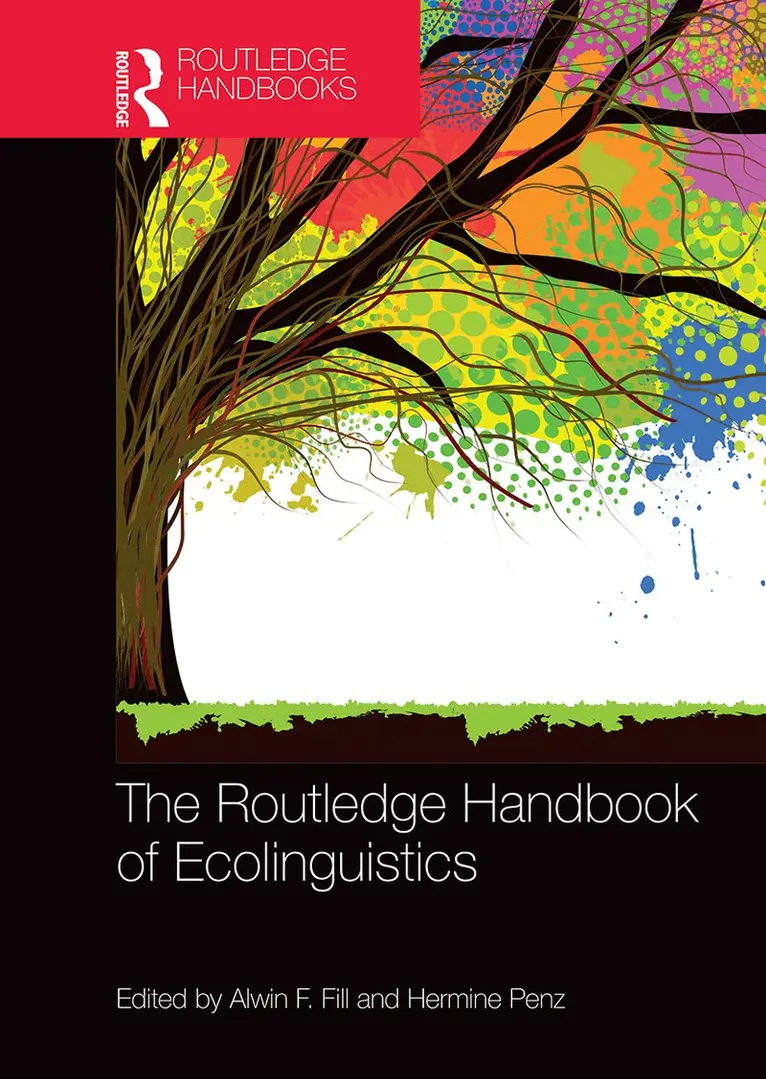
    Routledge Handbook of Ecolinguistics

    AvAlwin F. Fill,Hermine Penz

    Häftad, Engelska, 2022

    Del i serien Routledge Handbooks in Linguistics

    737 kr

    Beställningsvara. Skickas inom 10-15 vardagar. Fri frakt över 249 kr.

    Beskrivning

    The Routledge Handbook of Ecolinguistics is the first comprehensive exploration into the field of ecolinguistics, also known as language ecology. Organized into three sections that treat the different topic areas of ecolinguistics, the Handbook begins with chapters on language diversity, language minorities and language endangerment, with authors providing insight into the link between the loss of languages and the loss of species. It continues with an overview of the role of language and discourse in describing, concealing, and helping to solve environmental problems. With discussions on new orientations and topics for further exploration in the field, chapters in the last section show ecolinguistics as a pacesetter into a new scientific age. This Handbook is an excellent resource for students and researchers interested in language and the environment, language contact, and beyond.

    Produktinformation

    • Utgivningsdatum:2022-08-29
    • Mått:174 x 246 x 30 mm
    • Vikt:940 g
    • Format:Häftad
    • Språk:Engelska
    • Serie:Routledge Handbooks in Linguistics
    • Antal sidor:476
    • Förlag:Taylor & Francis Ltd
    • ISBN:9781032402123

    Utforska kategorier

    • Miljövetenskap och miljöpolitik inom Naturvetenskap och teknik
    • Språkvetenskap och lingvistik inom Språk och ordböcker
    • Språk: referensverk och allmänt inom Språk och ordböcker

    Mer om författaren

    Alwin F. Fill is Professor Emeritus of English Linguistics at the University of Graz, Austria. His main research areas are Ecolinguistics, Impact Linguistics, Language and Suspense and Linguistics for Kids.Hermine Penz is Associate Professor of English Linguistics at the University of Graz, Austria. Her main research interests lie in the fields of pragmatics and discourse, intercultural communication, and language and ecology. She is the Special Issues editor of the journal Pragmatics and Society.

    Recensioner i media

    "We live in the world, and shape the world we live in, through the language we use. Ecolinguistics studies this relation between language and the world. Ecolinguists describe, but also critique, forms of language that create but may also threaten environments and languages. This book brings together the best in ecolinguistic scholarship and contains chapters that merge linguistic analysis with reflections on science, politics, philosophy and ethics. Anybody trying to understand our future life on this planet should find something interesting to read in this collection."Brigitte Nerlich, University of Nottingham, UK

    Innehållsförteckning

    • PART I: Languages in their social and individual environmentA. Linguistic and biological diversity: minority and majority languages, endangermentand revival1. Biological diversity and language diversity: parallels and differencesTove Skutnabb-Kangas and David Harmon2. The ecology of language contact: minority and majority languagesAlbert Bastardas-Boada3. Language endangerment and language death: the future of language diversitySuzanne Romaine4. The Economy of language ecology: economic aspects of minority languagesAlwin F. Fill5. Language Evolution from an ecological perspectiveSalikoko Mufwene6. Ecological aspects of language planningRobert B. KaplanB. Language Contact (bilingualism and multilingualism) and contact languages7. Individual and societal bilingualism and multilingualismSabine Ehrhart8. Linguistic imperialism and the consequences for language ecologyRobert Phillipson and Tove Skutnabb-Kangas9. What creolistics can learn from ecolinguisticsPeter Mühlhäusler10. Ecosystemic LinguisticsHildo Honorio do Couto PART II: The role of language concerning the environment (biological and ecological)A. The role of language in creating, aggravating and solving environmental problems11. Positive discourse analysis: re-thinking human ecological relationshipsArran Stibbe12. Using visual images for showing environmental problemsAnders Hansen13. Investigating texts about environmental degradation using critical discourse analysis and corpus linguistic techniquesRichard Alexander14. The pragmatics of metaphor: an ecological viewJacob L. MeyB. How environmental topics appear in texts and in the media: ecological andunecological discourse15. Lexicogrammar and EcolinguisticsAndrew Goatly16. The treatment of environmental topics in the language of politicsMai Kuha17. Eco-advertising: the linguistics and semiotics of green(-washed) persuasionHartmut Stöckl and Sonja Molnar18. ‘Global warming’ or ‘climate change’?Hermine Penz19. Media reports about natural disasters: an ecolinguistic perspectiveMartin DöringC. How do language and discourse transport ecological and unecological ideas?20. The discursive representation of animalsGuy Cook and Alison Sealey21. Euphemisms for killing animals and for other forms of their useWilhelm Trampe22. Overcoming anthropocentrism with anthropomorphic and physiocentric uses of language? Reinhard Heuberger23. Ecolinguistics and place-names: interaction between humans and natureJoshua NashPART III: Philosophical and transdisciplinary ecolinguistics24. The ethics of scientific language about the environmentBrendon Larson25. Language, ecolinguistics and educationGeorge N. Jacobs26. The micro-ecological grounding of language: how linguistic symbolicity extends andtransforms human ecologySune V. Steffensen27. Transdisciplinary linguistics: ecolinguistics as a pace-maker into a new scientific agePeter Finke28. Religion, language and ecologyTodd LeVasseurPART IV: New orientations and future directions in ecolinguistics29. Ecolinguistics in the 21st century: new orientations and future directionsAlwin F. Fill and Hermine Penz