• Fri frakt över 249 kr
  • •
  • Snabba leveranser
  • •
  • Billiga böcker
Kundservice

Du är på sajten för privatpersoner.

Företag, bibliotek eller offentlig verksamhet?

Du handlar på classic.bokus.com, där alla dina funktioner finns intakta.
Till classic.bokus.com
Bokus logotyp. Gå till startsidan.
  • Erbjudanden
  • Nyheter
  • Student
  • Topplistor
  • Barn & ungdom
  • Bokus Play
  • E-böcker
  • Pocketböcker
  • Spel & pussel

10% rabatt på allt med kod: NYSTART10 →

Sidfot

Mina sidor

    Hjälp

    • Kundservice
    • Vanliga frågor och svar
    • Frakt och leverans
    • Retur vid ångerrätt
    • Reklamera vara
    • Betalning
    • Köpvillkor
    • Allmänna villkor
    • Information om webbplatsens tillgänglighet

    Om Bokus

    • Om oss
    • Pressrum
    • För studenter
    • För företag
    • För bibliotek och offentlig verksamhet
    • För leverantörer
    • Hållbarhet

    Populärt

    • Aktuella erbjudanden
    • Presentkort
    • Studentlitteratur
    • Nya böcker
    • Topplistor
    • Signerade böcker
    • Engelska böcker

    Inspiration

    • Boktips
    • BookTok
    • Populära bokserier
    • Barnbokskaraktärer
    • Populära författare
    Logotyp för Bokus
    Följ oss på Facebook (extern länk)Följ oss på Instagram (extern länk)Följ oss på YouTube (extern länk)Följ oss på TikTok (extern länk)
    bokus @ CookiesAnpassa cookiesIntegritetspolicyKöpvillkor
    Till Citymail hemsida (extern länk)Till Budbee hemsida (extern länk)Till Postnord hemsida (extern länk)Till Schenker hemsida (extern länk)Till Early Bird hemsida (extern länk)Till Walleys hemsida (extern länk)
    1. Historia och arkeologi
    2. Historia
    3. Historia: särskilda händelser och ämnen
    4. Kolonialism och imperialism

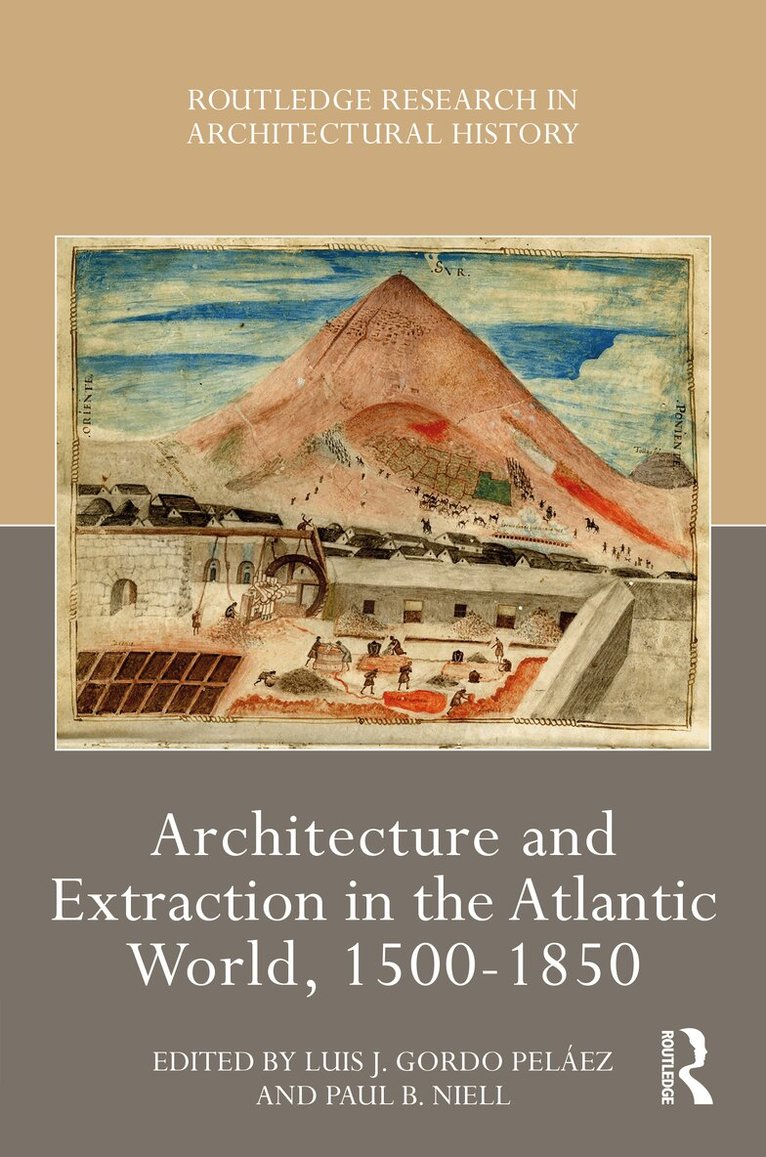
    Architecture and Extraction in the Atlantic World, 1500-1850

    AvLuis J. Gordo Peláez,Paul B. Niell

    Häftad, Engelska, 2025

    Del i serien Routledge Research in Architectural History

    701 kr

    Beställningsvara. Skickas inom 10-15 vardagar. Fri frakt över 249 kr.

    Beskrivning

    This edited collection examines the development of Atlantic World architecture after 1492. In particular, the chapters explore the landscapes of extraction as material networks that brought people, space, and labor together in harvesting raw materials, cultivating agriculture for export-level profits, and circulating raw materials and commodities in Europe, Africa, and the Americas from 1500 to 1850.This book argues that histories of extraction remain incomplete without careful attention to the social, physical, and mental nexus that is architecture, just as architecture’s development in the last 500 years cannot be adequately comprehended without attention to empire, extraction, colonialism, and the rise of what Immanuel Wallerstein has called the world system. This world system was possible because of built environments that enabled resource extraction, transport of raw materials, circulation of commodities, and enactment of power relations in the struggle between capital and labor. Separated into three sections: Harvesting the Environment, Cultivating Profit, and Circulating Commodities: Networks and Infrastructures, this volume covers a wide range of geographies, from England to South America, from Africa to South Carolina. The book aims to decenter Eurocentric approaches to architectural history to expose the global circulation of ideas, things, commodities, and people that constituted the architecture of extraction in the Atlantic World. In focusing on extraction, we aim to recover histories of labor exploitation and racialized oppression of interest to the global community.The book will be of interest to researchers and students of architectural history, geography, urban and labor history, literary studies, historic preservation, and colonial studies.

    Produktinformation

    • Utgivningsdatum:2025-05-27
    • Mått:156 x 234 x 16 mm
    • Vikt:460 g
    • Format:Häftad
    • Språk:Engelska
    • Serie:Routledge Research in Architectural History
    • Antal sidor:262
    • Förlag:Taylor & Francis Ltd
    • ISBN:9781032434575

    Utforska kategorier

    • Kolonialism och imperialism inom Historia och arkeologi
    • Arkitekturhistoria inom Kultur
    • Arkitektur inom Kultur

    Mer om författaren

    Luis Gordo Peláez is Assistant Professor in the Department of Art, Design and Art History at California State University, Fresno. His work examines the urban reform projects and public works agenda of the late colonial Mexican cities, particularly in Bourbon Guanajuato and the region of El Bajío.Paul Niell is Associate Professor in the Department of Art History at Florida State University. His research focuses on the art, architecture, and material culture of the Hispanophone Caribbean in the late eighteenth and early nineteenth centuries.

    Innehållsförteckning

    • List of figuresList of contributors Introduction: Building for Atlantic Extraction.Luis Gordo-Peláez and Paul NiellChapter 1. Early Modern Mining Exchanges across EmpiresJanna IsraelChapter 2. Purchasing a Poisoned City: Indigenous Andeans and Urban Space in Sixteenth-Century HuancavelicaMark P. DriesChapter 3. New Functions of Mining Heritage in MexicoMiguel Ángel Sorroche CuervaChapter 4. The Ice House: Industry and Ritual in the Nineteenth-Century Frozen Water TradeLouisa IarocciChapter 5. Contesting the Colonial Illu: Sealing and Social Change in Kalaallit Architecture, 1750-1860Kirstine Møller and Bart Pushaw Chapter 6. From Ireland to Barbados: Architecture of Extraction in British ColoniesLee MorrisseyChapter 7. Whiteness Among People of Color at Atlantic World Extraction Sites: A Comparative Study of the Indigenous Diamond Hill and Black Melrose PlantationsBarry L. StiefelChapter 8. Absentee Architecture: Remote Building Across the British Atlantic, c. 1800Jonah RowenChapter 9. Space, Science, and Slavery in Havana’s Botanical GardenLee SessionsChapter 10. The World’s Greatest Depot: West India Docks, Warehouses, and FlexibilityGeorgios EftaxiopoulosChapter 11. Choice Spirits or the Alloy of Slavery: Samuel Blodget’s First Bank of the United StatesPeter MinoshChapter 12. Castle Brew: Dreams Realized and Dreams DevastatedCourtnay MicotsChapter 13. Architecture of Indigo Dye Extraction in the Eighteenth-Century Atlantic Context: The Case of Charleston and Rio de JaneiroAlexander Lima ReisChapter 14. From Caravans to Railroads: Trails, Architecture, and Urban Networks in Rio Pardo’s Eighteenth- and Nineteenth-Century Landscapes of ExtractionRafael Augusto Silva Ferreira and Renata Baesso PereiraBibliographyIndex