• Fri frakt över 249 kr
  • •
  • Snabba leveranser
  • •
  • Billiga böcker
Kundservice

Du är på sajten för privatpersoner.

Företag, bibliotek eller offentlig verksamhet?

Du handlar på classic.bokus.com, där alla dina funktioner finns intakta.
Till classic.bokus.com
Bokus logotyp. Gå till startsidan.
  • Erbjudanden
  • Nyheter
  • Student
  • Topplistor
  • Barn & ungdom
  • Bokus Play
  • E-böcker
  • Pocketböcker
  • Spel & pussel

10% rabatt på allt med kod NYSTART10 →

Sidfot

Mina sidor

    Hjälp

    • Kundservice
    • Vanliga frågor och svar
    • Frakt och leverans
    • Retur vid ångerrätt
    • Reklamera vara
    • Betalning
    • Köpvillkor
    • Allmänna villkor
    • Information om webbplatsens tillgänglighet

    Om Bokus

    • Om oss
    • Pressrum
    • För studenter
    • För företag
    • För bibliotek och offentlig verksamhet
    • För leverantörer
    • Hållbarhet

    Populärt

    • Aktuella erbjudanden
    • Presentkort
    • Studentlitteratur
    • Nya böcker
    • Topplistor
    • Signerade böcker
    • Engelska böcker

    Inspiration

    • Boktips
    • BookTok
    • Populära bokserier
    • Barnbokskaraktärer
    • Populära författare
    Logotyp för Bokus
    Följ oss på Facebook (extern länk)Följ oss på Instagram (extern länk)Följ oss på YouTube (extern länk)Följ oss på TikTok (extern länk)
    bokus @ CookiesAnpassa cookiesIntegritetspolicyKöpvillkor
    Till Citymail hemsida (extern länk)Till Budbee hemsida (extern länk)Till Postnord hemsida (extern länk)Till Schenker hemsida (extern länk)Till Early Bird hemsida (extern länk)Till Walleys hemsida (extern länk)
    1. Kultur
    2. Konstböcker
    3. Konstteori

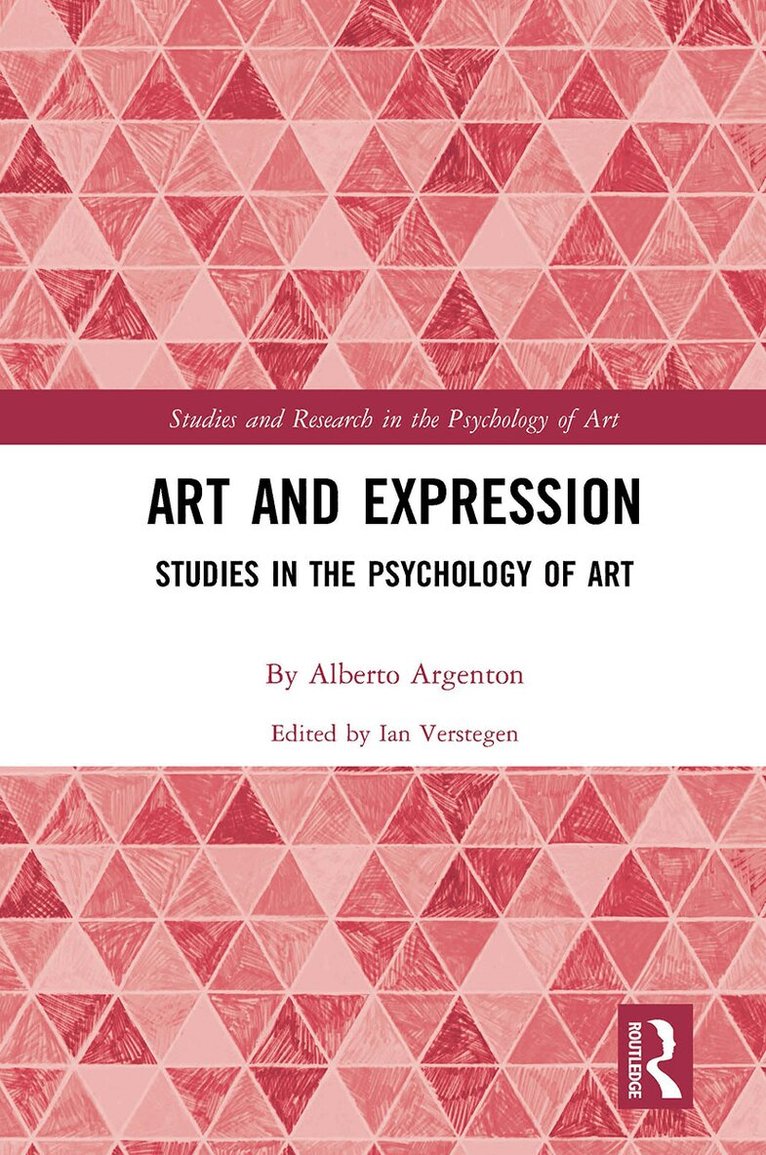
    Art and Expression

    Studies in the Psychology of Art

    AvAlberto Argenton,Ian Verstegen

    Häftad, Engelska, 2023

    Del i serien Studies and Research in the Psychology of Art

    644 kr

    Beställningsvara. Skickas inom 10-15 vardagar. Fri frakt över 249 kr.

    Fler format och utgåvor

    E-bok

    740 kr

    E-bok

    738 kr

    Inbunden

    2 495 kr

    Beskrivning

    Perception of expression distinguishes our cognitive activity in a pervasive, significant and peculiar way, and manifests itself paradigmatically in the vast world of artistic production.Art and Expression examines the cognitive processes involved in artistic production, aesthetic reception, understanding and enjoyment. Using a phenomenological theoretical and methodological framework, developed by Rudolf Arnheim and other important scholars interested in expressive media, Alberto Argenton considers a wide range of artistic works, which span the whole arc of the history of western graphic and pictorial art. Argenton analyses the representational strategies of a dynamic and expressive character that can be reduced to basic aspects of perception, like obliqueness, amodal completion, and the bilateral function of contour, giving new directions relative to the functioning of cognitive activity.Art and Expression is a monument to the fruitful collaboration of art history and psychology, and Argenton has taken great care to construct a meaningful psychological approach to the arts based also on a knowledge of pictorial genres that allows him to systematically situate the works under scrutiny. Art and Expression is an essential resource for postgraduate researchers and scholars interested in visual perception, art, and gestalt psychology.

    Produktinformation

    • Utgivningsdatum:2023-01-21
    • Mått:156 x 234 x 13 mm
    • Vikt:453 g
    • Format:Häftad
    • Språk:Engelska
    • Serie:Studies and Research in the Psychology of Art
    • Antal sidor:234
    • Förlag:Taylor & Francis Ltd
    • ISBN:9781032475530

    Utforska kategorier

    • Konstteori inom Kultur
    • Kognitiv psykologi inom Psykologi och pedagogik

    Mer om författaren

    Alberto Argenton was Professor of psychology of art in the Faculty of Psychology at University of Padova until 2014 and passed away in 2015. He is recognized as one of the preeminent scholars of the psychology of art in Italy. He authored numerous scientific papers and books, and was also a skilful artist, conducting his pictorial research with the same rigour he adopted for his scientific work (www.albertoargenton.it).Ian Verstegen is the Associate Director of Visual Studies at the University of Pennsylvania, where his current teaching is focused on the image and its special characteristics.

    Innehållsförteckning

    • Editor’s IntroductionIan Verstegen Introduction to the Italian Edition Part One: Expression and the Dynamics of Perception Chapter 1. Expression and Expressive Qualities 1.1. The study of Expression in Psychology 1.1.1. The Deficiency Disease 1.1.2. The Phenomenological Method 1.1.2.1. Inter-observation 1.2. For a Definition of Expression 1.2.1. Expression and Physiognomic Perception 1.2.2. The Genetic and Phenomenal Primacy of Expressive Qualities 1.2.3. Emotive Determinism 1.2.4. The Lexicon of Expression 1.2.5. The Essential Traits of Expression 1.2.6. Isomorphism and Figurative Thought References Chapter 2. The Dynamics of Perception and Expressive Qualities 2.1. The Construct of Dynamics 2.2. Arnheim’s Conception of the Dynamics of Visual Perception 2.2.1. Vectors, Forces, Tensions, and Dynamics of Perception 2.2.1.1. Physical Forces and Perceptual Forces 2.2.2. Dynamics is the Vehicle of Expression 2.2.2.1. An Example Taken from Art 2.3. Dynamics, Expression and Graphic and Pictorial Language 2.3.1. A Comparison of Two Paintings 2.4. The Two ‘Guiding Values’ of Art and Behaviour 2.5. Representational Strategies of the Graphic-Pictorial Medium References Part Two: Thematic Studies Chapter 3. The Swing Effect: A Little-studied Perceptual Phenomenon 3.1. Pictorial Perception and Line Drawing 3.2. Contour Rivalry 3.2.1. The Visual Tug-of-War 3.3. Perceptual Conditions of the Swing Effect 3.3.1. Differences between the Swing Effect and other Cases of Percept Alternation 3.4. The Dynamic Aspects of the Swing Effect 3.5. The Presence of the Swing Effect in Graphic and Pictorial Representation 3.5.1. Trademarks 3.5.2. Symbols 3.5.3. Decoration 3.5.4. Enamels and Painting on Glass 3.5.5. Cubism and Pablo Picasso 3.5.6. A Unique Case: Sano di Pietro 3.6. The Nature and Properties of the Swing Effect References Chapter 4. Amodal Completion and Pictorial Representation 4.1. Amodal Completion 4.2. Perceptual Completion 4.3. The Structural Conditions, Laws and Psychological Principles of Completion 4.4. Amodal Completion between Seeing and Thinking 4.5. Amodal Completion, Dynamics and Expression 4.6. "Completion by Frame" 4.7. Amodal Completion and Cognition References Chapter 5. The Dynamics of Obliqueness: Windmills and Timepieces 5.1. Obliqueness in Perception and in Pictorial Representation 5.1.1. The Local Use of Obliqueness 5.2. Two Studies on Local Obliqueness 5.3. The Study of the Pictorial Representation of Windmills 5.3.1. Windmills 5.3.2. The Pictorial Genre 5.3.3. Stylistic Characterization 5.3.4. The Premises of the Research 5.3.4.1. Windmill Illusion 5.4. Hypothesis, Aims and Structure of the Research 5.4.1. Research Results 5.4.1.1. The 1400s, 1500s and the F