• Fri frakt över 249 kr
  • •
  • Snabba leveranser
  • •
  • Billiga böcker
Kundservice

Du är på sajten för privatpersoner.

Företag, bibliotek eller offentlig verksamhet?

Du handlar på classic.bokus.com, där alla dina funktioner finns intakta.
Till classic.bokus.com
Bokus logotyp. Gå till startsidan.
  • Erbjudanden
  • Nyheter
  • Student
  • Topplistor
  • Barn & ungdom
  • Bokus Play
  • E-böcker
  • Pocketböcker
  • Spel & pussel

10% rabatt på allt med kod: NYSTART10 →

Sidfot

Mina sidor

    Hjälp

    • Kundservice
    • Vanliga frågor och svar
    • Frakt och leverans
    • Retur vid ångerrätt
    • Reklamera vara
    • Betalning
    • Köpvillkor
    • Allmänna villkor
    • Information om webbplatsens tillgänglighet

    Om Bokus

    • Om oss
    • Pressrum
    • För studenter
    • För företag
    • För bibliotek och offentlig verksamhet
    • För leverantörer
    • Hållbarhet

    Populärt

    • Aktuella erbjudanden
    • Presentkort
    • Studentlitteratur
    • Nya böcker
    • Topplistor
    • Signerade böcker
    • Engelska böcker

    Inspiration

    • Boktips
    • BookTok
    • Populära bokserier
    • Barnbokskaraktärer
    • Populära författare
    Logotyp för Bokus
    Följ oss på Facebook (extern länk)Följ oss på Instagram (extern länk)Följ oss på YouTube (extern länk)Följ oss på TikTok (extern länk)
    bokus @ CookiesAnpassa cookiesIntegritetspolicyKöpvillkor
    Till Citymail hemsida (extern länk)Till Budbee hemsida (extern länk)Till Postnord hemsida (extern länk)Till Schenker hemsida (extern länk)Till Early Bird hemsida (extern länk)Till Walleys hemsida (extern länk)
    1. Naturvetenskap och teknik
    2. Teknik och industri
    3. Agronomi och lantbruk
    4. Djurhållning

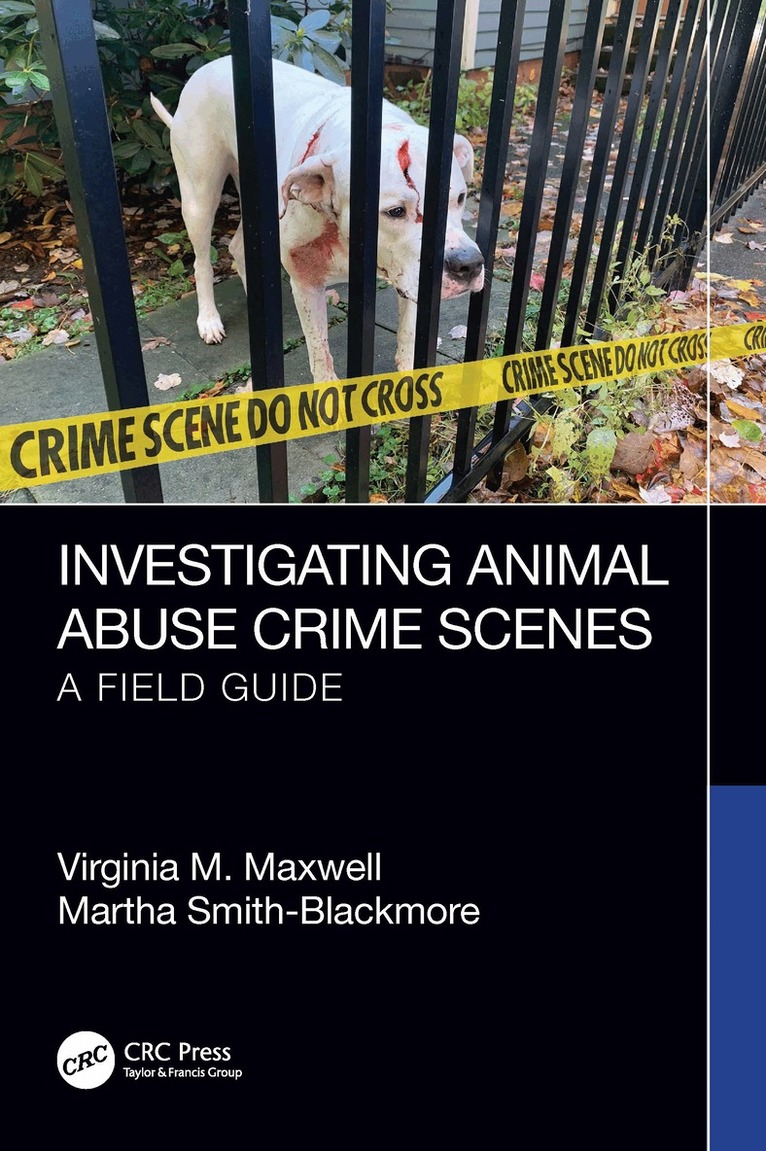
    Investigating Animal Abuse Crime Scenes

    A Field Guide

    AvVirginia M. Maxwell,Martha Smith-Blackmore

    Häftad, Engelska, 2023

    903 kr

    Beställningsvara. Skickas inom 10-15 vardagar. Fri frakt över 249 kr.

    Fler format och utgåvor

    Inbunden

    2 493 kr

    Beskrivning

    Animal abuse is well established as a gateway crime linked to other forms of antisocial behaviors and broader criminal violence. Increased awareness of the link between animal abuse and criminal behavior has led many states to mandate cross-reporting between agencies overseeing the welfare of families and of animals. Investigating Animal Abuse Crime Scenes: A Field Guide is designed for first responders—such as animal control officers and police officers—as well as forensic scientists and other criminal justice professionals who are tasked with processing and analyzing animal crime scenes and evidence. The book serves equally as a useful resource for those in the field and laboratory, in addition to those professionals who are further along in the investigative and judicial process. The book addresses the key areas that must be considered in a thorough investigation of an animal abuse crime. This starts with general crime scene procedures that include securing and releasing the scene, search and seizure issues, chain of custody, documentation, searching for evidence and the use of enhancement technologies. While many readers may already be familiar with such concepts, they are addressed in the context of unique factors relating to animals and animal abuse cases. The book then addresses the recognition, collection and preservation of different types of evidence that may be located at animal abuse scenes, with examples of the most important evidence for specific case types.The critical role of the veterinarian, and the key aspects of veterinary forensic medicine, receives in-depth consideration. This includes issues such as examining animal victims of crime; determining cause of injury or death through the forensic clinical exam or necropsy; and techniques for evidence documentation, collection, and preservation. The physical and emotional abuse of animals is outlined throughout a series of chapters focused on specific types of animal abuse. Finally, report writing and testimony, from the perspectives of both the crime scene investigator and forensic veterinarian, are addressed. Further, three appendices provide useful checklists and templates for all animal abuse crime scene responders and veterinarians.Investigating Animal Abuse Crime Scenes fills the growing need for a handy, comprehensive field reference that specifically focuses on the crime scene processing, investigation, analysis of evidence, and the subsequent adjudication of animal abuse cases within the court system.

    Produktinformation

    • Utgivningsdatum:2023-07-18
    • Mått:156 x 234 x 21 mm
    • Vikt:737 g
    • Format:Häftad
    • Språk:Engelska
    • Antal sidor:380
    • Förlag:Taylor & Francis Ltd
    • ISBN:9781032482651

    Utforska kategorier

    • Djurhållning inom Naturvetenskap och teknik
    • Veterinärmedicin: allmänt inom Medicin
    • Sociala och etiska frågor inom Samhälle och politik

    Mer om författaren

    Virginia Maxwell is Professor in the Forensic Science Department at the University of New Haven. She has over 30 years of experience in Forensic Science as both a practitioner in the State of Connecticut Forensic Science Laboratory and at the University of New Haven. As a practitioner Dr Maxwell specialized in trace evidence, examining cases ranging from property crimes to multiple homicides; she has provided expert testimony in criminal cases at both the state and federal level. Dr. Maxwell is the director of the MS Forensic Science and Assistant Chair of the Forensic Science Department. She teaches Forensic Investigation of Animal Cruelty and has created a graduate certificate in Animal Cruelty Investigation at the University. She also teaches Law and Forensic Science at the University of Connecticut School of Law. As part of the Collaboration for investigation of Animal Maltreatment with the University of Connecticut School of Law she has developed Animal Cruelty Investigation trainings for animal control officers and other first responders. Dr Maxwell’s research focuses on physical evidence issues in animal cruelty investigations, environmental degradation of pattern evidence and farm animal welfare. Dr. Maxwell is a member of the American Academy of Forensic Science, the Animals and Society Institute, the Dairy Cattle Welfare Council and the American Dairy Science Association. She holds a Doctorate in Physical Chemistry from Oxford University and Bachelor of Science in Chemistry from Liverpool University. She has published extensively on crime scene investigation, physical evidence, and trace and transfer evidence. Martha Smith-Blackmore is a veterinarian and president of a private veterinary forensic consulting firm, Forensic Veterinary Investigations, LLC with over 25 years’ experience documenting cases of suspected animal cruelty and working as an expert witness in criminal and civil cases involving animals. Dr. Smith-Blackmore is a faculty fellow of the Center for Animals & Public Policy at the Cummings School of Veterinary Medicine at Tufts University in North Grafton, MA, teaching Veterinary Forensics, and Law & Veterinary Medicine. She is a recent Visiting Fellow in the Brooks McCormick Jr. Animal Law & Policy Program at Harvard Law School. She is an associate member of the American Academy of Forensic Sciences, the National Association of Medical Examiners, the National Sheriffs Association, and the International Association of Chiefs of Police, appointed to their forensic science committee. She serves on the National Institute of Science and Technologies Organization of Scientific Area Committees in the Crime Scene Investigation and Reconstruction subcommittee. Dr. Smith-Blackmore's forensics career has included working with a variety of police departments, animal control departments and attorneys. She trained for one year at the Office of Chief Medical Examiner in Boston. Dr. Smith has contributed to the prosecution of cases of simple animal abuse, intentional abuse & torture, animal sexual abuse and animal fighting. She also works as a consulting expert witness for defense teams throughout the country.

    Innehållsförteckning

    • Authors. Contributors. Acknowledgments. Introduction. 1 The Role of the Animal Control Officer and First Responders. 2 Securing the Scene and First Actions. 3 Search and Seizure. 4 Documenting the Crime Scene. 5 Locating Physical Evidence. 6 Collection and Packaging of Evidence. 7 Special Considerations for Crime Scene Investigation and Evidence Processing of Animal Abuse. 8 Large-Scale Animal Abuse Cases. 9 Animal Abuse Involving Large Animals. 10 Releasing the Scene. 11 Biological Evidence. 12 Trace and Chemical Evidence. 13 Pattern Evidence. 14 Drugs and Controlled Substances. 15 Digital Evidence. 16 The Forensic Veterinarian at the Crime Scene. 17 Physical Examination of Living Victims. 18 Postmortem Interval. 19 The Forensic Necropsy. 20 Nonaccidental Injury. 21 Neglect and Hoarding. 22 Animal Sexual Abuse. 23 Animal Fighting. 24 Forensic Toxicology. 25 Report Writing and Court Testimony. Appendix A: Evidence Collection and Packaging Summary. Appendix B: Nonveterinary Crime Scene Kit. Appendix C: Example Veterinary Forensic Forms. Index.