• Fri frakt över 249 kr
  • •
  • Snabba leveranser
  • •
  • Billiga böcker
Kundservice

Du är på sajten för privatpersoner.

Företag, bibliotek eller offentlig verksamhet?

Du handlar på classic.bokus.com, där alla dina funktioner finns intakta.
Till classic.bokus.com
Bokus logotyp. Gå till startsidan.
  • Erbjudanden
  • Student
  • Topplistor
  • Barn & ungdom
  • Bokus Play
  • E-böcker
  • Ljudböcker
  • Pocketböcker
  • Spel och pussel

Pocketfynda! Hundratals böcker för 49 kr/st →

Sidfot

Mina sidor

    Hjälp

    • Kundservice
    • Vanliga frågor och svar
    • Frakt och leverans
    • Retur vid ångerrätt
    • Reklamera vara
    • Betalning
    • Köpvillkor
    • Allmänna villkor
    • Information om webbplatsens tillgänglighet

    Om Bokus

    • Om oss
    • Pressrum
    • För studenter
    • För företag
    • För bibliotek och offentlig verksamhet
    • För leverantörer
    • Hållbarhet

    Populärt

    • Aktuella erbjudanden
    • Presentkort
    • Studentlitteratur
    • Nya böcker
    • Topplistor
    • Signerade böcker
    • Engelska böcker

    Inspiration

    • Boktips
    • BookTok
    • Barnbokskaraktärer
    • Populära författare
    Logotyp för Bokus
    Följ oss på Facebook (extern länk)Följ oss på Instagram (extern länk)Följ oss på YouTube (extern länk)Följ oss på TikTok (extern länk)
    bokus @ CookiesAnpassa cookiesIntegritetspolicyKöpvillkor
    Till Citymail hemsida (extern länk)Till Budbee hemsida (extern länk)Till Postnord hemsida (extern länk)Till Schenker hemsida (extern länk)Till Early Bird hemsida (extern länk)Till Walleys hemsida (extern länk)
    1. Ekonomi och Ledarskap
    2. Nationalekonomi

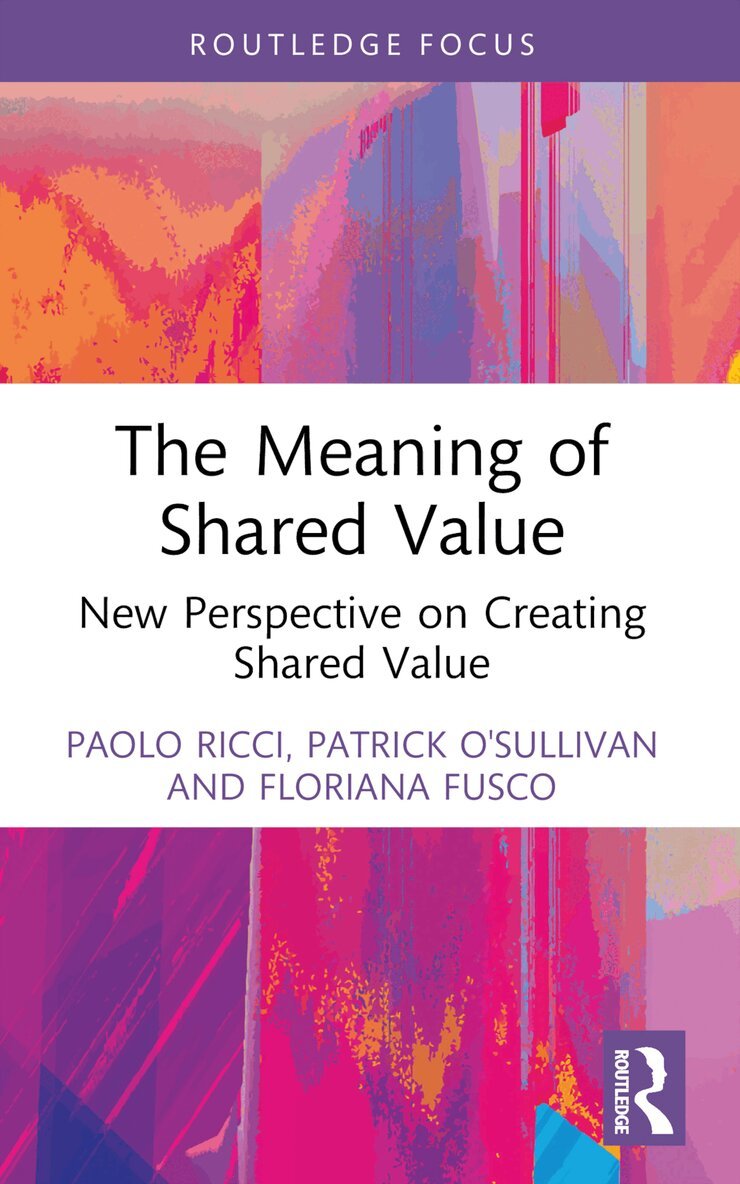
    Meaning of Shared Value

    New Perspective on Creating Shared Value

    AvPaolo Ricci,Patrick O'Sullivan

    Häftad, Engelska, 2024

    Del i serien Routledge Frontiers of Political Economy

    314 kr

    Beställningsvara. Skickas inom 10-15 vardagar. Fri frakt över 249 kr.

    Fler format och utgåvor

    Inbunden

    957 kr

    Beskrivning

    The concept of Creating Shared Value (CSV) – creating 'economic' value in a way that also creates value for the whole of society – has risen in prominence as a corporate policy and a strategy in recent years, mainly for third sector or development organisations. However, while it has received considerable interest among business leaders and practitioners, it has also sparked a bitter debate among academics, proponents and sceptics of the idea. Starting from this argument, the book develops a meta-critical examination of the hidden presuppositions of both supporters and critics of Creating Shared Value, particular in relation to the concept of value. It is argued that there are not two separate types of value, i.e. an economic value and a social value, but only a unique one: which essentially means the creation of well-being. If anything, the distinction that is drawn relates to the value capture (how the value created is distributed among different staekholders) and not to value creation (additions to potential well-being) since the notion of value itself is univocal. Behind the debate are two implicit opposed viewpoints on the philosophy of history: an antagonistic (pessimistic) and a cooperative (optimistic) view. The authors are thus led to a discussion of which of the two visions appears to be the most rational in today's world. The book is addressed to readers with an interest in the core concept of value, primarily in economics, strategic management, and philosophy.

    Produktinformation

    • Utgivningsdatum:2024-12-19
    • Mått:138 x 216 x 8 mm
    • Vikt:120 g
    • Format:Häftad
    • Språk:Engelska
    • Serie:Routledge Frontiers of Political Economy
    • Antal sidor:82
    • Förlag:Taylor & Francis Ltd
    • ISBN:9781032505459

    Utforska kategorier

    • Nationalekonomi inom Ekonomi och Ledarskap
    • Filosofiska discipliner inom Filosofi och religion

    Mer om författaren

    Paolo Ricci is a Full Professor of Business Administration and Public Accountability at the University of Naples Federico II, Italy. He coordinated several international research projects and he is a member of numerous editorial committees. Paolo was also member of the economic policy Staff of the Italian President of the Council of Ministers (2020–2021). His research studies and publications primarily focus on corporate social responsibility, accountability and social reporting, mainly in the public sector.Patrick O’Sullivan is Full Professor at Grenoble Ecole de Management, France. He served as Director of Studies (2006–2009) and Head of Department of People Organisations and Society (2009–2012). His research interests include Critical Scientific Methodology, Business Ethics, Transport Policy issues and System Timetabling/Planning, a field in which he has some consultancy experience.Floriana Fusco is a post-doctoral researcher at the University of Sannio, Italy. She is a member of the scientific committee of Mecosan journal and a member of several national and international academic societies. Her main research fields include social responsibility and sustainability reporting, coproduction and co-creation of value, third mission and entrepreneurial universities.

    Innehållsförteckning

    • 1. Introduction 2. The starting point: Creating Shared Value, the Big Idea, and following debate 2.1. The self-styled ‘Big Idea’: Creating Shared Value 2.2. The opponents’ position and the main criticisms to CSV 2.3. The defenders of CSV 2.4. The middle position: cautious enthusiasm and constructive criticism 2.5. What about our perspective? 3. A critical exegesis of the meaning of value 3.1. What essentially is value? 3.2. The beginnings: the concept of value in Economics 3.3. The creation of the false dichotomy 3.3.1. The concept of value in Financial and Strategic Management 3.3.2. A walk around a ‘socially sensitive’ stream: stakeholder theory and CSR literature3.4 Value creation vs value capture: the distributional question 4. The disputed naïveté of CSV and its roots in a primordial contrast 4.1. A naive or rather an optimist concept? 4.2. Philosophical roots of Optimism and Pessimism 4.3. Towards a rationally founded Optimism 5. Concluding reflections