• Fri frakt över 249 kr
  • •
  • Snabba leveranser
  • •
  • Billiga böcker
Kundservice

Du är på sajten för privatpersoner.

Företag, bibliotek eller offentlig verksamhet?

Du handlar på classic.bokus.com, där alla dina funktioner finns intakta.
Till classic.bokus.com
Bokus logotyp. Gå till startsidan.
  • Erbjudanden
  • Nyheter
  • Student
  • Topplistor
  • Barn & ungdom
  • Bokus Play
  • E-böcker
  • Pocketböcker
  • Spel & pussel

10% rabatt på allt med kod: NYSTART10 →

Sidfot

Mina sidor

    Hjälp

    • Kundservice
    • Vanliga frågor och svar
    • Frakt och leverans
    • Retur vid ångerrätt
    • Reklamera vara
    • Betalning
    • Köpvillkor
    • Allmänna villkor
    • Information om webbplatsens tillgänglighet

    Om Bokus

    • Om oss
    • Pressrum
    • För studenter
    • För företag
    • För bibliotek och offentlig verksamhet
    • För leverantörer
    • Hållbarhet

    Populärt

    • Aktuella erbjudanden
    • Presentkort
    • Studentlitteratur
    • Nya böcker
    • Topplistor
    • Signerade böcker
    • Engelska böcker

    Inspiration

    • Boktips
    • BookTok
    • Populära bokserier
    • Barnbokskaraktärer
    • Populära författare
    Logotyp för Bokus
    Följ oss på Facebook (extern länk)Följ oss på Instagram (extern länk)Följ oss på YouTube (extern länk)Följ oss på TikTok (extern länk)
    bokus @ CookiesAnpassa cookiesIntegritetspolicyKöpvillkor
    Till Citymail hemsida (extern länk)Till Budbee hemsida (extern länk)Till Postnord hemsida (extern länk)Till Schenker hemsida (extern länk)Till Early Bird hemsida (extern länk)Till Walleys hemsida (extern länk)
    1. Språk och ordböcker
    2. Språk: referensverk och allmänt
    3. Språk: historia och allmänt

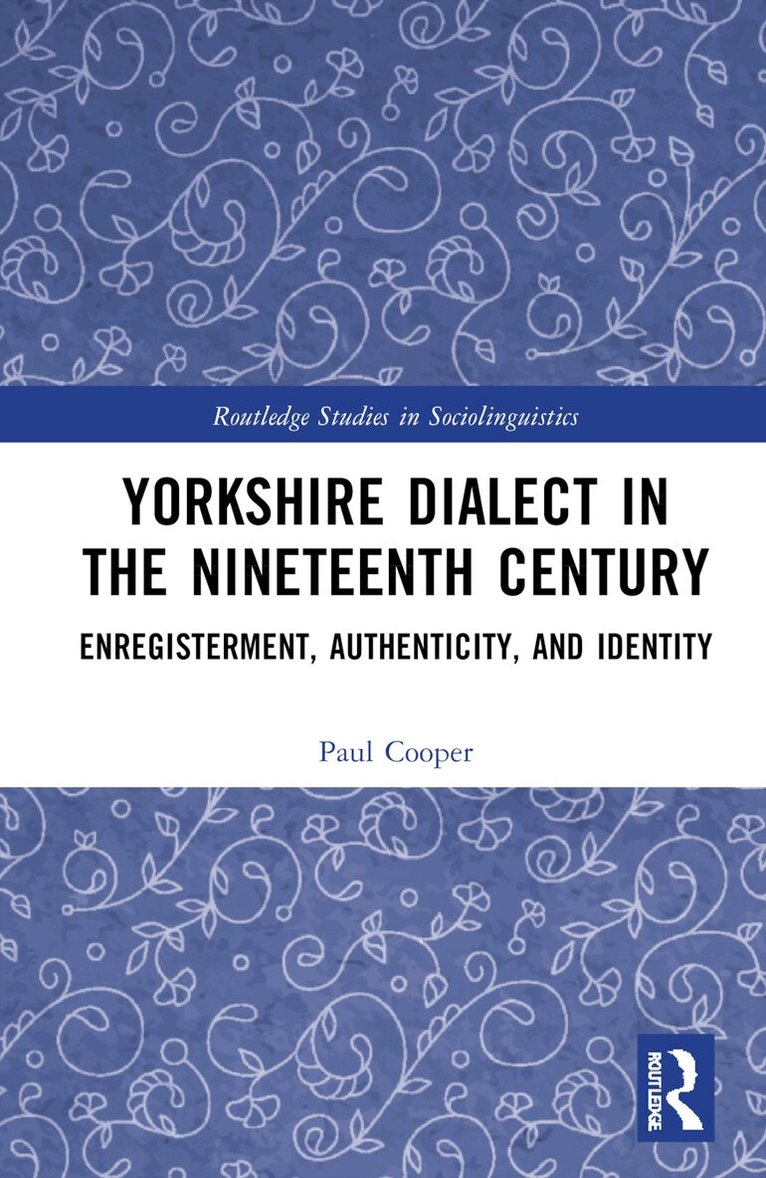
    Yorkshire Dialect in the Nineteenth Century

    Enregisterment, Authenticity, and Identity

    AvPaul Cooper

    Inbunden, Engelska, 2025

    Del i serien Routledge Studies in Sociolinguistics

    2 495 kr

    Beställningsvara. Skickas inom 10-15 vardagar. Fri frakt över 249 kr.

    Fler format och utgåvor

    Häftad

    702 kr

    E-bok

    829 kr

    E-bok

    829 kr

    Beskrivning

    This book draws on a framework of enregisterment and indexicality to chart the ways in which the Yorkshire dialect came to be associated with particular linguistic repertoires and social stereotypes from the nineteenth century through to today. Cooper situates the work within a historical enregisterment framework, rooted in an ideological approach to the study of language.Focusing on representations of the Yorkshire dialect in a corpus of nineteenth-century writing, comprising poetry, ballads, songs, and plays, Cooper explores how the dialect came to be enregistered and indexical of social values such as friendliness, directness, or authenticity, and how sub-varieties impacted the division of communities along ideological lines. The volume also includes qualitative analyses of metalinguistic commentary from such historical sources as dictionaries, glossaries, and magazines. Taken together, the book offers a holistic picture of the evolution of the Yorkshire dialect and in turn, stereotypes of “Yorkshireness” which persist to this day. Cooper shows how an enregisterment approach can offer a deeper understanding of the historical relationships between dialect and identity and in turn, contemporary perceptions of dialects and their speakers.This volume will be of interest to students and scholars in historical sociolinguistics, dialectology, and English language.

    Produktinformation

    • Utgivningsdatum:2025-03-24
    • Mått:152 x 229 x 19 mm
    • Vikt:640 g
    • Format:Inbunden
    • Språk:Engelska
    • Serie:Routledge Studies in Sociolinguistics
    • Antal sidor:250
    • Förlag:Taylor & Francis Ltd
    • ISBN:9781032534800

    Utforska kategorier

    • Språk: historia och allmänt inom Språk och ordböcker
    • Språkvetenskap och lingvistik inom Språk och ordböcker

    Mer om författaren

    Paul Cooper is Senior Lecturer in English Language at the University of Liverpool, UK.

    Innehållsförteckning

    • List of figuresList of tables1 Introduction1.1 Linguistic features of Yorkshire dialect1.1.1 Definite Article Reduction1.1.2 H-dropping1.1.3 Realisation of the GOAT diphthong1.1.4 Realisation of the FACE diphthong1.1.5 Additional phonological features1.1.6 Grammatical features and lexical items1.2 Yorkshire identity1.2.1 Aims of this book1.3 Methodological considerations1.3.1 Qualitative analysis1.3.2 Quantitative analysis1.3.3 Corpus of nineteenth-century Yorkshire dialect (CoNCYD)1.3.4 Nineteenth-century Yorkshire repertoires1.4 Conclusions2 Yorkshire dialect and social values2.1 Indexicality and enregisterment2.2 Processes of enregisterment2.2.1 Social mobility2.2.2 Geographical mobility2.2.4 Evidence for indexical links and enregisterment2.2.5 Simultaneous indexical links to multiple social values2.3 Indexicality and Yorkshire dialect2.4 Conclusions3 Enregisterment in historical contexts3.1 Historical context: The nineteenth century3.2 Industrialisation and geographical mobility3.3 Social change and social mobility3.4 Linguistic awareness3.5 Studying enregisterment in the nineteenth century3.6 Sociological fractionation in nineteenth-century Yorkshire dialect writing3.7 Conclusions4 Yorkshire repertoires: the emergence of authentic Yorkshire spellings4.1 Awareness of nonstandard Yorkshire spellings4.2 Nineteenth-century “Yorkshire” dialect areas4.3 “Yorkshire” versions of The Song of Solomon4.4 Vernacular norm formation in nineteenth-century Yorkshire dialect4.4.1 Owt4.4.2 Definite Article Reduction4.4.3 Sen4.4.4 /l/-vocalisation4.5 Conclusions5 Creating the authentic “Yorkshireman”: the emergence of characterological figures in nineteenth-century texts5.1 Characterological figures5.2 The ideological construction of the “Yorkshireman” in nineteenth-century texts5.2.1 The dialect of Yorkshiremen5.3 Occupational associations with “Yorkshiremen”5.3.1 The Yorkshire “dalesman”5.4 A strong, independent “race” of men5.5 Conclusion6 Style and the Yorkshirewoman6.1 Yorkshiremen and style-shifting6.1.1 Metapragmatic discourse about style-shifting6.1.2 Style-shifting in dialect literature6.1.3 Style-shifting in literary dialect6.2 Yorkshirewomen, metacommentary, and domesticity6.2.1 Domesticity6.2.2 Metacommentary on Yorkshirewomen and their dialect6.2.3 Yorkshirewomen in literary dialect6.2.4 Yorkshirewomen in dialect literature6.3 Conclusions7 Saxon, Scandinavian, and fair complexion: the historical enregisterment of Yorkshire dialect and whiteness7.1 Enregisterment and ethnicity7.2 Anglo-Saxon and Viking as indexes of whiteness in nineteenth-century texts7.2.1 Non-white people in nineteenth-century Yorkshire7.3 Yorkshire dialect indexing authentic, Teutonic, and “Anglo-Saxon”7.3.1 “Saxon” Yorkshire dialect indexed by literary dialect and dialect literature7.4 Yorkshire dialect indexing “Scandinavian”, “Anglo-Danish”, and “Old Norse”7.4.1 Scandinavian7.4.2 Anglo-Danish7.4.3 Old Norse7.5 Conclusions8 The legacy of nineteenth-century Yorkshire dialect8.1 Changes to the enregistered Yorkshire repertoire8.2 ConclusionReferencesIndex