• Fri frakt över 249 kr
  • •
  • Snabba leveranser
  • •
  • Billiga böcker
Kundservice

Du är på sajten för privatpersoner.

Företag, bibliotek eller offentlig verksamhet?

Du handlar på classic.bokus.com, där alla dina funktioner finns intakta.
Till classic.bokus.com
Bokus logotyp. Gå till startsidan.
  • Erbjudanden
  • Nyheter
  • Student
  • Topplistor
  • Barn & ungdom
  • Bokus Play
  • E-böcker
  • Pocketböcker
  • Spel & pussel

10% rabatt på allt med kod: NYSTART10 →

Sidfot

Mina sidor

    Hjälp

    • Kundservice
    • Vanliga frågor och svar
    • Frakt och leverans
    • Retur vid ångerrätt
    • Reklamera vara
    • Betalning
    • Köpvillkor
    • Allmänna villkor
    • Information om webbplatsens tillgänglighet

    Om Bokus

    • Om oss
    • Pressrum
    • För studenter
    • För företag
    • För bibliotek och offentlig verksamhet
    • För leverantörer
    • Hållbarhet

    Populärt

    • Aktuella erbjudanden
    • Presentkort
    • Studentlitteratur
    • Nya böcker
    • Topplistor
    • Signerade böcker
    • Engelska böcker

    Inspiration

    • Boktips
    • BookTok
    • Populära bokserier
    • Barnbokskaraktärer
    • Populära författare
    Logotyp för Bokus
    Följ oss på Facebook (extern länk)Följ oss på Instagram (extern länk)Följ oss på YouTube (extern länk)Följ oss på TikTok (extern länk)
    bokus @ CookiesAnpassa cookiesIntegritetspolicyKöpvillkor
    Till Citymail hemsida (extern länk)Till Budbee hemsida (extern länk)Till Postnord hemsida (extern länk)Till Schenker hemsida (extern länk)Till Early Bird hemsida (extern länk)Till Walleys hemsida (extern länk)
    1. Samhälle och politik
    2. Samhälle och kultur
    3. Sociala grupper och identitet
    4. Genusvetenskap

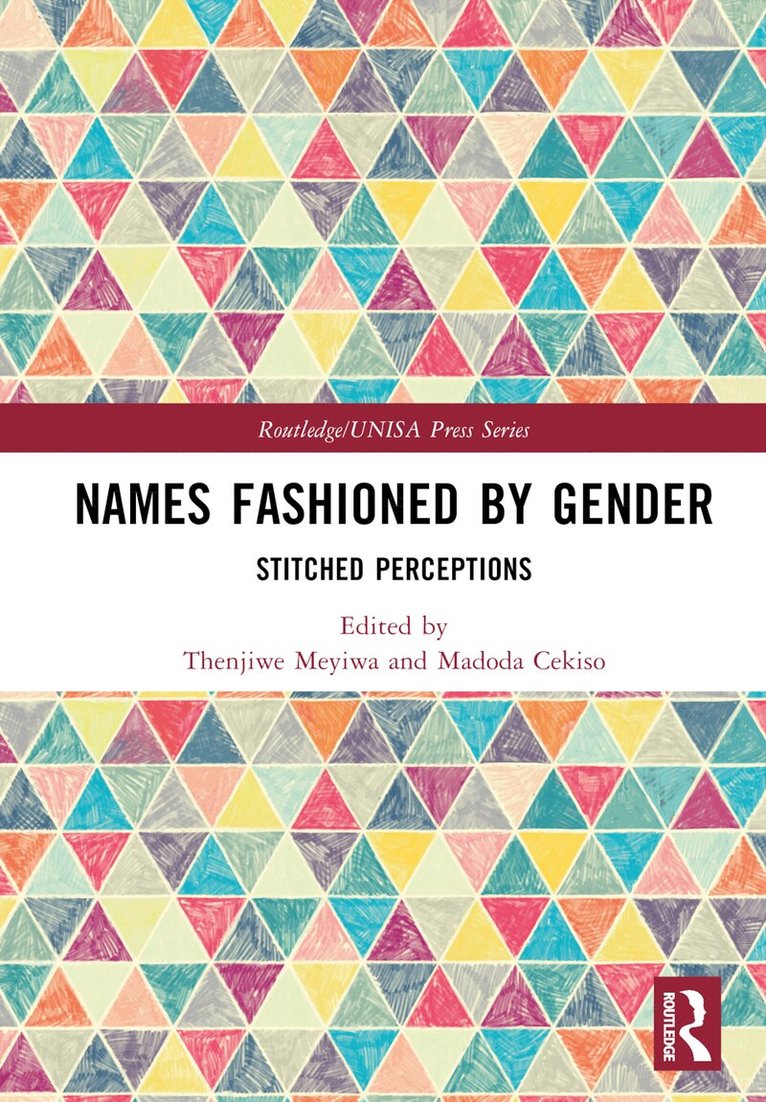
    Names Fashioned by Gender

    Stitched Perceptions

    AvThenjiwe Meyiwa,Madoda Cekiso

    Inbunden, Engelska, 2023

    Del i serien Routledge/UNISA Press Series

    2 784 kr

    Beställningsvara. Skickas inom 10-15 vardagar. Fri frakt över 249 kr.

    Beskrivning

    Names are very powerful and significant, especially in the African context. Across societies, there is a universal, albeit taken-for-granted fact that all human beings have names. Names Fashioned by Gender is a collection of essays on onomastics—a linguistics field of study focusing on the origin, form, history and use of proper names. The study of naming potentially provides significant evidence about the role of gender in the assimilation and/or enculturation processes as personal names evoke insight into the construction of gender and personhood in African societies.The book takes intellectual course from the idea that how names are viewed and used is heavily context-dependent and gendered. It demonstrates that personal names are narratives derived from different contexts within various cultures and circumstances subsequently imposing different identities on name bearers. Through persuasive essays, this book elucidates that naming is an activity that needs to be conducted cautiously because names tend to determine the destiny and character of an individual.Print editions not for sale in Sub-Saharan Africa.

    Produktinformation

    • Utgivningsdatum:2023-12-01
    • Mått:174 x 246 x 24 mm
    • Vikt:453 g
    • Format:Inbunden
    • Språk:Engelska
    • Serie:Routledge/UNISA Press Series
    • Antal sidor:342
    • Förlag:Taylor & Francis Ltd
    • ISBN:9781032628196

    Utforska kategorier

    • Genusvetenskap inom Samhälle och politik
    • Språkvetenskap och lingvistik inom Språk och ordböcker
    • Litteraturvetenskap inom Skönlitteratur

    Mer om författaren

    Thenjiwe Meyiwa, a feminist scholar, is the lead editor of this book. She is Deputy Vice-chancellor for Research, Innovation, Commercialisation and Postgraduate Studies at Unisa. She is a member of various parastatals, community and civil society organisations, such as the Rural Women’s Movement where she is the Advisory Board member; the South African National Heraldry Council where she serves as its Chairperson and a Deputy Chair of the National Heritage Council; to name but a few. She has authored several research gender studies articles, including co-publishing five books.Madoda Cekiso, the co-editor of this book, is senior professor at Tshwane University of Technology’s Department of English. He has published widely in the field of reading and writing with a significant number of his recent research projects and publications focusing on the gender analysis within this subject field.

    Innehållsförteckning

    • AcknowledgementsForewordPrefaceIntroduction: Towards developing feminist onomastics scholarshipThenjiwe Meyiwa and Madoda CekisoChapter 1: Assessing the origin and perceptions of gendered Yoruba namesTemitope O. AdekunleChapter 2: Gendered personal names in Yoruba and ChichewaAlfred Jana Matiki and Modupe M. AlimiChapter 3: Setswana naming system: a gendered outlookGoabilwe N. Ramaeba and Joyce T. MathangwaneChapter 4: Gender stereotypes embedded in the labels of female subjects in a cross section of Zimbabwean musicDuren JhambaChapter 5: Child naming and gender transformation in Gutu, ZimbabweChristopher RwodziChapter 6: Beyond the name: Maniangas tribe ways of namingLuvisa Bibiche BazolaChapter 7: Subculture socio-cultural nicknaming phenomena embedded in izindlavini of amaMpondo of the Eastern CapeThenjiwe Meyiwa and Madoda CekisoChapter 8: Re-considering the idiom ‘If God is male, then the male is God’ in light of selected Shona personal names among Reformed Church in Zimbabwe Christians in Chivi, ZimbabweExcellent ChiresheChapter 9: Gender in the personal naming practices of the Shona in Zimbabwe: a socio-onomastic studyZvinashe Mamvura and Margret ChiparaChapter 10: Xhosa female initiates’ (intonjane) perceptions of meanings and values attached to their new namesKhanyisile Rose Masha and Ilse du ToitChapter 11: ‘Get this straight, that is (not) my name’, retorts a Xhosa womanNolutho DikoChapter 12: ‘Hold the roof woman’: exploring how the naming practices amongst isiXhosa speaking people contribute to a high divorce rate in South AfricaNosisi FezaChapter 13: A feminist approach to the naming and circumstances of women in the Bible in relation to the naming of prominent Zulu womenNobuhle Ndimande-Hlongwa and Thandi MwelaseChapter 14: An examination of names and gender in Ngugi’s Devil on the cross and I will marry when I wantCheela ChilalaChapter 15: Gender shift in the use of the formative -no- in Zulu given namesAdrian KoopmanChapter 16: Fluid identities: naming and recognition in NoViolet Bulawayo’s We need new names and Chimamanda Ngozi Adichie’s AmericanahKen Junior LipengaChapter 17: Queer(ing) onomastics: names and the construction of non-normative genders and sexualities in selected short stories in Queer Africa: New and collected fictionGibson NcubeChapter 18: A feminist interrogation of Owé gendered naming practices Josephine Olufunmilayo AlexanderChapter 19: The gendered nature of naming children among the Shona in ZimbabweVimbai Matiza-MtombeniChapter 20: Names of council beer halls and shebeens in Bulawayo: A feminist analysisLiketso Dube and Sambulo NdlovuChapter 21: Anti-women nomenclature: a selection of Zimbabwean ergonyms in family businessesSambulo NdlovuChapter 22: Interrogating the female politicians selected motherhood and wifehood label in the Zimbabwean print media: The case of the Financial Gazette 2002Mandiedza ParichiChapter 23: Rethinking the framing of women in the nation through ‘self-naming’ and ‘self-definition’ of female nationalists in ZimbabwePhillip Mpofu and Charles TemboChapter 24: Naming female characters to achieve a colonial agenda (‘de-womanisation’ of African womanhood): The case of Zvarevashe’s novel KurauoneTyanai Charamba