• Fri frakt över 249 kr
  • •
  • Snabba leveranser
  • •
  • Billiga böcker
Kundservice

Du är på sajten för privatpersoner.

Företag, bibliotek eller offentlig verksamhet?

Du handlar på classic.bokus.com, där alla dina funktioner finns intakta.
Till classic.bokus.com
Bokus logotyp. Gå till startsidan.
  • Erbjudanden
  • Nyheter
  • Student
  • Topplistor
  • Barn & ungdom
  • Bokus Play
  • E-böcker
  • Pocketböcker
  • Spel & pussel

Må bättre, för mindre! Upp till 50% rabatt på hälsoböcker

Sidfot

Mina sidor

    Hjälp

    • Kundservice
    • Vanliga frågor och svar
    • Frakt och leverans
    • Retur vid ångerrätt
    • Reklamera vara
    • Betalning
    • Köpvillkor
    • Allmänna villkor
    • Information om webbplatsens tillgänglighet

    Om Bokus

    • Om oss
    • Pressrum
    • För studenter
    • För företag
    • För bibliotek och offentlig verksamhet
    • För leverantörer
    • Hållbarhet

    Populärt

    • Aktuella erbjudanden
    • Presentkort
    • Studentlitteratur
    • Nya böcker
    • Topplistor
    • Signerade böcker
    • Engelska böcker

    Inspiration

    • Boktips
    • BookTok
    • Populära bokserier
    • Barnbokskaraktärer
    • Populära författare
    Logotyp för Bokus
    Följ oss på Facebook (extern länk)Följ oss på Instagram (extern länk)Följ oss på YouTube (extern länk)Följ oss på TikTok (extern länk)
    bokus @ CookiesAnpassa cookiesIntegritetspolicyKöpvillkor
    Till Citymail hemsida (extern länk)Till Budbee hemsida (extern länk)Till Postnord hemsida (extern länk)Till Schenker hemsida (extern länk)Till Early Bird hemsida (extern länk)Till Walleys hemsida (extern länk)
    1. Naturvetenskap och teknik
    2. Geovetenskap
    3. Geografi

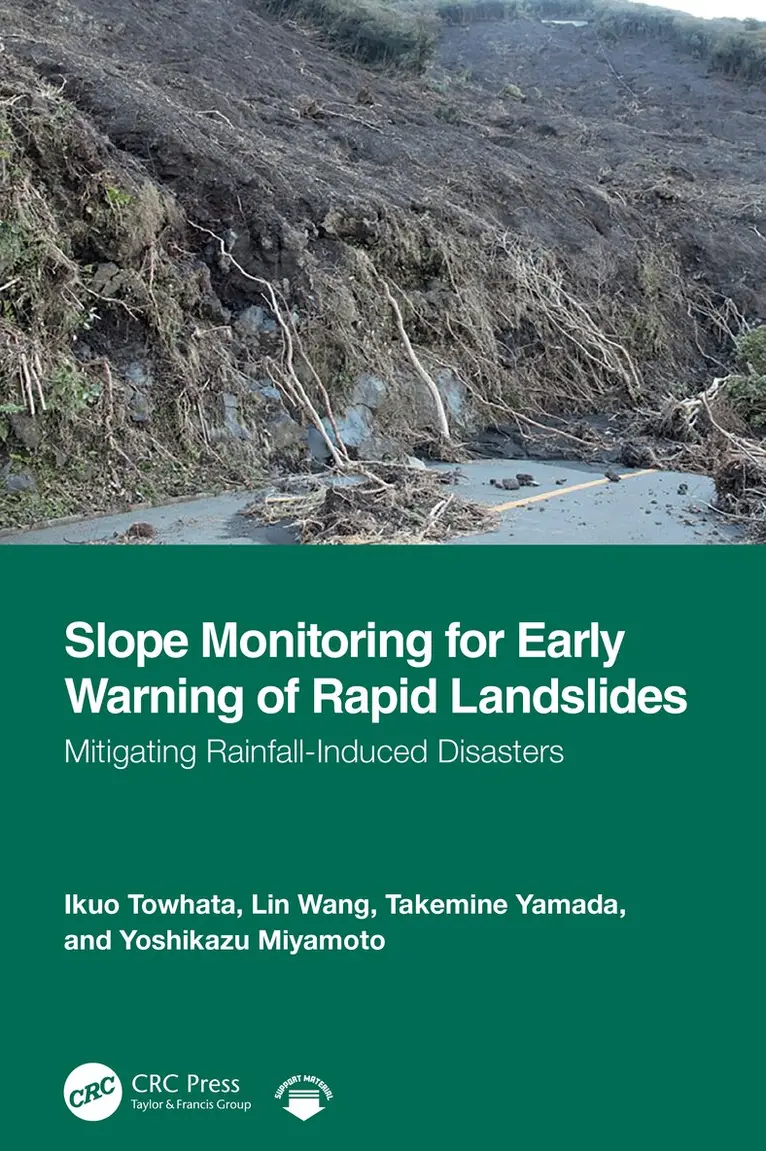
    Slope Monitoring for Early Warning of Rapid Landslides

    Mitigating Rainfall-induced Disasters

    AvIkuo Towhata,Lin Wang

    Inbunden, Engelska, 2026

    2 067 kr

    Beställningsvara. Skickas inom 10-15 vardagar. Fri frakt över 249 kr.

    Beskrivning

    The coauthors of this book draw on their decades of research and innovation to describe an inexpensive and easy-to-interpret early warning system for rainfall-induced landslides. This system will enable readers to identify slope collapses before they happen and act to prevent economic and human losses.Readers will gain an understanding of existing slope monitoring technologies and their applications, advantages and disadvantages. They will also understand the need for early warning systems for rapid landslides caused by heavy rainfall. Because such landslides are increasing in frequency due to climate-change-related increase in short-term but heavy rainfall, the authors first review the current context before explaining the importance of field monitoring for their continuing professional career development. The authors describe their technology, which is based on an inexpensive tiltmeter sensor and can detect landslides several hours prior to their onset. It is important that the authors present ample cases in which their technology could foresee imminent landslides. This description is supported by in-depth comparisons with other methodologies, field tests and case studies. Finally, existing problems are introduced and future research directions are presented. This information will enable readers to implement their own systems to identify slopes at imminent risk of collapse following rainfall events so that they may take appropriate action to prevent economic damage and loss of life.Slope Monitoring for Early Warning of Rapid Landslides: Mitigating Rainfall-Induced Disasters is an indispensable guide for practitioners in both public and private sectors who are responsible for the implementation of slope monitoring and landslide early warning systems. Postgraduate students who specialize in the mitigation of natural disasters and the effects of global climate change will also benefit from the discussions of differing available technologies and case studies.

    Produktinformation

    • Utgivningsdatum:2026-03-16
    • Mått:156 x 234 x 22 mm
    • Vikt:750 g
    • Format:Inbunden
    • Språk:Engelska
    • Antal sidor:305
    • Förlag:Taylor & Francis Ltd
    • ISBN:9781032647319

    Utforska kategorier

    • Geografi inom Naturvetenskap och teknik
    • Miljövetenskap och miljöpolitik inom Naturvetenskap och teknik
    • Byggnadsteknik inom Naturvetenskap och teknik

    Mer om författaren

    Ikuo Towhata is Professor Emeritus at The University of Tokyo. He was formerly President of the Japanese Geotechnical Society and Vice President for Asia of the International Society for Soil Mechanics and Geotechnical Engineering (ISSMGE). He obtained his PhD from the University of Tokyo in 1982.Lin Wang is a Senior Engineer at Chuo-Kaihatsu Inc., Tokyo and Visiting Professor at Sichuan University. He is a member of the ISSMGE’s Technical Committee 220 for Field Monitoring of ISSMGE. He received his PhD from The University of Tokyo.Takemine Yamada is a Senior Research Engineer at Kajima Technical Research Institute, Tokyo. He is a member of the ISSMGE’s Technical Committee 221 for Tailings and Mine Wastes of ISSMGE. He received his PhD from The University of Tokyo.Yoshikazu Miyamoto is a professor of Department of the Social Management Engineering, Faculty of Engineering, Tottori University in Japan. He is a member of the Committee on Global Environment in Japan, Society of Civil Engineers. He received his PhD from the Tottori University.

    Innehållsförteckning

    • 1. General Views on Recent Rainfall and Landslide Events 2. Experiences of Rapid Landslide and Debris Flow 3. Social Needs for Disaster Mitigation with Emphasis on Slope Disasters 4. Review of Slope Monitoring Technology 5. Rainfall Criterion for Early Warning 6. Forecasting of Rainfall-Induced Slope Disasters by Ground-Based Tilt Sensors 7. Case Histories of Successful Early Warnings 8. Ground-Based or Air-Borne Imagery Surveys 9. Development of Slope Monitoring System with Residents’ Participation 10. New Micromotion and Vibration Monitoring System 11. Scope of DX and Advanced Services 12. Ideas on Future Development of Field Monitoring 13. Conclusion