• Fri frakt över 249 kr
  • •
  • Snabba leveranser
  • •
  • Billiga böcker
Kundservice

Du är på sajten för privatpersoner.

Företag, bibliotek eller offentlig verksamhet?

Du handlar på classic.bokus.com, där alla dina funktioner finns intakta.
Till classic.bokus.com
Bokus logotyp. Gå till startsidan.
  • Erbjudanden
  • Nyheter
  • Student
  • Topplistor
  • Barn & ungdom
  • Bokus Play
  • E-böcker
  • Pocketböcker
  • Spel & pussel

10% rabatt på allt med kod: NYSTART10 →

Sidfot

Mina sidor

    Hjälp

    • Kundservice
    • Vanliga frågor och svar
    • Frakt och leverans
    • Retur vid ångerrätt
    • Reklamera vara
    • Betalning
    • Köpvillkor
    • Allmänna villkor
    • Information om webbplatsens tillgänglighet

    Om Bokus

    • Om oss
    • Pressrum
    • För studenter
    • För företag
    • För bibliotek och offentlig verksamhet
    • För leverantörer
    • Hållbarhet

    Populärt

    • Aktuella erbjudanden
    • Presentkort
    • Studentlitteratur
    • Nya böcker
    • Topplistor
    • Signerade böcker
    • Engelska böcker

    Inspiration

    • Boktips
    • BookTok
    • Populära bokserier
    • Barnbokskaraktärer
    • Populära författare
    Logotyp för Bokus
    Följ oss på Facebook (extern länk)Följ oss på Instagram (extern länk)Följ oss på YouTube (extern länk)Följ oss på TikTok (extern länk)
    bokus @ CookiesAnpassa cookiesIntegritetspolicyKöpvillkor
    Till Citymail hemsida (extern länk)Till Budbee hemsida (extern länk)Till Postnord hemsida (extern länk)Till Schenker hemsida (extern länk)Till Early Bird hemsida (extern länk)Till Walleys hemsida (extern länk)
    1. Skönlitteratur
    2. Litteraturvetenskap
    3. Litteraturvetenskap

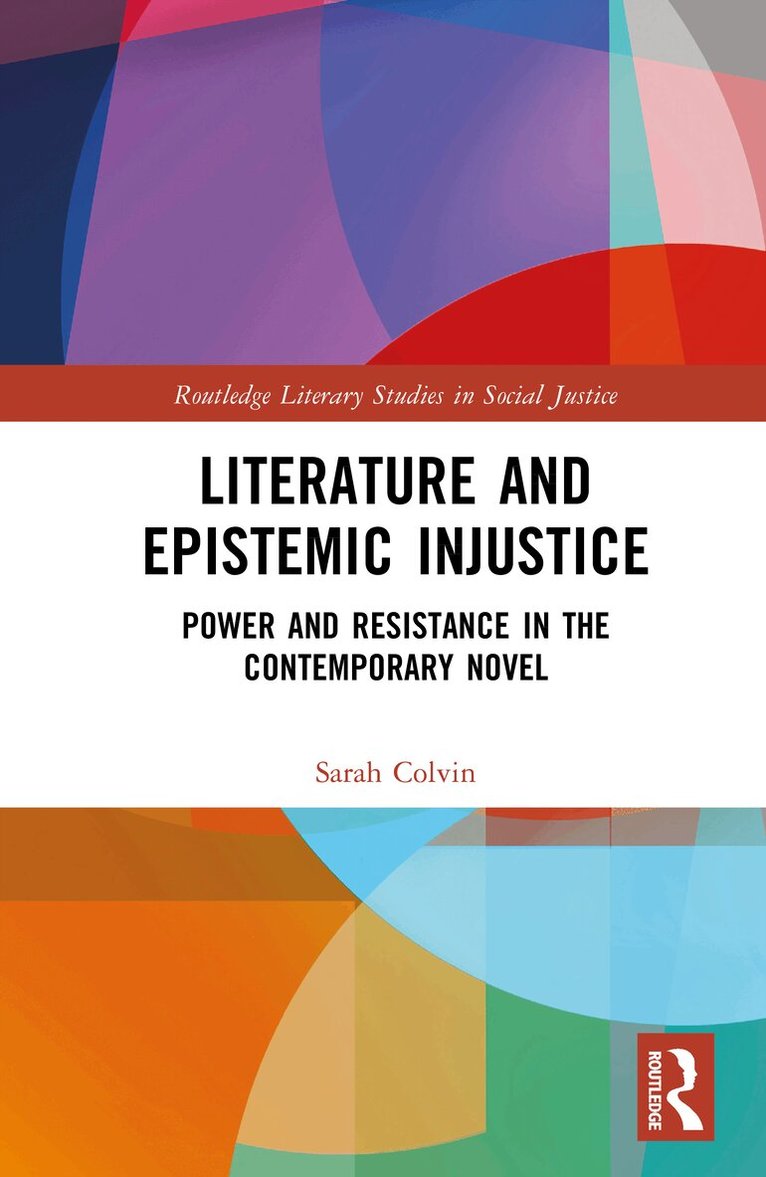
    Literature and Epistemic Injustice

    Power and Resistance in the Contemporary Novel

    AvSarah Colvin

    Inbunden, Engelska, 2025

    Del i serien Routledge Literary Studies in Social Justice

    2 784 kr

    Beställningsvara. Skickas inom 10-15 vardagar. Fri frakt över 249 kr.

    Beskrivning

    A vital resource for anyone interested in literature and politics, this is the first in-depth study of epistemic injustice as a concept for literary studies. Focusing on contemporary fiction in an age of post-truth, it shows how eight novels set in different global contexts reveal epistemic injustice as an authoritarian practice and offer an aesthetics of resistance. Epistemic injustice valorises the thinking of those in power while suppressing other people’s knowledge; it declares some people omniscient and others targets for violence. This book tracks how the novels make tangible its strategic use and effects while suggesting – in their form as well as their content – that something else is possible. Bridging political philosophy and literary analysis in clear prose, this study offers exciting new stimuli for reading groups and general readers as well as for students of literature.The Open Access version of this book, available at http://www.taylorfrancis.com, has been made available under a Creative Commons Attribution-Non Commercial-No Derivatives (CC BY-NC-ND) 4.0 license.

    Produktinformation

    • Utgivningsdatum:2025-11-11
    • Mått:152 x 229 x 19 mm
    • Vikt:500 g
    • Format:Inbunden
    • Språk:Engelska
    • Serie:Routledge Literary Studies in Social Justice
    • Antal sidor:244
    • Förlag:Taylor & Francis Ltd
    • ISBN:9781032649245

    Utforska kategorier

    • Litteraturvetenskap inom Skönlitteratur
    • Filosofiska discipliner inom Filosofi och religion

    Mer om författaren

    Sarah Colvin is the Schröder Professor at the University of Cambridge, UK. She has authored and edited a number of books including Shadowland: The Story of Germany Told by its Prisoners (2022) and (with Stephanie Galasso) Epistemic Justice and Creative Agency: Global Perspectives on Literature and Film (Routledge, 2023)

    Recensioner i media

    "Literature and Epistemic Injustice adeptly interweaves theory with rich readings of contemporary novels to give timely, vital insights into literature's role in both revealing oppression and countering it. Colvin urgently reminds us of what defines our humanity through and across difference––our need to share, learn, and be heard through stories."-Didem Uca, Assistant Professor of German Studies, Emory University, USA“Sarah Colvin’s Literature and Epistemic Injustice is an intellectually powerful examination of how contemporary fiction discloses the operations of epistemic injustice and articulates forms of resistance to it. The study moves confidently between ethics, political theory, narratology, and global literatures, treating the selected novels as rich sources of insight. Colvin positions contemporary fiction as an active participant in debates about knowledge and power. A central achievement of the book is its clear demonstration that epistemic injustice functions as a deliberate and strategic practice of authoritarian power. At the same time, the emphasis on narrative meaning-making as a form of resistance is one of the book’s strongest conceptual threads. Overall, the monograph is rigorous, generous, and lucid. It offers a persuasive account of how literature intervenes in the politics of knowledge and power and presents storytelling as a vital practice that restores the capacity to think, feel, and interpret in conditions designed to obstruct those capacities. It stands as a significant contribution to literary studies, ethics, and contemporary political analysis.”-Pavlo Shopin, Associate Professor, Mykhailo Drahomanov State University of Ukraine“Colvin’s book offers hope. Through subtle and engaging readings that both expose and resist the long history of oppression, exploitation and violence, it moves, shocks and summons us to imagine that things could yet be otherwise.”-Prof Anne Fuchs, Times Literary Supplement

    Innehållsförteckning

    • Acknowledgements INTRODUCTIONPART I ‘WE CANNOT BREATHE’. PRACTICES OF POWERCHAPTER 1. VIOLENT TIMESI. Necropolitical space-time Petrifying times and twin temporalities in 1000 Coils of FearII. Epistemic ghostingPicaresque unheroism and ghosted knowledge in VoroshilovgradCHAPTER 2. ABSENT VOICESI. Epistemologies of ignorance and petrified storiesWhite lies in the BardoII. Deadly silences Violent silencing, necro-joking and necro-pleasure in We That Are YoungCHAPTER 3. DIVISIVE FORMSI. Hierarchies and binariesLogics of purity in We That Are YoungII. Split-separation in the necropatriarchyThe murderous Midas touch. Purity and profiteering in Ada’s RealmCHAPTER 4. PETRIFIED BODIESI. Written on the body Traces of injustice in We Need New NamesII. The body as archive Marks of violence in GloryCHAPTER 5. THE END OF MEANINGI. The pure and simple … lieLife and Death and the lie of stateII. Postnarrative ‘There is no why here’. Ultimate epistemic injustice in GloryPART 2 BREATHING FIRE. ANIMATING AESTHETICSCHAPTER 6. INSURRECTIONARY TIMESI. Transtemporal possibilitiesTime in the singular plural. 1000 Coils of Fear and Ada’s RealmII. Epistemic revenants Haunting and counter-memory. Voroshilovgrad and GloryCHAPTER 7. OTHER VOICESI. Eccentric narratorsDisruptive knowledge. Picaresque and trickster voices in We Need New Names and Life and Death Are Wearing Me OutII. Guerrilla epistemologyAnimals as epistemic guerrilleros. Life and Death Are Wearing Me Out and GloryCHAPTER 8. BODIES IN RELATIONI. Affirmative pleasure Counter-pleasure and blues irony in Life and Death Are Wearing Me Out and VoroshilovgradII. Motherhood and mayonnaiseChiasmus and curdling. Lincoln in the Bardo and Ada’s RealmCHAPTER 9. THE FUTURE OF MEANINGI. Meaning beyond monodyProvoking pluralism in Lincoln in the Bardo and We That Are YoungII. Animapoetics. Stories in the face of death‘There’s a chance you won’t be remembered as a total asshole’. Hope and community in Voroshilovgrad and GloryCONCLUSIONBIBLIOGRAPHYIndex