• Fri frakt över 249 kr
  • •
  • Snabba leveranser
  • •
  • Billiga böcker
Kundservice

Du är på sajten för privatpersoner.

Företag, bibliotek eller offentlig verksamhet?

Du handlar på classic.bokus.com, där alla dina funktioner finns intakta.
Till classic.bokus.com
Bokus logotyp. Gå till startsidan.
  • Erbjudanden
  • Nyheter
  • Student
  • Topplistor
  • Barn & ungdom
  • Bokus Play
  • E-böcker
  • Pocketböcker
  • Spel & pussel

10% studentrabatt med kod TERM26

Sidfot

Mina sidor

    Hjälp

    • Kundservice
    • Vanliga frågor och svar
    • Frakt och leverans
    • Retur vid ångerrätt
    • Reklamera vara
    • Betalning
    • Köpvillkor
    • Allmänna villkor
    • Information om webbplatsens tillgänglighet

    Om Bokus

    • Om oss
    • Pressrum
    • För studenter
    • För företag
    • För bibliotek och offentlig verksamhet
    • För leverantörer
    • Hållbarhet

    Populärt

    • Aktuella erbjudanden
    • Presentkort
    • Studentlitteratur
    • Nya böcker
    • Topplistor
    • Signerade böcker
    • Engelska böcker

    Inspiration

    • Boktips
    • BookTok
    • Populära bokserier
    • Barnbokskaraktärer
    • Populära författare
    Logotyp för Bokus
    Följ oss på Facebook (extern länk)Följ oss på Instagram (extern länk)Följ oss på YouTube (extern länk)Följ oss på TikTok (extern länk)
    bokus @ CookiesAnpassa cookiesIntegritetspolicyKöpvillkor
    Till Citymail hemsida (extern länk)Till Budbee hemsida (extern länk)Till Postnord hemsida (extern länk)Till Schenker hemsida (extern länk)Till Early Bird hemsida (extern länk)Till Walleys hemsida (extern länk)
    1. Historia och arkeologi
    2. Historia
    3. Asiens historia

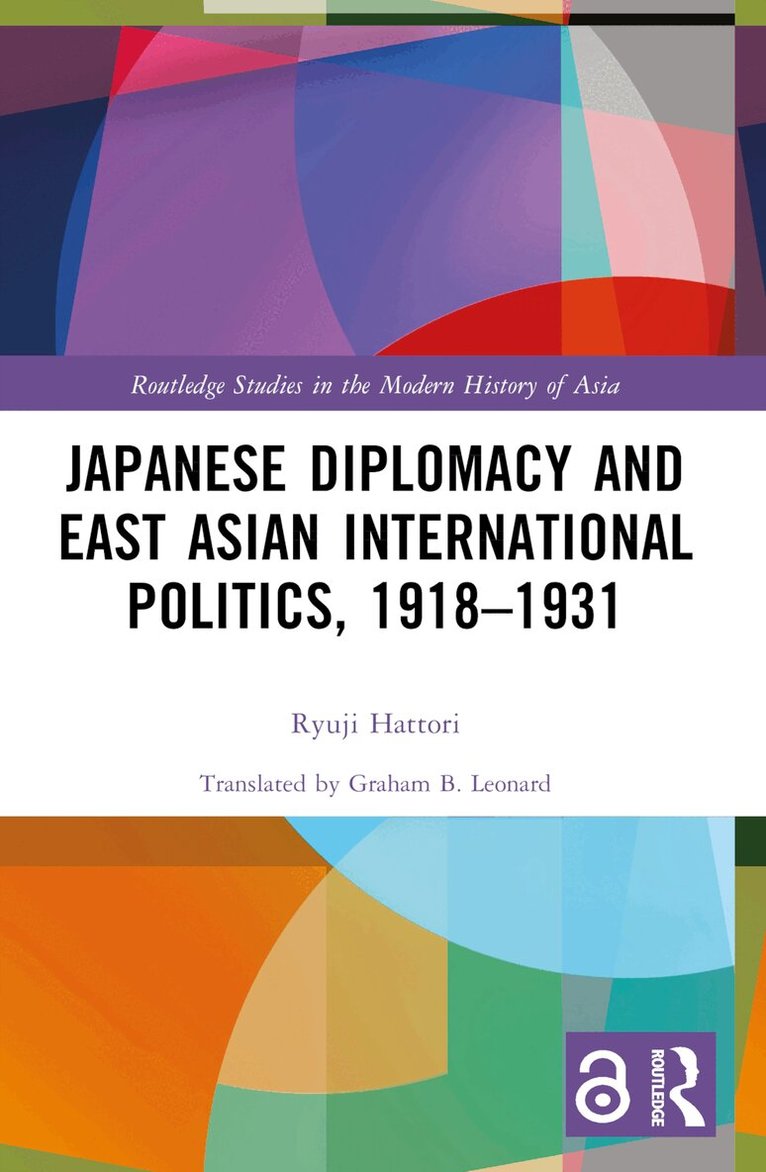
    Japanese Diplomacy and East Asian International Politics, 1918–1931

    AvRyuji Hattori

    Inbunden, Engelska, 2024

    Del i serien Routledge Studies in the Modern History of Asia

    2 506 kr

    Beställningsvara. Skickas inom 10-15 vardagar. Fri frakt över 249 kr.

    Fler format och utgåvor

    Häftad

    705 kr

    Beskrivning

    This book provides an overall picture of East Asian international politics during the early interwar period and examines the various foreign policy trends of the major powers involved, including Japan, China, Britain, the United States, and the Soviet Union. Based on extensive original research, it posits that East Asia experienced four waves of international change during the interwar period: the transition to the post-World War I international order; the appearance of Nationalist China and the Soviet Union as actors in East Asian international politics; the Japanese invasion of Manchuria; and Japanese implementation of the North China Buffer State Strategy. It considers the new challenges brought about by each of these waves, how the powers – particularly Japan, Britain, and the United States – were able to meet these challenges by working together, and how this became more difficult as time went on. It argues that the Washington System – the international order established at the 1921–1922 Washington Naval Conference – was not a break with the past, as is frequently argued, on account of new forms of foreign policy, including the ideological approaches of the United States and the Soviet Union, but that rather spheres of influence diplomacy continued as before. In addition, in discussing Japanese foreign policy, the book provides a comprehensive picture of the diversity of views towards China among Japanese actors and the ways these shifted over time.The Open Access version of this book, available at www.taylorfrancis.com, has been made available under a Creative Commons CC-BY-NC-ND 4.0 license.

    Produktinformation

    • Utgivningsdatum:2024-01-12
    • Mått:156 x 234 x 23 mm
    • Vikt:780 g
    • Format:Inbunden
    • Språk:Engelska
    • Serie:Routledge Studies in the Modern History of Asia
    • Antal sidor:320
    • Förlag:Taylor & Francis Ltd
    • ISBN:9781032675930
    • Översättare:Graham B. Leonard

    Utforska kategorier

    • Asiens historia inom Historia och arkeologi
    • Internationella relationer inom Samhälle och politik

    Mer om författaren

    Ryuji Hattori is a Professor in the Faculty of Policy Studies at Chuo University, Japan and has a Bachelor’s from Kyoto University, an MA from Johns Hopkins University, and a Ph.D. from Kobe University.Graham B. Leonard is an Independent Translator and Researcher based in Seattle, Washington, USA.

    Innehållsförteckning

    • List of illustrations Preface Usage Notes Name Equivalencies Acronyms Introduction: Japanese Diplomacy and Interwar East Asia’s “Four Waves of International Change” 1 The First Wave of International Change and Hara Diplomacy: September 1918 to November 1921 – The Hara Government 2 The Creation of the Washington System and the Second Wave of International Change: November 1921 to January 1924 – The Takahashi, Kato- Tomosaburo - , and Yamamoto Governments 3 New Movements in China and the Soviet Union and the First Era of Shidehara Diplomacy: January 1924 to April 1927 – The Kiyoura, Kato- Takaaki, and Wakatsuki Governments 4 The Establishment of the Nationalist Government and Tanaka Diplomacy: April 1927 to July 1929 – The Tanaka Government 5 The Second Era of Shidehara Diplomacy and the Third Wave of International Change: July 1929 to December 1931 – The Hamaguchi and Wakatsuki Governments Conclusion: International Changes and Policy Trends Afterword Index