• Fri frakt över 249 kr
  • •
  • Snabba leveranser
  • •
  • Billiga böcker
Kundservice

Du är på sajten för privatpersoner.

Företag, bibliotek eller offentlig verksamhet?

Du handlar på classic.bokus.com, där alla dina funktioner finns intakta.
Till classic.bokus.com
Bokus logotyp. Gå till startsidan.
  • Erbjudanden
  • Nyheter
  • Student
  • Topplistor
  • Barn & ungdom
  • Bokus Play
  • E-böcker
  • Pocketböcker
  • Spel & pussel

Må bättre, för mindre! Upp till 50% rabatt på hälsoböcker

Sidfot

Mina sidor

    Hjälp

    • Kundservice
    • Vanliga frågor och svar
    • Frakt och leverans
    • Retur vid ångerrätt
    • Reklamera vara
    • Betalning
    • Köpvillkor
    • Allmänna villkor
    • Information om webbplatsens tillgänglighet

    Om Bokus

    • Om oss
    • Pressrum
    • För studenter
    • För företag
    • För bibliotek och offentlig verksamhet
    • För leverantörer
    • Hållbarhet

    Populärt

    • Aktuella erbjudanden
    • Presentkort
    • Studentlitteratur
    • Nya böcker
    • Topplistor
    • Signerade böcker
    • Engelska böcker

    Inspiration

    • Boktips
    • BookTok
    • Populära bokserier
    • Barnbokskaraktärer
    • Populära författare
    Logotyp för Bokus
    Följ oss på Facebook (extern länk)Följ oss på Instagram (extern länk)Följ oss på YouTube (extern länk)Följ oss på TikTok (extern länk)
    bokus @ CookiesAnpassa cookiesIntegritetspolicyKöpvillkor
    Till Citymail hemsida (extern länk)Till Budbee hemsida (extern länk)Till Postnord hemsida (extern länk)Till Schenker hemsida (extern länk)Till Early Bird hemsida (extern länk)Till Walleys hemsida (extern länk)
    1. Ekonomi och Ledarskap
    2. Nationalekonomi
    3. Ekonomisk historia

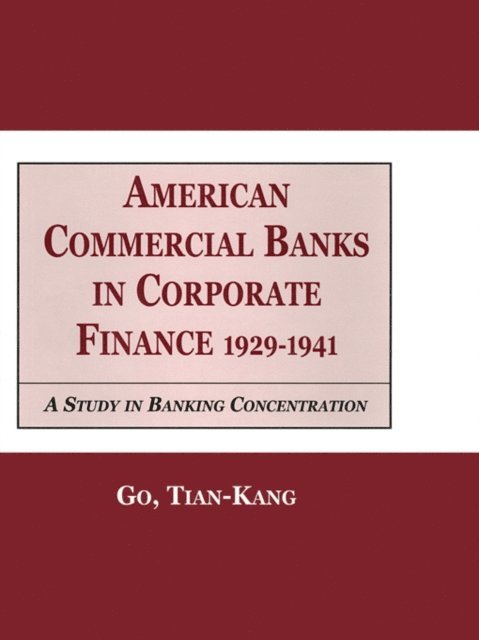
    History of Finance Capital in America

    The Great Depression and Interwar Years

    AvGo Tian Kang

    Häftad, Engelska, 2025

    Del i serien Perspectives in Economic and Social History

    715 kr

    Beställningsvara. Skickas inom 10-15 vardagar. Fri frakt över 249 kr.

    Fler format och utgåvor

    Inbunden

    3 131 kr

    E-bok

    846 kr

    E-bok

    846 kr

    Beskrivning

    Go details through institutional analysis how major financial institutions (including banks and insurance companies), industries, and the U.S. government behaved and linked with each other during the Great Depression and interwar period.Drawing on data that has not been widely used since the late thirties – including congressional hearings, financial data, and government reports concerning economic concentration in the Depression era – Go presents a general picture of American finance capital on the eve of World War II. He details the emergence of important new financial‑industrial powers in the 1920s that challenged the Wall Street’s established order on the eve of Great Depression, the response of the Wall Street’s finance capital to the challenge, and its renewed dominance as well as the growing community of interests between finance and industry under the Depression. He also points out the role of Wall Street’s finance capital in financing the Reconstruction Finance Corporation in 1932, the New Deal, and the emerging war economy.With its coverage of primary sources, this book will interest researchers and advanced undergraduate students taking American history, political science, and institutional economics.

    Produktinformation

    • Utgivningsdatum:2025-12-26
    • Mått:156 x 234 x 18 mm
    • Vikt:600 g
    • Format:Häftad
    • Språk:Engelska
    • Serie:Perspectives in Economic and Social History
    • Antal sidor:310
    • Förlag:Taylor & Francis Ltd
    • ISBN:9781032727875

    Utforska kategorier

    • Ekonomisk historia inom Ekonomi och Ledarskap
    • Finansiering inom Ekonomi och Ledarskap
    • Amerikas historia inom Historia och arkeologi

    Mer om författaren

    Go Tian Kang is an Emeritus Professor at Chuo University, Japan. He is the author of The Rise of Finance Capital in America (in Japanese) and American Commercial Banks in Corporate Finance, 1929–1941. He has contributed numerous articles to economic journals and has tought at the University of Tokyo, Peking University and other universities in Asia.

    Innehållsförteckning

    • ContentsPREFACEChapter Ⅰ De-concentration after World War I (part 1) —The emergence of new financial-industrial powersⅠ The Rise of New IndustriesⅡ The Formation of New Financial-Industrial Powers1. The Regional Financial-Industrial Powers2. The Investment Bankers and their Investment Trusts3. The Industrial Capitalists become BankersChapter Ⅱ De-concentration after World War I (part 2) —The response of Wall Street financial-industrial powersⅠ Morgan-First National GroupⅡ National City GroupⅢ Chase GroupChapter Ⅲ The Renewed Dominance of Finance Capital under the DepressionⅠ The Dominance of Finance Capital1. Formation of the stock pool2. Leading the bond syndicates3. Concentration of bank loans4. The Massive withdrawal of brokers’ loans and its consequencesⅡ The Fall of the New Financial-Industrial Powers1. The elimination of powerful competitors in the financial center2. The fall of regional powersⅢ Industrial Concentration Following the Crash1. Public utilities (power and gas)2. Electrical equipment3. Motor Cars4. Oil5. Steel6. Motion Pictures7. NewsprintChapter Ⅳ The Growing Community of Interests1. Public Utilities2. Petroleum3. Iron and Steel4. Automobile sales finance5. Chemicals6. Tire7. Tobacco8. Distilleries9. Canneries10. Paper11. Motion Pictures12. Merchandizing13. Aircraft14. ShipbuildingChapter Ⅴ The New OligarchyⅠ The Emergence of New OligarchyⅡ The Morgan-First National Group1. The Four Morgan-First National Banks2. The Three Big Insurance Companies3. The Two Investment Banking FirmsⅢ The Rockefeller Group1. Chase National Bank2. Metropolitan Life and Equitable Life3. The First Boston Corporation and Rockefeller’s subordinate allies in investment bankingⅣ National City GroupⅤ Wall Street’s Growing Influence over the Regional Groups1. The Chicago banks’ growing dependence on the Wall Street financial powers2. Subordination of Mellon to Rockefeller3. Cleveland becomes a satellite of Wall Street4. The new alliance between Boston and RockefellerChapter Ⅵ Finance Capital in Federal FinanceⅠ Financing the Reconstruction Finance Corporation (RFC)Ⅱ Financing the New Deal ProgramⅢ Supporting the emerging War EconomyAPPENDIXSELECTED BIBLIOGRAPHY INDEX