• Fri frakt över 249 kr
  • •
  • Snabba leveranser
  • •
  • Billiga böcker
Kundservice

Du är på sajten för privatpersoner.

Företag, bibliotek eller offentlig verksamhet?

Du handlar på classic.bokus.com, där alla dina funktioner finns intakta.
Till classic.bokus.com
Bokus logotyp. Gå till startsidan.
  • Erbjudanden
  • Nyheter
  • Student
  • Topplistor
  • Barn & ungdom
  • Bokus Play
  • E-böcker
  • Pocketböcker
  • Spel & pussel

10% rabatt på allt med kod: NYSTART10 →

Sidfot

Mina sidor

    Hjälp

    • Kundservice
    • Vanliga frågor och svar
    • Frakt och leverans
    • Retur vid ångerrätt
    • Reklamera vara
    • Betalning
    • Köpvillkor
    • Allmänna villkor
    • Information om webbplatsens tillgänglighet

    Om Bokus

    • Om oss
    • Pressrum
    • För studenter
    • För företag
    • För bibliotek och offentlig verksamhet
    • För leverantörer
    • Hållbarhet

    Populärt

    • Aktuella erbjudanden
    • Presentkort
    • Studentlitteratur
    • Nya böcker
    • Topplistor
    • Signerade böcker
    • Engelska böcker

    Inspiration

    • Boktips
    • BookTok
    • Populära bokserier
    • Barnbokskaraktärer
    • Populära författare
    Logotyp för Bokus
    Följ oss på Facebook (extern länk)Följ oss på Instagram (extern länk)Följ oss på YouTube (extern länk)Följ oss på TikTok (extern länk)
    bokus @ CookiesAnpassa cookiesIntegritetspolicyKöpvillkor
    Till Citymail hemsida (extern länk)Till Budbee hemsida (extern länk)Till Postnord hemsida (extern länk)Till Schenker hemsida (extern länk)Till Early Bird hemsida (extern länk)Till Walleys hemsida (extern länk)
    1. Språk och ordböcker
    2. Språkvetenskap och lingvistik

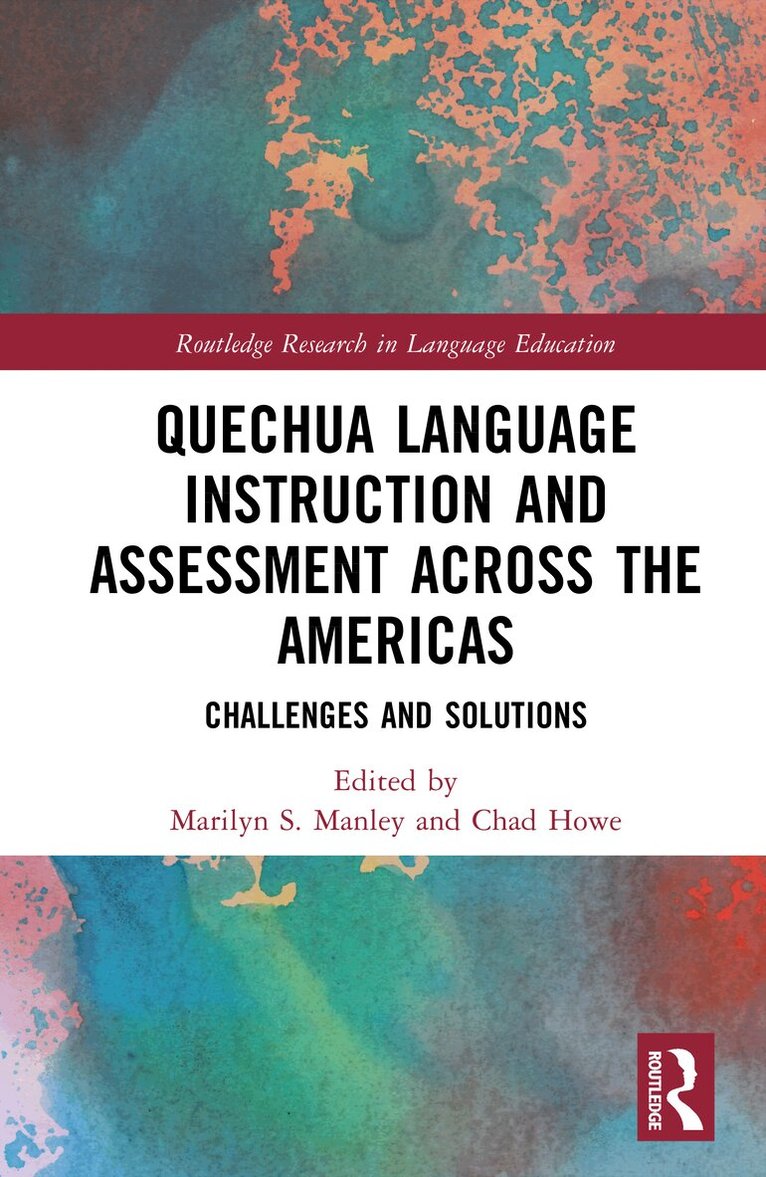
    Quechua Language Instruction and Assessment Across the Americas

    Challenges and Solutions

    AvMarilyn S. Manley,Chad Howe

    Inbunden, Engelska, 2026

    Del i serien Routledge Research in Language Education

    2 352 kr

    Beställningsvara. Skickas inom 10-15 vardagar. Fri frakt över 249 kr.

    Beskrivning

    Quechua, with nearly ten million speakers living primarily across the Andes, stands as the most widely spoken Indigenous language of the Americas today. Yet, this less commonly taught language (LCTL) continues to face significant challenges. This work illuminates and interrogates current barriers to Quechua language instruction and assessment within the United States, Ecuador, Bolivia, and Peru. Collectively, the contributions to this volume offer a way forward with suggestions and solutions aimed at building the capacity of Quechua language stakeholders.The volume describes barriers to effective Quechua language instruction and assessment, such as the problematic implementation of Intercultural Bilingual Education (IBE) in Peru and Ecuador, ineffective Quechua language learning materials, and inadequate Quechua language assessment instruments. To address these challenges, this work offers three primary solutions: expanding the target audience for Quechua language instruction and language learning materials, creating communicative language learning materials that reflect culturally appropriate, real-life situations and include nativized grammatical descriptions, and making necessary modifications to language proficiency assessment instruments. As such, it provides a blueprint for pushing Quechua language instruction and assessment beyond its current status and into a future in which instructors and students are offered high-quality, culturally grounded classroom experiences. These solutions may also apply to other LCTLs and, in particular, to other Indigenous languages of the Americas and beyond.This timely volume, which responds to UNESCO's Global Call for Action in declaring 2022-2032 as the International Decade of Indigenous Languages, is essential reading for scholars, faculty, and students with interests in Indigenous languages, language acquisition (L1/L2), language pedagogy, language policy, sociolinguistics, linguistic anthropology, and decolonizing approaches to education.

    Produktinformation

    • Utgivningsdatum:2026-02-24
    • Mått:152 x 229 x 17 mm
    • Vikt:570 g
    • Format:Inbunden
    • Språk:Engelska
    • Serie:Routledge Research in Language Education
    • Antal sidor:208
    • Förlag:Taylor & Francis Ltd
    • ISBN:9781032741789

    Utforska kategorier

    • Språkvetenskap och lingvistik inom Språk och ordböcker
    • Språkundervisning och språkinlärning inom Språk och ordböcker
    • Undervisning i specifika ämnen inom Psykologi och pedagogik

    Mer om författaren

    Marilyn S. Manley is Professor of Spanish and Chairperson of the Department of World Languages at Rowan University, where she teaches Quechua. She is the co-editor of Quechua expressions of stance and deixis, in Brill’s Studies in the Indigenous Languages of the Americas book series, 11, Leiden: Brill (2015).Chad Howe is Professor of Spanish and Director of the Latin American and Caribbean Studies Institute at the University of Georgia. He is the author of The Spanish Perfects (2013, Palgrave Macmillan) and co-editor of Lingüística de Corpus / The Routledge Handbook of Spanish Corpus Linguistics (2022, Routledge).

    Recensioner i media

    This volume is a groundbreaking contribution to Indigenous language education, addressing the challenges and possibilities of Quechua instruction and assessment across the Americas. By blending historical perspectives, decolonial approaches, and practical solutions, it provides a vital resource for educators, linguists, and policymakers committed to sustaining Quechua into the future.Serafín M. Coronel-Molina, Professor, Indiana University Bloomington, USAAn important volume on Indigenous language pedagogy and revitalization, bringing both seasoned and newer voices to the full array of Quechua teaching, learning, and assessment practices and proficiency in the US and the Andes. A cogent and supremely practical response to UNESCO's 2021 call for action on behalf of Indigenous language users and stakeholders. Nancy H. Hornberger, Professor Emerita, University of Pennsylvania, USAAn innovative and stimulating account of Quechua language teaching in its Andean homelands and among Andeans living in the US. Based on first hand research, the authors emphasize the need for culturally sustaining pedagogies, decolonial approaches, non-Westernised grammatical descriptions, and language-appropriate assessment tools, when teaching such an under-represented Indigenous language across a wide social field.Rosaleen Howard, Professor Emerita, Newcastle University, UK

    Innehållsförteckning

    • Part I: Looking to the future of Quechua language instructionChapter 1: Introduction: Looking to the future for Quechua language instruction and assessmentMarilyn S. Manley and Chad HoweChapter 2: Quechua beyond the Andes: Teaching and learning Indigenous languages in the United StatesAmérico Mendoza-MoriChapter 3: The history and development of intercultural bilingual education in Ancash, PeruFélix Julca-Guerrero and Laura Nivin-VargasPart II: Decolonizing Quechua language teaching and proficiency testingChapter 4: De-Westernizing grammar in the Quechua language classroomChad Howe and Bethany BatemanChapter 5: On Speaking Amazonian Kichwa authentically: Dilemmas for IRIS and ACTFL evaluative toolsJanis B. Nuckolls and Tod SwansonChapter 6: Assessing Quechua by its own standards: Adapting the ACTFL OPI Proficiency GuidelinesElvia Andía Grágeda and Marilyn S. Manley Part III: Authenticity versus standardization in Quechua language learning materialsChapter 7: Which Kichwa? Teaching Indigenous languages and working with and against dominant language ideologies in a small-scale textbook in EcuadorNicholas LimerickChapter 8: Heritage learners count: A Focus on language instruction for the revitalization of Southern QuechuaMarilyn S. Manley, Carlos Molina-Vital, and Alana DeLogePart IV: ConclusionChapter 9: ReflectionsPedro Ovio Plaza Martínez