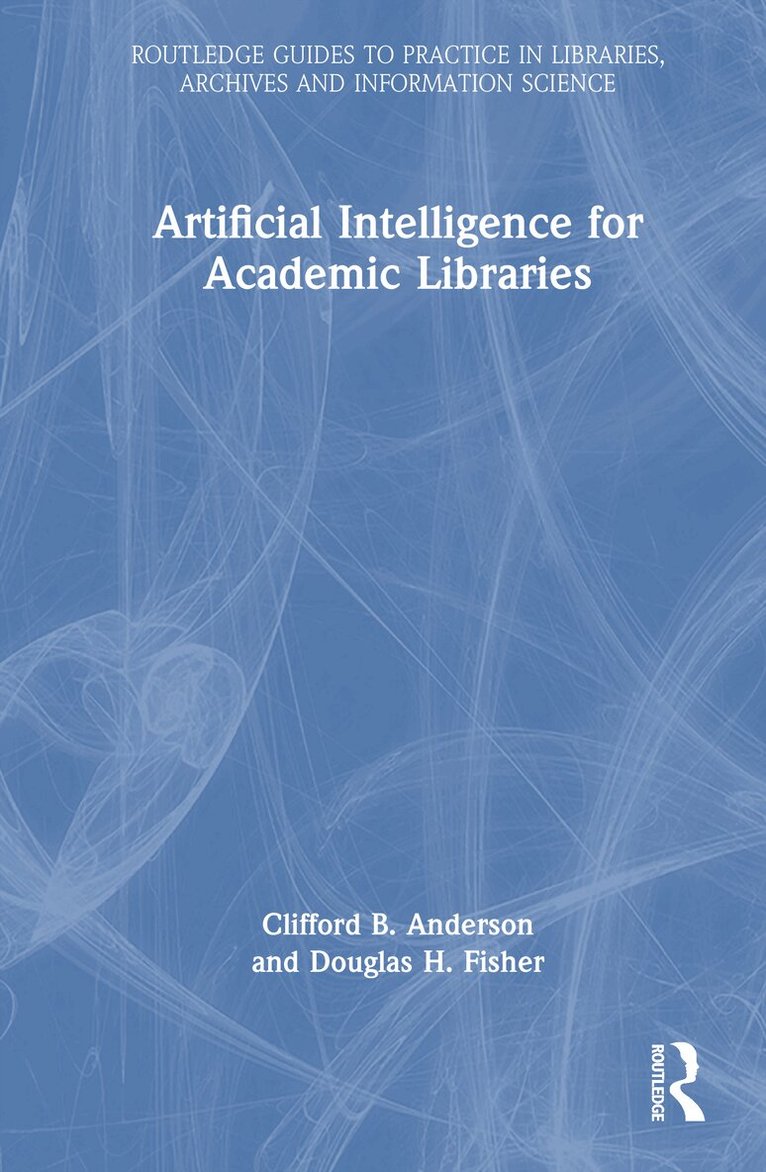
Inbunden, Engelska, 2025
Artificial Intelligence for Academic Libraries
Av Clifford B. Anderson, Douglas H. Fisher
Del i serien Routledge Guides to Practice in Libraries, Archives and Information Science
2564 kr
Beställningsvara. Skickas inom 10-15 vardagar. Fri frakt över 249 kr.
Fler format och utgåvor
Beskrivning
Produktinformation
- Utgivningsdatum: 2025-07-08
- Mått: 156 x 234 x 17 mm
- Vikt: 600 g
- Format: Inbunden
- Språk: Engelska
- Serie: Routledge Guides to Practice in Libraries, Archives and Information Science
- Antal sidor: 220
- Förlag: Taylor & Francis Ltd
- ISBN: 9781032753539
Mer om författaren
Clifford B. Anderson is the Director of the Divinity Library at Yale University. Previously, he was Chief Digital Strategist at the Vanderbilt University Library. He holds an M.Div. from Harvard Divinity School, an M.S.L.I.S. from the Pratt Institute, and a Ph.D. from Princeton Theological Seminary. His research interests include computational theology, digital humanities, and block-based programming languages. Among other publications, he is co-author of XQuery for Humanists (2020) and editor of Digital Humanities and Libraries and Archives in Religious Studies (2022).Douglas H. Fisher is Associate Professor Emeritus and Professor of the Practice in Computer Science at Vanderbilt University, having long taught and researched artificial intelligence, notably machine learning, cognitive modeling, computing for environmental sustainability, computational creativity, database, and other topics. His most recent research and publications, with colleagues, are on the nature of large language model cognition. He served for three years at the National Science Foundation, vetting and administering proposals and grants in all areas of artificial intelligence, as well as interdisciplinary programs. He received the Director’s Award for his work on NSF programs for computing and environment, and his innovations on virtual proposal review.
Recensioner i media
"The book is written in a very straightforward manner and is full of examples and practical applications for librarians. The authors provide a balanced view of AI and present many sides to the debate of how AI is and will continue to impact libraries and librarians. I recommend this book for academic librarians based on the history, background, and definitions/acronyms it gives. The authors also move the conversation beyond the media hype, providing depth and context to the conversation that librarians are having around AI."Alec K. Ellis, Web Technologies Librarian, Colorado Christian University, USA"Through comprehensive consideration of AI, this book is highly relevant and suitable for academic librarians and students in library and information science programs. With a strong conceptual orientation and an emphasis on professional reflection, this book helps readers understand the technological, ethical, and professional implications of developments in artificial intelligence in the academic environment. Additionally, observations on the responsible use of AI, scientific communication, and information literacy make the book valuable to interdisciplinary researchers, including those in information science, digital humanities, and technology studies. Thus, this book serves not only as an academic resource, but also as a professional development reference for librarians and researchers who wish to deepen their understanding of artificial intelligence, as well as its potential applications in library services and broader scholarly practices."Arya Wijaya Pramodha Wardhana, Lecturer, Library & Information Science, Universitas Airlangga, Indonesia
Betyg & recensioner
0 recensioner
Inga recensioner tillgängliga.