• Fri frakt över 249 kr
  • •
  • Snabba leveranser
  • •
  • Billiga böcker
Kundservice

Du är på sajten för privatpersoner.

Företag, bibliotek eller offentlig verksamhet?

Du handlar på classic.bokus.com, där alla dina funktioner finns intakta.
Till classic.bokus.com
Bokus logotyp. Gå till startsidan.
  • Erbjudanden
  • Nyheter
  • Student
  • Topplistor
  • Barn & ungdom
  • Bokus Play
  • E-böcker
  • Pocketböcker
  • Spel & pussel

10% rabatt på allt med kod NYSTART10 →

Sidfot

Mina sidor

    Hjälp

    • Kundservice
    • Vanliga frågor och svar
    • Frakt och leverans
    • Retur vid ångerrätt
    • Reklamera vara
    • Betalning
    • Köpvillkor
    • Allmänna villkor
    • Information om webbplatsens tillgänglighet

    Om Bokus

    • Om oss
    • Pressrum
    • För studenter
    • För företag
    • För bibliotek och offentlig verksamhet
    • För leverantörer
    • Hållbarhet

    Populärt

    • Aktuella erbjudanden
    • Presentkort
    • Studentlitteratur
    • Nya böcker
    • Topplistor
    • Signerade böcker
    • Engelska böcker

    Inspiration

    • Boktips
    • BookTok
    • Populära bokserier
    • Barnbokskaraktärer
    • Populära författare
    Logotyp för Bokus
    Följ oss på Facebook (extern länk)Följ oss på Instagram (extern länk)Följ oss på YouTube (extern länk)Följ oss på TikTok (extern länk)
    bokus @ CookiesAnpassa cookiesIntegritetspolicyKöpvillkor
    Till Citymail hemsida (extern länk)Till Budbee hemsida (extern länk)Till Postnord hemsida (extern länk)Till Schenker hemsida (extern länk)Till Early Bird hemsida (extern länk)Till Walleys hemsida (extern länk)
    1. Historia och arkeologi
    2. Historia
    3. Europas historia

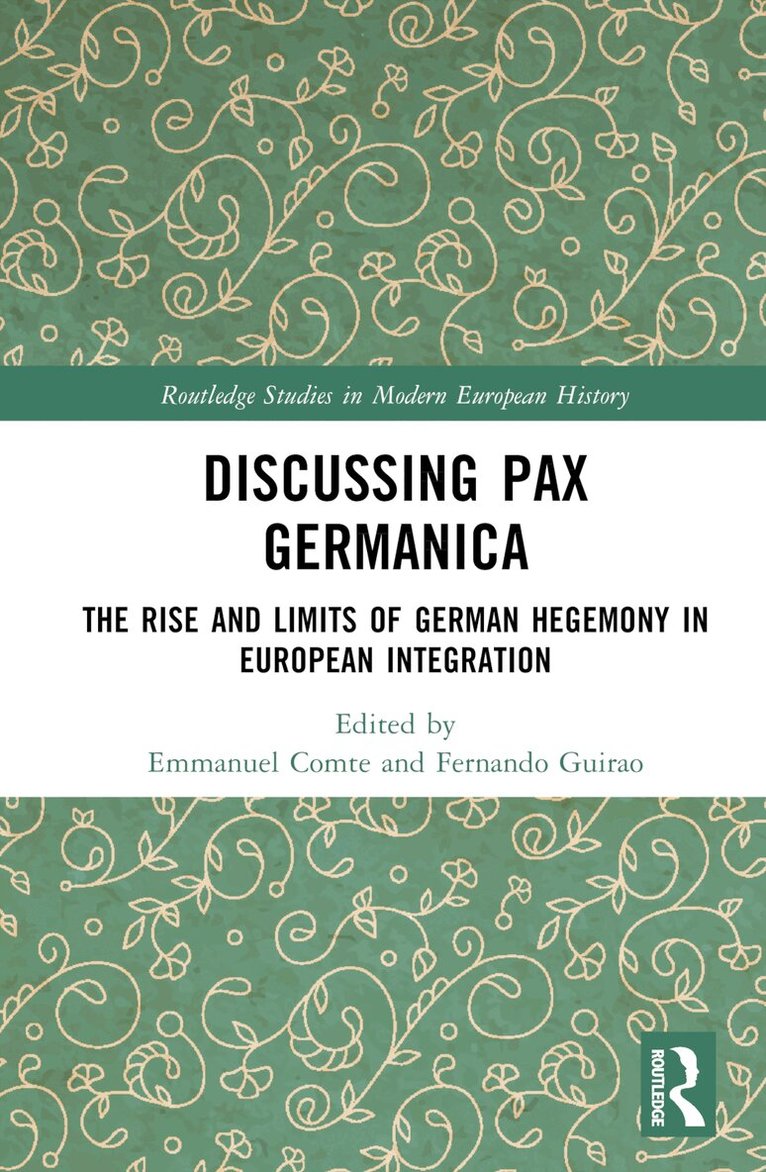
    Discussing Pax Germanica

    The Rise and Limits of German Hegemony in European Integration

    AvEmmanuel Comte,Fernando Guirao

    Inbunden, Engelska, 2024

    Del i serien Routledge Studies in Modern European History

    2 495 kr

    Beställningsvara. Skickas inom 10-15 vardagar. Fri frakt över 249 kr.

    Beskrivning

    Discussing Pax Germanica: The Rise and Limits of German Hegemony in European Integration examines and reconsiders Germany’s paramount role in shaping European integration from the aftermath of World War II to the present. This volume meticulously explores the ascendancy of Germany to a dominant position in European politics and economics. It critically engages with the concept of hegemony, delineating Germany’s influence on the development of the European Union and its resemblance to historical precedents in German history like the Holy Roman Empire. Methodologically, the book integrates archival research with contemporary literature to craft a narrative that is both historically grounded and relevant to current European affairs. The work stands out for its exploration of Germany’s strategic use of economic power and political diplomacy to shape the European Union according to its interests while facing inherent limitations and challenges, such as the eurozone crisis, migration policies, energy dependency, and foreign policy towards Russia. Targeting a diverse audience of both scholars and non-specialists, this book is particularly relevant for those interested in European politics, German history, and international relations.

    Produktinformation

    • Utgivningsdatum:2024-10-08
    • Mått:156 x 234 x 20 mm
    • Vikt:670 g
    • Format:Inbunden
    • Språk:Engelska
    • Serie:Routledge Studies in Modern European History
    • Antal sidor:262
    • Förlag:Taylor & Francis Ltd
    • ISBN:9781032792590

    Utforska kategorier

    • Europas historia inom Historia och arkeologi
    • Politik och statsskick inom Samhälle och politik

    Mer om författaren

    Emmanuel Comte is a senior research fellow of the European Programme at the Hellenic Foundation for European and Foreign Policy in Athens (ELIAMEP) and a professorial lecturer at the Vienna School of International Studies. He is the author of The History of the European Migration Regime (2018).Fernando Guirao is Jean Monnet History Professor at Pompeu Fabra University in Barcelona and deputy director of the Barcelona Center for European Studies (BACES). His most recent book, The European Rescue of the Franco Regime, 1950–1975 (2021) has merited the 2021 Joan Sardà prize.

    Recensioner i media

    "Finally a book that answers Europe's most vexing question: how to fit Germany onto the map without endangering the continent's peace and prosperity. The authors, a superb mix of specialists across fields, treat politics as inseparable from economics and culture. What the wartime alliance ultimately enabled was not the destruction of German hegemony but its transformation: now enacted not by German force, but through European consensus."John Connelly, University of California, Berkeley, USA“In … Discussing Pax Germanica: The Rise and Limits of German Hegemony in European Integration, Herman Van Rompuy ... writes matter-of-factly, ‘In the years of my mandate, there was only one time when the position of the European Council did not correspond to the position of Germany…’ So which way Germany goes matters more to Europe than the future course of any other European country.”Timothy Garton Ash, University of Oxford, UK, in The New York Review of Books, May 23, 2024“The authors have succeeded in offering a new, original perspective on the role of the Federal Republic in European integration.”Robin de Bruin, University of Amsterdam, Integration, April 2025"Anyone interested in European and German history and the future of the EU will benefit from reading the book. Overall, this edited volume offers valuable insights on peace systems, and it is particularly relevant in the current context of increased geopolitical tensions, contested globalization and limited economic growth"Laura Pierret, European University Institute, International Affairs

    Innehållsförteckning

    • Introduction Part 1: Pax Germanica through the ages 1. The European Union of the German nation 2. The Habsburg peace and its lessons for today’s Europe 3. Economics and power in German national identity Part 2: The rise of German hegemony in European integration 4. The sources and effects of German hegemony on European integration 5. Germany and France – The elusiveness of a joint hegemony 6. How Helmut Schmidt and Helmut Kohl made Europe Testimony: German pre-eminence in Europe Part 3: The constraints and limitations of German hegemony 7. Spectres of German dominance: Anxieties aroused and averted since 1950 8. Solving the German question through European integration 9. European integration history revisited around German leadership in the European Monetary System Part 4: The difficulties of German hegemony in a new century 10. The failure of German hegemony in European energy policy 11. German hegemony in the European Union? Evaluating the ‘crisis years’ from 2010 12. Hegemony and Germany – An odd couple Conclusion