• Fri frakt över 249 kr
  • •
  • Snabba leveranser
  • •
  • Billiga böcker
Kundservice

Du är på sajten för privatpersoner.

Företag, bibliotek eller offentlig verksamhet?

Du handlar på classic.bokus.com, där alla dina funktioner finns intakta.
Till classic.bokus.com
Bokus logotyp. Gå till startsidan.
  • Erbjudanden
  • Nyheter
  • Student
  • Topplistor
  • Barn & ungdom
  • Bokus Play
  • E-böcker
  • Pocketböcker
  • Spel & pussel

10% studentrabatt med kod TERM26

Sidfot

Mina sidor

    Hjälp

    • Kundservice
    • Vanliga frågor och svar
    • Frakt och leverans
    • Retur vid ångerrätt
    • Reklamera vara
    • Betalning
    • Köpvillkor
    • Allmänna villkor
    • Information om webbplatsens tillgänglighet

    Om Bokus

    • Om oss
    • Pressrum
    • För studenter
    • För företag
    • För bibliotek och offentlig verksamhet
    • För leverantörer
    • Hållbarhet

    Populärt

    • Aktuella erbjudanden
    • Presentkort
    • Studentlitteratur
    • Nya böcker
    • Topplistor
    • Signerade böcker
    • Engelska böcker

    Inspiration

    • Boktips
    • BookTok
    • Populära bokserier
    • Barnbokskaraktärer
    • Populära författare
    Logotyp för Bokus
    Följ oss på Facebook (extern länk)Följ oss på Instagram (extern länk)Följ oss på YouTube (extern länk)Följ oss på TikTok (extern länk)
    bokus @ CookiesAnpassa cookiesIntegritetspolicyKöpvillkor
    Till Citymail hemsida (extern länk)Till Budbee hemsida (extern länk)Till Postnord hemsida (extern länk)Till Schenker hemsida (extern länk)Till Early Bird hemsida (extern länk)Till Walleys hemsida (extern länk)
    1. Skönlitteratur
    2. Litteraturvetenskap
    3. Litteraturvetenskap

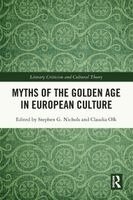
    Myths of the Golden Age in European Culture

    AvStephen G. Nichols,Claudia Olk

    Häftad, Engelska, 2026

    Del i serien Literary Criticism and Cultural Theory

    787 kr

    Beställningsvara. Skickas inom 10-15 vardagar. Fri frakt över 249 kr.

    Beskrivning

    Hesiod’s concept of a Golden Age, together with analogous myths – Babylonian, Egyptian, Hebrew, etc. – speak to the psychic appeal, perhaps even deep-rooted need, for humans to conceive alternate worlds free from the anguish, toil, and dangers of the one they inhabit. Classical poets and philosophers explored the myth; the Middle Ages imagined it as the land of Cockaigne; Early Modern dramatists incorporated it; Romantic poets and nineteenth-century writers imagined it in various guises. This volume explores the configuration presented by Hesiod and the history of its reception and transformation in European literature and culture. The chapters study how texts written in specific historical moments of European history reshape elements of the myth to explore contemporary issues of concern. The book addresses these issues of cultural hybridization, and, from a transhistorical perspective, provides new insights into the dynamics of epochal shifts. It also looks at similar configurations in non-Western civilizations (China), which complements the spectrum of contributions that covers periods from classical antiquity to the Age of Goethe.

    Produktinformation

    • Utgivningsdatum:2026-05-21
    • Mått:152 x 229 x 10 mm
    • Vikt:360 g
    • Format:Häftad
    • Språk:Engelska
    • Serie:Literary Criticism and Cultural Theory
    • Antal sidor:178
    • Förlag:Taylor & Francis Ltd
    • ISBN:9781032814476

    Utforska kategorier

    • Litteraturvetenskap inom Skönlitteratur

    Mer om författaren

    Stephen G. Nichols is the James M. Beall Professor Emeritus and Academy Professor of French and Humanities at Johns Hopkins University. He is a Fellow of the American Academy of Arts and Sciences, a Fellow of the Medieval Academy of America, an Honorary Senior Fellow of the School of Criticism and Theory (which he directed from 1996-2001). He received an honorary Docteur dès Lettres from the University of Geneva, is an Officier de l’Ordre des Arts et Lettres (France) and was awarded the Alexander von Humboldt Foundation Research Prize in 2008, 2015, and 2023. A Yale University Ph.D. in Comparative Literature, he has written or edited some 27 books on the Middle Ages, including Romanesque Signs: Early Medieval Narrative and Iconography, which received MLA’s Lowell Prize for an outstanding book, and From Parchment to Cyberspace: Medieval Literature in the Digital Age. Nichols co-directs JHU’s Digital Library of Medieval Manuscripts and co-founded the journal Digital Philology.Claudia Olk is chair of English and Director of the Shakespeare Library at Ludwig- Maximilians-Universität München. Until 2019 she was chair of Comparative Literature at the Peter Szondi Institute of the Freie Universität Berlin and Dean of the Faculty of Philosophy and the Humanities. Her main fields of research are Medieval and Renaissance Literature, Shakespeare Studies as well as Modernism. She is a member of the Bavarian Academy of Sciences and Humanities and served as President of the German Shakespeare Society from 2014-2023. Her publications include: Travel and Narration: the development of fiction in late medieval and renaissance travel narratives (1999), Virginia Woolf's Aesthetics of Vision (2014), and Shakespeare and Beckett: Restless Echoes (2023). Her edition of one of Virginia Woolf's hitherto unpublished manuscripts was published in 2013 by the British Library.

    Innehållsförteckning

    • List of ContributorsPreface Claudia Olk and Stephen G. Nichols,IntroductionOliver PrimavesiChapter 1: Hesiod and Empedocles on the Decline of HumankindStephen G. NicholsChapter 2: Eros and Eris in Hesiod’s Myth of the Golden AgeJack I. AbecassisChapter 3: In defense of the Evil Brother, an Interpretation of Hesiod’s Works and Days Daniel Heller-RoazenChapter 4: The Oldest Reading: Prometheus and the Arts of DivinationBrian J. ReillyChapter 5: “Immeasurably Preferred to Gold”: The Saintly Age of Medieval Christian SalvationGaia GubbiniChapter 6: After the End: The Troubadours, the Golden Age, and a Fading CivilizationClaudia OlkChapter 7: ‘T’excel the Golden Age’: Golden Worlds in the English RenaissanceJoachim KüpperChapter 8: Patriarchal Fantasies and Proto-Feminist Libertarianism: Don Quijote’s Praise of the Golden Age and Marcela’s Plea for FreedomAndreas HöfeleChapter 9: The Golden Age Restored, London 1616: Court Entertainment and Stuart PoliticsDavid E. WellberyChapter 10: The Golden Age in the Age of GoetheMichael LacknerChapter 11: One Golden Age? Or many? Chinese Conceptions of the Ideal SocietyIndex