• Fri frakt över 249 kr
  • •
  • Snabba leveranser
  • •
  • Billiga böcker
Kundservice

Du är på sajten för privatpersoner.

Företag, bibliotek eller offentlig verksamhet?

Du handlar på classic.bokus.com, där alla dina funktioner finns intakta.
Till classic.bokus.com
Bokus logotyp. Gå till startsidan.
  • Erbjudanden
  • Nyheter
  • Student
  • Topplistor
  • Barn & ungdom
  • Bokus Play
  • E-böcker
  • Pocketböcker
  • Spel & pussel

10% rabatt på allt med kod: NYSTART10 →

Sidfot

Mina sidor

    Hjälp

    • Kundservice
    • Vanliga frågor och svar
    • Frakt och leverans
    • Retur vid ångerrätt
    • Reklamera vara
    • Betalning
    • Köpvillkor
    • Allmänna villkor
    • Information om webbplatsens tillgänglighet

    Om Bokus

    • Om oss
    • Pressrum
    • För studenter
    • För företag
    • För bibliotek och offentlig verksamhet
    • För leverantörer
    • Hållbarhet

    Populärt

    • Aktuella erbjudanden
    • Presentkort
    • Studentlitteratur
    • Nya böcker
    • Topplistor
    • Signerade böcker
    • Engelska böcker

    Inspiration

    • Boktips
    • BookTok
    • Populära bokserier
    • Barnbokskaraktärer
    • Populära författare
    Logotyp för Bokus
    Följ oss på Facebook (extern länk)Följ oss på Instagram (extern länk)Följ oss på YouTube (extern länk)Följ oss på TikTok (extern länk)
    bokus @ CookiesAnpassa cookiesIntegritetspolicyKöpvillkor
    Till Citymail hemsida (extern länk)Till Budbee hemsida (extern länk)Till Postnord hemsida (extern länk)Till Schenker hemsida (extern länk)Till Early Bird hemsida (extern länk)Till Walleys hemsida (extern länk)
    1. Juridik
    2. Internationell rätt
    3. Folkrätt
    • Nyhet

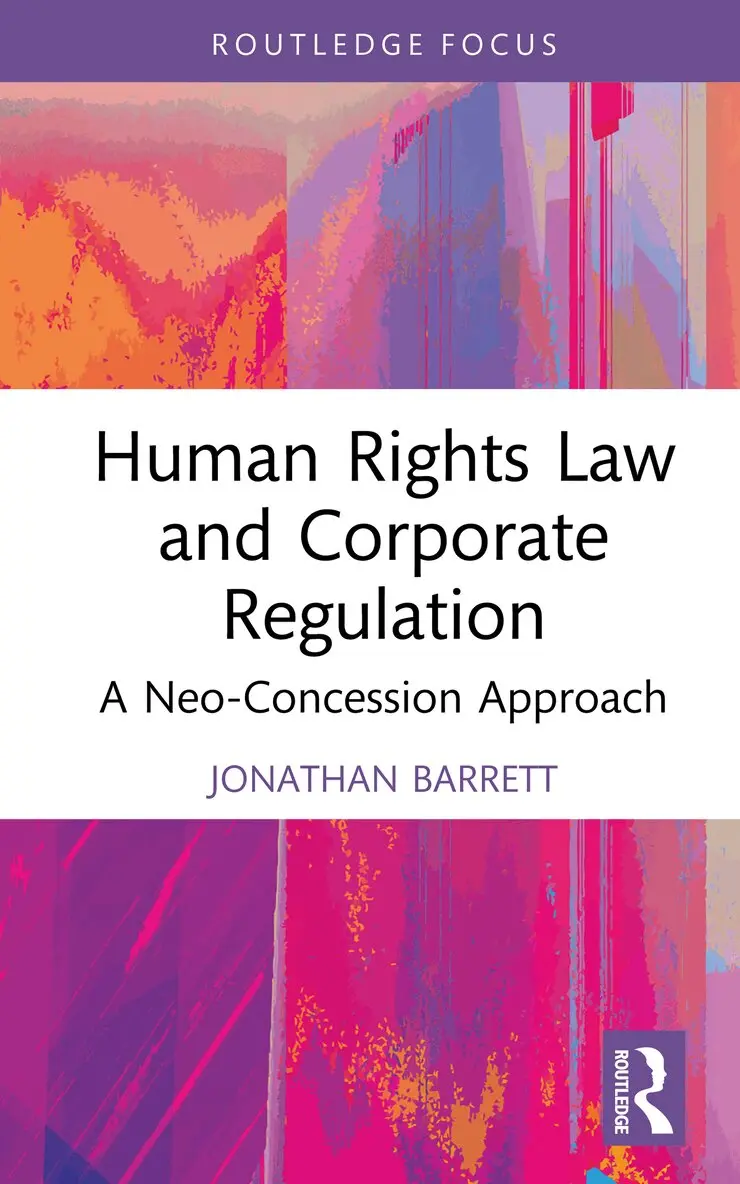
    Human Rights Law and Corporate Regulation

    A Neo-Concession Approach

    AvJonathan Barrett

    Häftad, Engelska, 2026

    Del i serien Routledge Research in Human Rights Law

    329 kr

    Beställningsvara. Skickas inom 10-15 vardagar. Fri frakt över 249 kr.

    Fler format och utgåvor

    Inbunden

    776 kr

    E-bok

    386 kr

    E-bok

    386 kr

    Beskrivning

    This book argues for an intensely humanist engagement with the company and presents a model of company regulation that is compatible with the protection, respect for and fulfilment of human rights.Dr Barrett provides a theoretical framing for corporate regulation in the context of human rights States. He argues that States which have ratified the fundamental human rights instruments should, on principle, exclude bodies corporate from the human rights ecosystem, except to the degree necessary to respect property rights of humans and human rights in business. He therefore develops a ‘neo-concession’ account of the corporation as the basis for a model of corporate regulation to protect human rights. The book outlines and recommends the principal features of a company under a neo-concession model, and the role of regulators in furthering the State’s human right obligations. It also delves into the potential issues of technological developments, including decentralised autonomous organisations, and the lessons policymakers can gain from First Nations’ approaches to business.This is a thought-provoking volume that will appeal to scholars in the disciplines of human rights law and corporate governance, as well as policymakers and regulators interested in regulating business for greater societal good.

    Produktinformation

    • Utgivningsdatum:2026-07-20
    • Mått:138 x 216 x 7 mm
    • Vikt:240 g
    • Format:Häftad
    • Språk:Engelska
    • Serie:Routledge Research in Human Rights Law
    • Antal sidor:120
    • Förlag:Taylor & Francis Ltd
    • ISBN:9781032833835

    Utforska kategorier

    • Folkrätt inom Juridik
    • Bolagsrätt inom Juridik
    • Offentlig förvaltning inom Juridik

    Mer om författaren

    Jonathan Barrett is an Associate Professor in the School of Accounting and Commercial Law, Victoria University of Wellington Te Herenga Waka, New Zealand. He teaches company law and taxation and researches the practical application of human rights.

    Innehållsförteckning

    • 1 Introduction 1.1 Aim 1.2 A neo-concessionist model 1.3 Structure 1.3.1 Human rights and duties, and corporations 1.3.2 Concession to neo-concession 1.3.3 Companies Acts and legislative considerateness 1.3.4 The role of the corporate regulator – regulatory considerateness 1.3.5. Towards regulatory confederation 1.3.6 Corporate regulation and technology 1.4 Concluding comments 2 Human rights and corporations 2.1 Introduction 2.1.1 Humanism 2.1.2 Rights and duties 2.1.3 Universal human rights2.2 Human rights in law 2.3 Property 2.4 Corporate claims to human rights2.4.1 Practical problems 2.4.2 Interpretive problems 2.4.3 Learning from the United States 2.4.4 Rule of law 2.5 Concluding comments 3 Concession to neo-concession 3.1 Introduction 3.2 Some theories of the company 3.2.1 Concession 3.2.2 Organic 3.2.3 Contract3.2.4 Real entity 3.3 The company untheorised3.4 Neo-concession 3.5 Concluding comments 4 Law and legislative considerateness 4.1 Introduction 4.1.1 Legislative considerateness 4.1.2 Directors’ duties4.1.3 Piercing the corporate veil 4.2 Legislative considerateness 4.2.1 General principles 4.2.2 Legislative considerateness and SMEs 4.3 Directors’ duties 4.3.2 Shareholders 4.5 General anti-abuse provision 4.6 Concluding comments 5 The role of the corporate regulator 5.1 Introduction 5.1.1 General principles 5.1.2 Key issues 5.2 Institutional competence 5.3 Regulatory considerateness 5.3.1 Competent and cooperative actors 5.3.2 Potentially competent and cooperative actors 5.3.3 Recalcitrant actors 5.4 International issues 5.4.1 Recognition of out-of-jurisdiction registered companies 5.5 Concluding comments 6 Towards regulatory confederation 6.1 Introduction 6.2 Colonial experience and UNDRIP 6.2.1 Australia6.2.2 Canada 6.2.3 New Zealand 6.3 Indigenous corporations 6.3.1 Australia6.3.2 Canada 6.3.3 New Zealand 6.4 Towards regulatory confederation 6.5 Concluding comments 7 Corporate regulation and technology 7.1 Introduction 7.2 Regulating cyberutopia 7.2.1 The DAO – a failed CBE 7.2.2 Algorithmic entities 7.3 AI 7.4 Regulating the unregulable 7.5 Concluding comments 8 Conclusion Bibliography Index