• Fri frakt över 249 kr
  • •
  • Snabba leveranser
  • •
  • Billiga böcker
Kundservice

Du är på sajten för privatpersoner.

Företag, bibliotek eller offentlig verksamhet?

Du handlar på classic.bokus.com, där alla dina funktioner finns intakta.
Till classic.bokus.com
Bokus logotyp. Gå till startsidan.
  • Erbjudanden
  • Nyheter
  • Student
  • Topplistor
  • Barn & ungdom
  • Bokus Play
  • E-böcker
  • Pocketböcker
  • Spel & pussel

10% rabatt på allt med kod NYSTART10 →

Sidfot

Mina sidor

    Hjälp

    • Kundservice
    • Vanliga frågor och svar
    • Frakt och leverans
    • Retur vid ångerrätt
    • Reklamera vara
    • Betalning
    • Köpvillkor
    • Allmänna villkor
    • Information om webbplatsens tillgänglighet

    Om Bokus

    • Om oss
    • Pressrum
    • För studenter
    • För företag
    • För bibliotek och offentlig verksamhet
    • För leverantörer
    • Hållbarhet

    Populärt

    • Aktuella erbjudanden
    • Presentkort
    • Studentlitteratur
    • Nya böcker
    • Topplistor
    • Signerade böcker
    • Engelska böcker

    Inspiration

    • Boktips
    • BookTok
    • Populära bokserier
    • Barnbokskaraktärer
    • Populära författare
    Logotyp för Bokus
    Följ oss på Facebook (extern länk)Följ oss på Instagram (extern länk)Följ oss på YouTube (extern länk)Följ oss på TikTok (extern länk)
    bokus @ CookiesAnpassa cookiesIntegritetspolicyKöpvillkor
    Till Citymail hemsida (extern länk)Till Budbee hemsida (extern länk)Till Postnord hemsida (extern länk)Till Schenker hemsida (extern länk)Till Early Bird hemsida (extern länk)Till Walleys hemsida (extern länk)
    1. Naturvetenskap och teknik
    2. Teknik och industri
    3. Byggnadsteknik

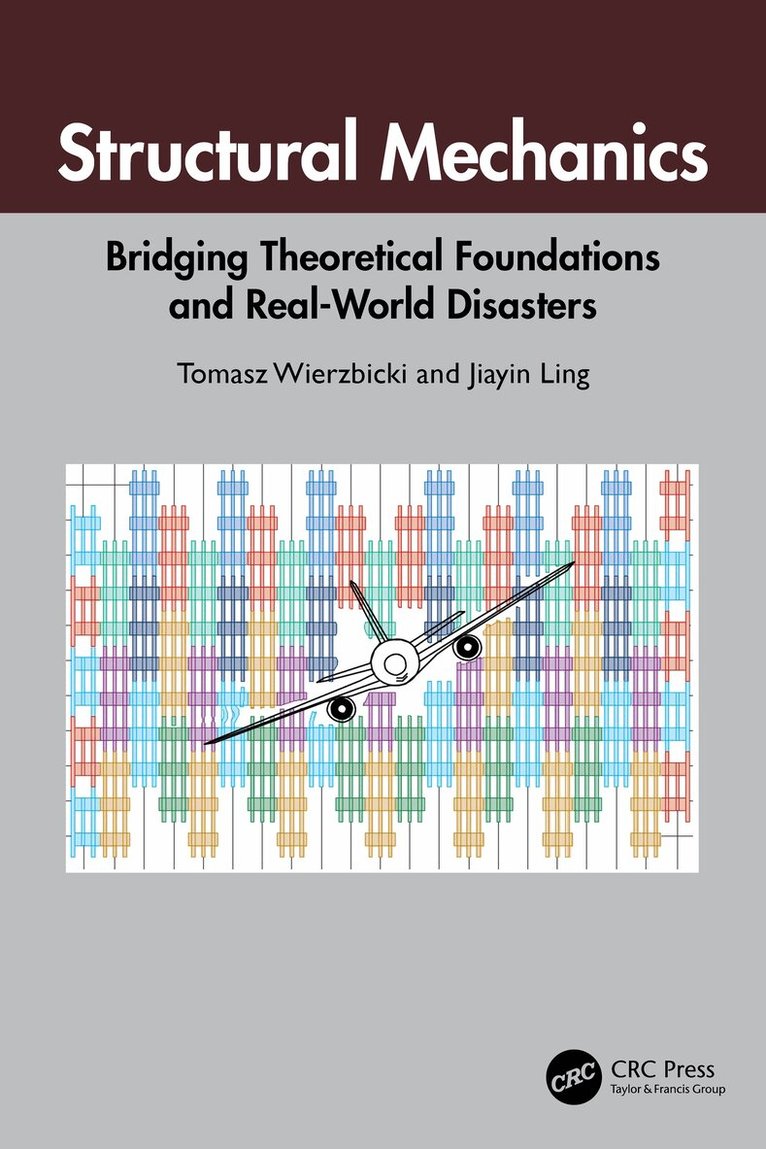
    Structural Mechanics

    Bridging Theoretical Foundations and Real-World Disasters

    AvTomasz Wierzbicki,Jiayin Ling

    Inbunden, Engelska, 2024

    2 422 kr

    Beställningsvara. Skickas inom 10-15 vardagar. Fri frakt över 249 kr.

    Fler format och utgåvor

    Häftad

    920 kr

    Beskrivning

    Structural Mechanics covers three different aspects of modern engineering: the foundation of structural mechanics, the solution to urgent industrial problems, and the reconstruction of major accidents. This book offers six case studies that teach how to identify the most important phase of the collapse or fracture of a complex system, develop a simple mathematically tractable model, and offer a discussion of the analytical and numerical solutions.This book originated from the lecture notes of Professor Tomasz Wierzbicki who taught at MIT and Stanford University. The notes were amended and improved many times over the years to provide a link between rigorous theoretical foundations with solutions to important engineering problems. The book discusses complex man-made structures under accidental impact or explosive loads, resulting in the loss of life and/or extensive property, infrastructural, and environmental damage. The book deals with reconstructing the sequence of events of such accidents from the structural point of view. The book is not restricted to the accident reconstruction only - concepts and solutions of the elasticity, advance plasticity and ductile fracture were used throughout the reconstruction of the accidents. The additional 17 lectures provide theoretical foundations for the elastic structures, plastic plates and shells, and ductile fracture.Not only is this an essential textbook for graduate students studying structural mechanics, it is also relevant to industry professionals, researchers, and academics in the field of engineering.

    Produktinformation

    • Utgivningsdatum:2024-12-23
    • Mått:156 x 234 x 36 mm
    • Vikt:1 250 g
    • Format:Inbunden
    • Språk:Engelska
    • Antal sidor:566
    • Förlag:Taylor & Francis Ltd
    • ISBN:9781032842813

    Utforska kategorier

    • Byggnadsteknik inom Naturvetenskap och teknik
    • Klassisk mekanik inom Naturvetenskap och teknik
    • Maskinteknik och material inom Naturvetenskap och teknik

    Mer om författaren

    Professor Tomasz Wierzbicki earned his MS degree from the Department of Mechanical Engineering at the Warsaw University of Technology, followed by a PhD from the Institute of Fundamental Technological Research. He then pursued postdoctoral studies at Stanford University, delving into innovative research in crashworthiness. This expertise garnered him an invitation from Volvo, where he contributed to various projects. In 1981, he ascended to the position of Full Professor at the Polish Academy of Sciences before relocating to the United States later that year. Joining MIT in 1983, he directed the Impact and Crashworthiness Lab. His contributions have been widely recognized with over 250 papers published in leading international journals. In 1986, he was honored with the Alexander von Humboldt senior US Scientist Award, marking the beginning of a fruitful collaboration with the BMW R&D Department in Munich, focusing primarily on fracture mechanics. Professor Wierzbicki's legacy is evident in the numerous industry-oriented programs he has spearheaded at MIT, garnering support from over 76 major automotive, steel, aluminum, offshore, shipbuilding, and consumer electronics companies. His research interests span dynamic plasticity, structural failure, crashworthiness, ultralight materials, ductile fracture, and, more recently, a pioneering program on modeling lithium-ion batteries. He has also served as an Associate Editor of the International Journal of Impact Engineering for many years.Dr. Jiayin Ling serves as a Senior Services Manager at GE HealthCare. Before this role, he held various engineering positions at GE, where he played key roles in developing innovative medical devices such as photon-counting CT scanners and helium-free MRI magnets. Dr. Ling earned his Ph.D. in Mechanical Engineering from the Massachusetts Institute of Technology and his B.S. in Physics from Tsinghua University.

    Innehållsförteckning

    • Part I From Continuum Mechanics to Elastic StructuresLecture 1: The concept of strain Lecture 2: The Concept of Stress, Generalized Stresses and Equilibrium Lecture 3: Development of Constitutive Equations of Continuum, Beams and Plates Lecture 4: Solution Method for Beam Deflections Lecture 5: Moderately Large Deflection Theory of Beams Lecture 6: Bending Response of Plates and Optimum Design Lecture 7: Energy Methods in Elasticity Lecture 8: Stability of Elastic Structures Lecture 9: Advanced Topic in Column Buckling Lecture 10: Buckling of Plates and Sections Part II Plastic Analysis of Plates and Shells, and Ductile Fracture Lecture 11: Fundamental concepts in plasticity Lecture 12: Von Mises yield condition Lecture 13: Tresca yield condition Lecture 14: Yield condition in generalized stresses Lecture 15: Principle of virtual velocity and Limit Analysis Lecture 16: Fundamental concepts of ductile fracture Lecture 17: Fracture Calibration and Experimental ValidationPart III Dynamic Loading and Failure of Structures Lecture 18: Space Shuttle Challenger mid-air break-up (1986) Lecture 19: Denting Analysis of Short Tubular Members Lecture 20: Buckle Propagation In Undersea Pipelines (1987)Lecture 21: Grounding Damage of Exxon Valdez (1989) Lecture 22: Airplane Wing Cutting Into Twin Tower External Columns(2003) Lecture 23: Fracture And Collapse of the BP Horizon Oil Rig (2010)Lecture 24: Road Debris Impact on EV Battery Pack (2014)Appendix