• Fri frakt över 249 kr
  • •
  • Snabba leveranser
  • •
  • Billiga böcker
Kundservice

Du är på sajten för privatpersoner.

Företag, bibliotek eller offentlig verksamhet?

Du handlar på classic.bokus.com, där alla dina funktioner finns intakta.
Till classic.bokus.com
Bokus logotyp. Gå till startsidan.
  • Erbjudanden
  • Nyheter
  • Student
  • Topplistor
  • Barn & ungdom
  • Bokus Play
  • E-böcker
  • Pocketböcker
  • Spel & pussel

10% rabatt på allt med kod: NYSTART10 →

Sidfot

Mina sidor

    Hjälp

    • Kundservice
    • Vanliga frågor och svar
    • Frakt och leverans
    • Retur vid ångerrätt
    • Reklamera vara
    • Betalning
    • Köpvillkor
    • Allmänna villkor
    • Information om webbplatsens tillgänglighet

    Om Bokus

    • Om oss
    • Pressrum
    • För studenter
    • För företag
    • För bibliotek och offentlig verksamhet
    • För leverantörer
    • Hållbarhet

    Populärt

    • Aktuella erbjudanden
    • Presentkort
    • Studentlitteratur
    • Nya böcker
    • Topplistor
    • Signerade böcker
    • Engelska böcker

    Inspiration

    • Boktips
    • BookTok
    • Populära bokserier
    • Barnbokskaraktärer
    • Populära författare
    Logotyp för Bokus
    Följ oss på Facebook (extern länk)Följ oss på Instagram (extern länk)Följ oss på YouTube (extern länk)Följ oss på TikTok (extern länk)
    bokus @ CookiesAnpassa cookiesIntegritetspolicyKöpvillkor
    Till Citymail hemsida (extern länk)Till Budbee hemsida (extern länk)Till Postnord hemsida (extern länk)Till Schenker hemsida (extern länk)Till Early Bird hemsida (extern länk)Till Walleys hemsida (extern länk)
    1. Samhälle och politik
    2. Social välfärd och brottslighet
    3. Socialt arbete och välfärd

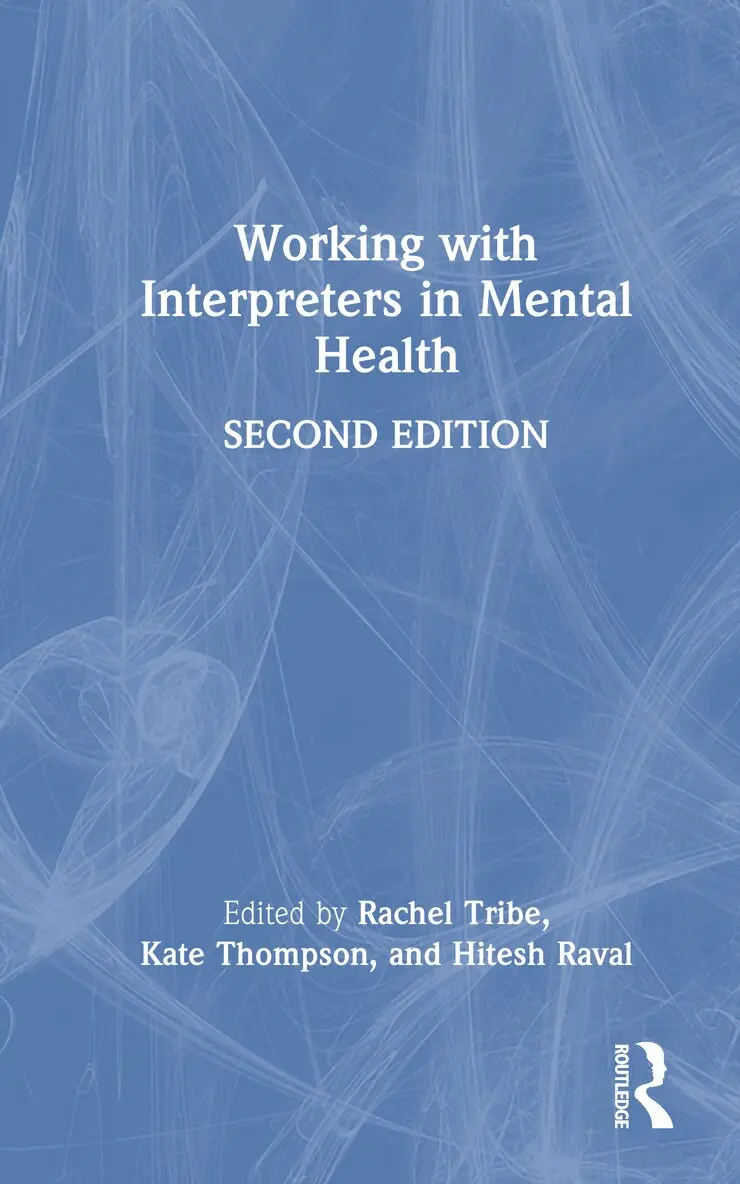
    Working with Interpreters in Mental Health

    AvRachel Tribe,Kate Thompson

    Inbunden, Engelska, 2026

    2 493 kr

    Beställningsvara. Skickas inom 10-15 vardagar. Fri frakt över 249 kr.

    Beskrivning

    This fully updated edition gives an insight into the opportunities and challenges of mental health professionals and interpreters working together in mental health.Drawing on extensive theory, research, and practice, chapters combine contributions from a range of disciplines on topics including interpreters in medical consultations; issues of language provision in health care services; the application of theoretical frameworks to the work with interpreters; and the work of interpreters in a variety of practice settings. This thoroughly revised edition also features additional chapters exploring interpreter perspectives on their work, along with new chapters on working with interpreters in forensic settings, in National Health Service talking therapies/primary care settings, in humanitarian work, in schools, and with older adults, as well as presenting an interprofessional approach to interpreter and therapist training.This book will be invaluable for practitioners of psychology, psychiatry, social work, and other health professionals. It will also be relevant to interpreters working with mental health professionals and their managers and service leads. It will be of interest to anyone involved in commissioning language support in health and social care services.

    Produktinformation

    • Utgivningsdatum:2026-02-26
    • Mått:138 x 216 x 24 mm
    • Vikt:870 g
    • Format:Inbunden
    • Språk:Engelska
    • Antal sidor:360
    • Upplaga:2
    • Förlag:Taylor & Francis Ltd
    • ISBN:9781032907123

    Utforska kategorier

    • Socialt arbete och välfärd inom Samhälle och politik
    • Psykiatri inom Medicin
    • Psykoterapi som behandlingsmetod inom Medicin

    Mer om författaren

    Rachel Tribe is based at the School of Psychology, University of East London, and the Centre for Psychiatry and Mental Health, Queen Mary, University of London.Kate Thompson is a consultant counselling psychologist with more than two decades of experience providing psychological support to clients and staff in a range of settings.Hitesh Raval is a clinical psychologist and systemic practitioner with previous clinical work experience in child and family services where interpreting was an essential part of the work.

    Recensioner i media

    ‘This essential book offers a comprehensive exploration of the collaboration between mental health professionals and interpreters across diverse settings. By bridging theory and practice, it sheds light on critical issues like disempowerment, agency, and the complexities of working in primary care, forensic units, and humanitarian contexts. With insightful chapters on trauma, neuropsychology, and child mental health, as well as guidance on training and supervision, this book is a valuable resource for professionals navigating multilingual mental health care. A must-read for anyone committed to improving accessibility and equity in mental health services.’Irina Sanders, Chairperson, Association of Interpreters and Translators‘This book brings together an impressive range of experts in the field of working psychologically through interpreters. Professor Tribe and colleagues have ensured that the contributions cover many clinical specialties across the lifespan where therapists might need to take into account the challenges and opportunities that work in this area presents. The contributors have ensured that there is a helpful combination of practical information for the front line clinician and thoughtful consideration of the theoretical and contextual issues that shape work in this area. This book is an essential and unique resource for any clinician working with people through interpreters.’Dr Andrew Beck, Consultant Clinical Psychologist, former President and Honorary Fellow of the BABCP'In many cultures guests are welcomed and revered. Other cultures see workers as temporary arrivals and guest workers. In the past two decades there have been large numbers of people migrating within the same country and also across national boundaries. Various factors may explain higher rates of psychiatric disorders among migrants but it is also true that they are often reluctant to seek help either because of stigma or because services are hard to access and unknown, not culturally aware or insensitive. Lack of fluency in the host language makes it difficult to seek help even if a person is keen to do so. This second edition of a well-regarded volume makes us aware of working with interpreters across cultures. Congratulations to the editors for bringing together a wonderful group of experts. Every mental health professional will benefit from reading this volume and following its advice, which will help improve engagement and outcomes in mental health settings. Good clear communication and mutual understanding are at the core of human interactions and humanity as a whole.'Dinesh Bhugra, President World Psychiatric Association 2014-2017, British Medical Association 2018 – 2019, Professor Emeritus, Mental Health & Cultural Diversity, IoPPN 'The world has become a global village with multiple languages spoken in different parts of the globe. One of the most significant factors restricting access to mental health services for those newly arrived in a country is limited language proficiency. The services provided by interpreters thus assume a key importance for delivering mental health services in multicultural settings. Interpreters also require information, training and support about how best to work with health and care professionals. Working with Interpreters in Mental Health enhances the prospect of successful service delivery by emphasising the importance of meeting the diverse needs of multicultural populations. It is a meaningful addition to the literature for mental health clinicians including psychiatrists, psychologists, social workers psychiatric nurses and GPs, and it is hoped that a wider range of health professionals including health service managers and commissioners of interpreting services will also find this book helpful for their work.'Dr Afzal Javed, Consultant Psychiatrist, Immediate Past President World Psychiatric Association 'This important book is aimed at wide readership, and is particularly relevant to those working in mental health services, either as an interpreter or as a clinician working with interpreters. The book will be beneficial to interpreters, commissioners and managers with responsibility for policy and service planning, as well as clinicians working in primary and secondary care roles, in forensic settings, family therapy services, with children and adolescents as well as those working internationally. The book summarises current thinking on best practice so that individuals working in the field of interpreting as well as clinical staff may be more inclusive and better meet the diverse needs of service users.' Roman Raczka, President of the BPS 2024-2025

    Innehållsförteckning

    • Section 1 IntroductionChapter 1: Introduction: Setting the scene Kate Thompson, Rachel Tribe & Hitesh Raval Chapter 2: Reflections of an interpreter working in mental health settings and the impact on her practice later as a counselling psychologist working in partnership with interpretersFarkhondeh Farsimadan Chapter 3: Service Users’ Perspective on Receiving Talking Therapy with Interpreters: opportunities, challenges, and adjustments to practiceChapter 4: Working as an interpreter in mental health Phillipe Muriel Section 2 TheoryChapter 5: Applying theoretical frameworks to therapeutic work with bilingual coworkersHitesh Raval Chapter 6: Speaking with the silenced: working with refugee survivors of tortureNimisha Patel Chapter 7: The power and agency of the mental health interpreter Anne DelizéeChapter 8: Guidance on Working with interpreters in Mental HealthRachel Tribe & Kate Thompson Section 3 PracticeChapter 9: Working with Interpreters – Including their Voices Phillip Messent Chapter 10: Clinicians’ experience of working with interpreters in Improving Access to Psychological Therapies services and secondary care in EnglandChloe Gerskowitch, Hannah Sela & Rachel Tribe Chapter 11: Interpreter-mediated assessment in secondary mental health servicesJordan Bamford, Seri Abraham, Mustafa Alachkar, & Adeola Akinola Chapter 12: The Third Wheel? Exploring the challenges of working with sign language interpreters in mental healthcareYvonne Waddell Chapter 13: Working with interpreters in trauma settings Ann Salter, Huda M. Abubaker Benyounis, and Laura Kemmis Chapter 14: Working with interpreters, adolescents, and young adults in a non-residential therapeutic communityBitenge Makula, Sheila Melzak, Kevin Perkins, and Ferelyth Watt Chapter 15: Children’s, interpreters’, and group members’ voices and positioning in multilingual multi-family groups and family therapyNatasha Nascimento Chapter 16: Learning from research into the experiences of interpreters working in a medium-secure forensic mental health unitLana Molle and Rachel Tribe Chapter 17: Working with an interpreter when working with older adults Maureen McIntosh and Afreen Huq Chapter 18: Interpreter-mediated neuropsychological assessment Clara Calia, T. Rune Nielsen, Sanne Franzen, Tamlyn Watermeyer and Naaheed Mukadam Chapter 19: Interpreting in a humanitarian setting Christian Harkensee Chapter 20: Remote working with interpreters – the opportunities and pitfalls of offering language-mediated mental health work online Kate Thompson Section 4 Training, supervision, and supportChapter 21: An interprofessional approach to training clinicians and interpreters Biyu (Jade) Du and Anna Chaddock Chapter 22: Training issues for interpretersRachel Tribe and Phillipe Muriel Chapter 23: Supervision and support when clinicians and interpreters work together Rachel Tribe and Claire Marshall Chapter 24: Setting up a mental health spoken language interpreting service – principles and implementation Beverley Costa Chapter 25: Conclusions Rachel Tribe, Kate Thompson and Hitesh Raval