• Fri frakt över 249 kr
  • •
  • Snabba leveranser
  • •
  • Billiga böcker
Kundservice

Du är på sajten för privatpersoner.

Företag, bibliotek eller offentlig verksamhet?

Du handlar på classic.bokus.com, där alla dina funktioner finns intakta.
Till classic.bokus.com
Bokus logotyp. Gå till startsidan.
  • Erbjudanden
  • Student
  • Topplistor
  • Barn & ungdom
  • Bokus Play
  • E-böcker
  • Ljudböcker
  • Pocketböcker
  • Spel och pussel

Pocketfynda! Hundratals böcker för 49 kr/st →

Sidfot

Mina sidor

    Hjälp

    • Kundservice
    • Vanliga frågor och svar
    • Frakt och leverans
    • Retur vid ångerrätt
    • Reklamera vara
    • Betalning
    • Köpvillkor
    • Allmänna villkor
    • Information om webbplatsens tillgänglighet

    Om Bokus

    • Om oss
    • Pressrum
    • För studenter
    • För företag
    • För bibliotek och offentlig verksamhet
    • För leverantörer
    • Hållbarhet

    Populärt

    • Aktuella erbjudanden
    • Presentkort
    • Studentlitteratur
    • Nya böcker
    • Topplistor
    • Signerade böcker
    • Engelska böcker

    Inspiration

    • Boktips
    • BookTok
    • Barnbokskaraktärer
    • Populära författare
    Logotyp för Bokus
    Följ oss på Facebook (extern länk)Följ oss på Instagram (extern länk)Följ oss på YouTube (extern länk)Följ oss på TikTok (extern länk)
    bokus @ CookiesAnpassa cookiesIntegritetspolicyKöpvillkor
    Till Citymail hemsida (extern länk)Till Budbee hemsida (extern länk)Till Postnord hemsida (extern länk)Till Schenker hemsida (extern länk)Till Early Bird hemsida (extern länk)Till Walleys hemsida (extern länk)
    1. Samhälle och politik
    2. Politik och statsskick
    3. Internationella relationer

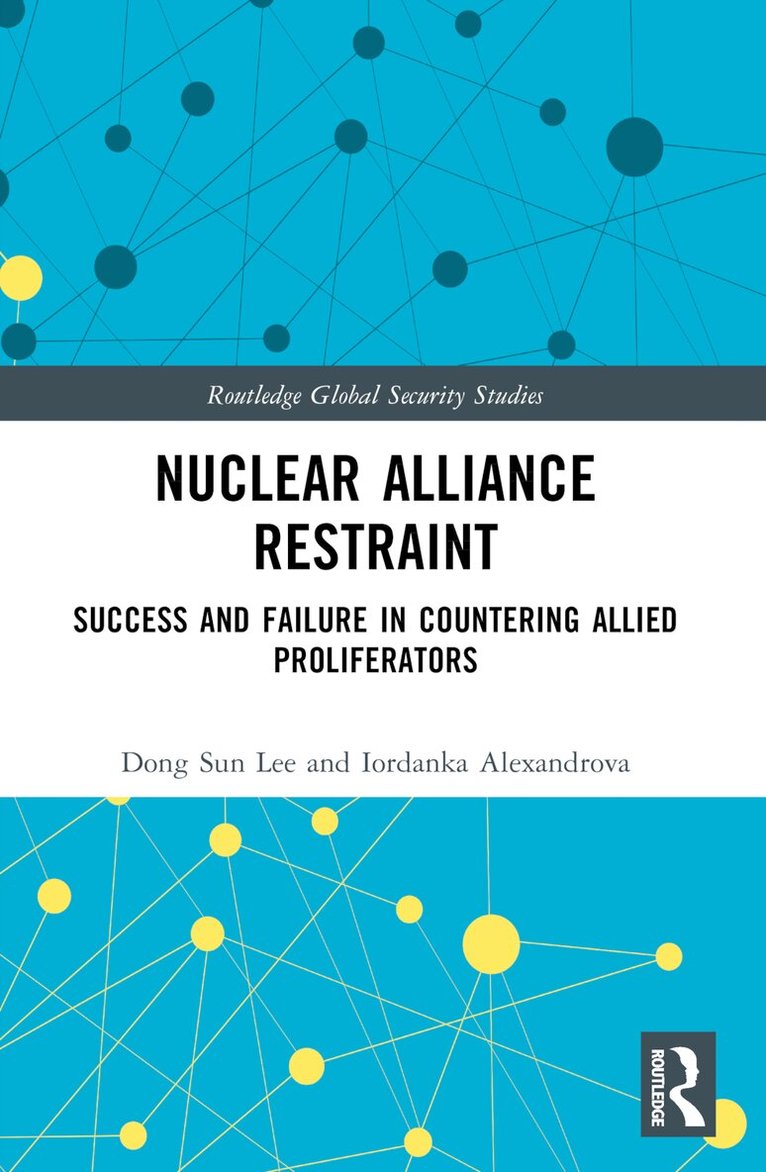
    Nuclear Alliance Restraint

    Success and Failure in Countering Allied Proliferators

    AvDong Sun Lee,Iordanka Alexandrova

    Häftad, Engelska, 2026

    Del i serien Routledge Global Security Studies

    677 kr

    Beställningsvara. Skickas inom 10-15 vardagar. Fri frakt över 249 kr.

    Fler format och utgåvor

    Inbunden

    2 410 kr

    Beskrivning

    This book examines why powerful states have varying success in restraining less-powerful allies from acquiring nuclear weapons, based on a broad range of historical case studies.The outcomes of nuclear alliance restraint primarily depend on two structural factors: the number of superpowers in the global system and the geographical distance between patrons and clients. Through in-depth case studies of South Korea, North Korea, China, and Pakistan and a comprehensive analysis of 14 historical episodes, the book demonstrates that restraint succeeds when there are two superpowers, with one trying to rein in a distant ally. Conversely, restraint often fails with a single superpower in the system or when nuclear aspirants are close to their patrons. This study has important implications for current nonproliferation efforts since it suggests that a bipolar world with the United States and China as superpowers would enhance counterproliferation effectiveness, reducing nuclear proliferation risks. In addition, an inducement-centered approach adopted early on would be most effective for these superpowers in restraining their allied proliferators.This book will be of much interest to students of nuclear proliferation, foreign policy, security studies, and international relations.

    Produktinformation

    • Utgivningsdatum:2026-06-22
    • Mått:156 x 234 x 11 mm
    • Vikt:370 g
    • Format:Häftad
    • Språk:Engelska
    • Serie:Routledge Global Security Studies
    • Antal sidor:184
    • Förlag:Taylor & Francis Ltd
    • ISBN:9781032914091

    Utforska kategorier

    • Internationella relationer inom Samhälle och politik

    Mer om författaren

    Dong Sun Lee is a Professor of International Relations at Korea University, Seoul, South Korea. He has a PhD in Political Science from the University of Chicago and is the author of Power Shifts, Strategy, and War: Declining States and International Conflict (2008).Iordanka Alexandrova is an Assistant Professor of International Relations at Seoul National University of Science and Technology, South Korea. She has a PhD in Political Science from Korea University.

    Recensioner i media

    'Nuclear Alliance Restraint is a fascinating and well-researched book that explains when powerful states are likely to prevent their weaker allies from acquiring nuclear weapons. Whereas many experts fear increased nuclear proliferation now that unipolarity has ended and great-power competition is back with a vengeance, Lee and Alexandrova argue the opposite. Let’s hope they are right!'John J. Mearsheimer, R. Wendell Harrison Distinguished Service Professor of Political Science at the University of Chicago, USA'Nuclear Alliance Restraint adopts a bold approach to understanding a crucially important question—under what conditions do powerful states fail to stop weaker allies from acquiring nuclear weapons? The authors develop a structural theory that focuses on polarity—the number of superpowers—and geography. Their high-level theory provides a parsimonious, yet nuanced, understanding of the credibility and leverage of the major power’s carrots and sticks, and produces crucial insights that are missing from theories that focus instead on the characteristics of individual states. Nuclear Alliance Restraint greatly advances our understanding of nuclear proliferation, as well as the dynamics of asymmetric alliances.'Charles L. Glaser, Senior Fellow in the MIT Security Studies Program and Professor Emeritus of Political Science and International Affairs at George Washington University, USA

    Innehållsförteckning

    • 1. Introduction 2. Polarity, Geography, and Nuclear Alliance Restraint 3. The American Success to Denuclearize South Korea, 1970–1982 4. The Chinese Failure to Disarm North Korea, 1993–2016 5. The Soviet Failure to Restrain the Chinese Nuclear Armament, 1954–1966 6. The US Failure to Denuclearize Pakistan, 1991–2000 7. Comprehensive Investigation 8. Conclusion: Nuclear Alliance Restraint Now and After Unipolarity