Dong Sun Lee - Böcker
Visar alla böcker från författaren Dong Sun Lee. Handla med fri frakt och snabb leverans.
6 produkter
6 produkter
2 386 kr
Skickas inom 7-10 vardagar
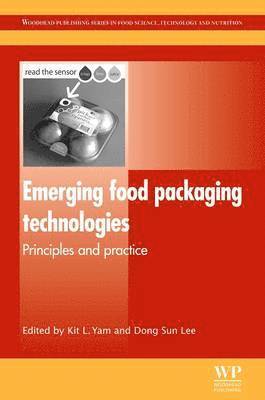
The successful employment of food packaging can greatly improve product safety and quality, making the area a key concern to the food processing industry. Emerging food packaging technologies reviews advances in packaging materials, the design and implementation of smart packaging techniques, and developments in response to growing concerns about packaging sustainability.Part one of Emerging food packaging technologies focuses on developments in active packaging, reviewing controlled release packaging, active antimicrobials and nanocomposites in packaging, and edible chitosan coatings. Part two goes on to consider intelligent packaging and how advances in the consumer/packaging interface can improve food safety and quality. Developments in packaging material are analysed in part three, with nanocomposites, emerging coating technologies, light-protective and non-thermal process packaging discussed, alongside a consideration of the safety of plastics as food packaging materials. Finally, part four explores the use of eco-design, life cycle assessment, and the utilisation of bio-based polymers in the production of smarter, environmentally-compatible packaging.With its distinguished editors and international team of expert contributors, Emerging food packaging technologies is an indispensable reference work for all those responsible for the design, production and use of food and beverage packaging, as well as a key source for researchers in this area.Reviews advances in packaging materials, the design and implementation of smart packaging techniques, and developments in response to growing concerns about packaging sustainabilityConsiders intelligent packaging and how advances in the consumer/packaging interface can improve food safety and qualityExamines developments in packaging materials, nanocomposites, emerging coating technologies, light-protective and non-thermal process packaging and the safety of plastics as food packaging materials
777 kr
Skickas inom 10-15 vardagar
Marked changes in the balance of power between states in the international system are generally seen by IR scholars as among the most common causes of war. This book explains why such power shifts lead to war breaking out in some cases, but not in others. In contrast to existing approaches, this book argues that the military strategy of declining states is the key determinant of whether power shifts result in war or pass peacefully. More specifically, Dong Sun Lee argues that the probability of war is primarily a function of whether a declining state possesses a ‘manoeuvre strategy’ or an ‘attrition strategy’. The argument is developed through the investigation of fourteen power shifts among great powers over the past two centuries.Shifts in the balance of power and the attendant risks of war remain an enduring feature of international politics. This book argues that policymakers need to understand the factors influencing the risk of war as a result of these changes, in particular the contemporary shifts in power resulting from the rise of China and from the growth of nuclear proliferation.
2 246 kr
Skickas inom 10-15 vardagar
Marked changes in the balance of power between states in the international system are generally seen by IR scholars as among the most common causes of war. This book explains why such power shifts lead to war breaking out in some cases, but not in others. In contrast to existing approaches, this book argues that the military strategy of declining states is the key determinant of whether power shifts result in war or pass peacefully. More specifically, Dong Sun Lee argues that the probability of war is primarily a function of whether a declining state possesses a ‘manoeuvre strategy’ or an ‘attrition strategy’. The argument is developed through the investigation of fourteen power shifts among great powers over the past two centuries.Shifts in the balance of power and the attendant risks of war remain an enduring feature of international politics. This book argues that policymakers need to understand the factors influencing the risk of war as a result of these changes, in particular the contemporary shifts in power resulting from the rise of China and from the growth of nuclear proliferation.
1 909 kr
Skickas inom 10-15 vardagar
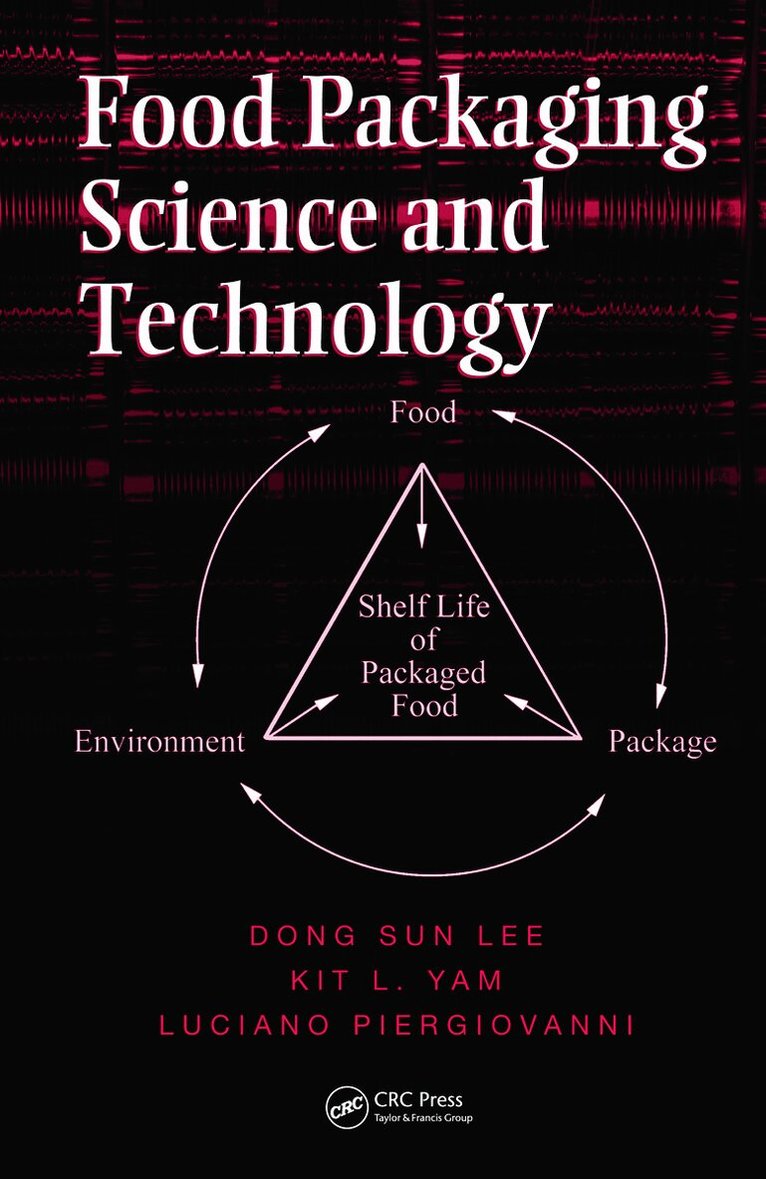
With a wealth of illustrations, examples, discussion questions, and case studies, the Food Packaging Science and Technology covers basic principles and technologies as well as advanced topics such as active, intelligent, and sustainable packaging with unparalleled depth and breadth of scope. Emphasizing the application of relevant scientific principles to create effective designs and quality products, an international team of contributors draws on their collective experience to equip you with the necessary knowledge and tools to tackle modern food packaging problems.Divided into four parts, this book begins with an extensive discussion of packaging materials science. Contributions review the basic concepts of chemical and physical properties as they relate to food packaging. They cover gas permeation and migration and give detailed information on the four basic types of packaging materials: plastics, glass, metal, and cellulosic. The second part applies the previous information to the field of packaging technologies. Traditional methods and concepts such as end-of-line operations, permeation and migration, canning and aseptic packaging, and vacuum/modified atmosphere packaging are juxtaposed with the more advanced technologies of microwaveable packaging, active packaging, and intelligent packaging. Part 3 discusses shelf life determination and elements of storage stability and packaging requirements of various food categories. The final part presents issues related to packaging sociology, addressing sustainable packaging, as well as sociological and legislative considerations.
Nuclear Alliance Restraint
Success and Failure in Countering Allied Proliferators
Inbunden, Engelska, 2025
2 113 kr
Skickas inom 10-15 vardagar
This book examines why powerful states have varying success in restraining less-powerful allies from acquiring nuclear weapons, based on a broad range of historical case studies.The outcomes of nuclear alliance restraint primarily depend on two structural factors: the number of superpowers in the global system and the geographical distance between patrons and clients. Through in-depth case studies of South Korea, North Korea, China, and Pakistan and a comprehensive analysis of 14 historical episodes, the book demonstrates that restraint succeeds when there are two superpowers, with one trying to rein in a distant ally. Conversely, restraint often fails with a single superpower in the system or when nuclear aspirants are close to their patrons. This study has important implications for current nonproliferation efforts since it suggests that a bipolar world with the United States and China as superpowers would enhance counterproliferation effectiveness, reducing nuclear proliferation risks. In addition, an inducement-centered approach adopted early on would be most effective for these superpowers in restraining their allied proliferators.This book will be of much interest to students of nuclear proliferation, foreign policy, security studies, and international relations.
3 009 kr
Skickas inom 3-6 vardagar
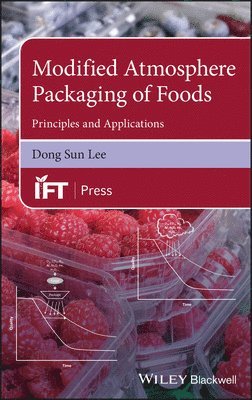
A complete guide to the principles and practical application of modified atmosphere packagingModified atmosphere packaging (MAP) is one of the most cost-effective, versatile, and commonly used methods of preserving food products available today. Employed in both ambient and chilled conditions, it can prolong shelf-life and preserve the quality of a wide array of items via careful processes of atmospheric engineering. The essential scientific principles underlying this technology can, however, be difficult to grasp and effectively apply.With Modified Atmosphere Packaging of Foods, esteemed food science professor Dong Sun Lee provides a thorough and practical explanation of all aspects of MAP. Chapters covering the development, impact, and day-to-day application of the technique give a well-rounded understanding of its pivotal role in the food industry, while accounts of other active packaging methods help to provide broader context. This important new book includes: Detailed guidance on all aspects of MAP – from its scientific background to its practical application Information on how specific MAP products may be developed according to their particular engineering principlesCoverage of the related active and intelligent packaging techniquesDiscussion of relevant food safety issues and regulationsContaining vital information for industry professionals and food science researchers alike, Modified Atmosphere Packaging of Foods is an essential text for all those working to improve the quality and shelf-life of the food we eat.