• Fri frakt över 249 kr
  • •
  • Snabba leveranser
  • •
  • Billiga böcker
Kundservice

Du är på sajten för privatpersoner.

Företag, bibliotek eller offentlig verksamhet?

Du handlar på classic.bokus.com, där alla dina funktioner finns intakta.
Till classic.bokus.com
Bokus logotyp. Gå till startsidan.
  • Erbjudanden
  • Nyheter
  • Student
  • Topplistor
  • Barn & ungdom
  • Bokus Play
  • E-böcker
  • Pocketböcker
  • Spel & pussel

10% rabatt på allt med kod: NYSTART10 →

Sidfot

Mina sidor

    Hjälp

    • Kundservice
    • Vanliga frågor och svar
    • Frakt och leverans
    • Retur vid ångerrätt
    • Reklamera vara
    • Betalning
    • Köpvillkor
    • Allmänna villkor
    • Information om webbplatsens tillgänglighet

    Om Bokus

    • Om oss
    • Pressrum
    • För studenter
    • För företag
    • För bibliotek och offentlig verksamhet
    • För leverantörer
    • Hållbarhet

    Populärt

    • Aktuella erbjudanden
    • Presentkort
    • Studentlitteratur
    • Nya böcker
    • Topplistor
    • Signerade böcker
    • Engelska böcker

    Inspiration

    • Boktips
    • BookTok
    • Populära bokserier
    • Barnbokskaraktärer
    • Populära författare
    Logotyp för Bokus
    Följ oss på Facebook (extern länk)Följ oss på Instagram (extern länk)Följ oss på YouTube (extern länk)Följ oss på TikTok (extern länk)
    bokus @ CookiesAnpassa cookiesIntegritetspolicyKöpvillkor
    Till Citymail hemsida (extern länk)Till Budbee hemsida (extern länk)Till Postnord hemsida (extern länk)Till Schenker hemsida (extern länk)Till Early Bird hemsida (extern länk)Till Walleys hemsida (extern länk)
    1. Samhälle och politik
    2. Samhälle och kultur
    3. Kultur och medier
    4. Referensverk och tvärvetenskap

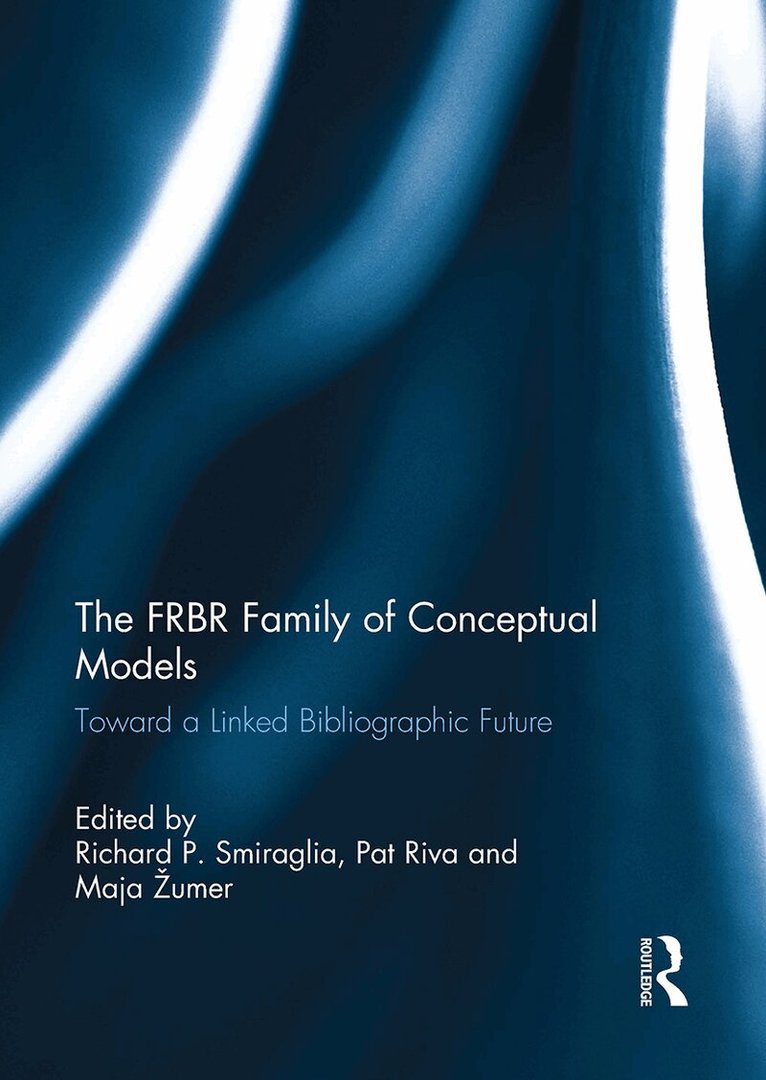
    FRBR Family of Conceptual Models

    Toward a Linked Bibliographic Future

    AvUSA) Smiraglia, Richard P. (University of Wisconsin-Milwaukee,Canada) Riva, Pat (Bibliotheque et Archives nationales du Quebec

    Häftad, Engelska, 2024

    629 kr

    Beställningsvara. Skickas inom 10-15 vardagar. Fri frakt över 249 kr.

    Fler format och utgåvor

    Inbunden

    2 386 kr

    Beskrivning

    Since 1998 when FRBR (Functional Requirements for Bibliographic Records) was first published by IFLA, the effort to develop and apply FRBR has been extended in many innovative and experimental directions. Papers in this volume explain and expand upon the extended family of FRBR models including Functional Requirements for Authority Data (FRAD), Functional Requirements for Subject Authority Data (FRSAD), and the object-oriented version of FRBR known as FRBRoo. Readers will learn about dialogues between the FRBR Family and other modeling technologies, specific implementations and extensions of FRBR in retrieval systems, catalog codes employing FRBR, a wide variety of research that uses the FRBR model, and approaches to using FRBR for the Semantic Web. Librarians of all stripes as well as library and information science students and researchers can use this volume to bring their knowledge of the FRBR model and its implementation up to date.This book was published as a special issue of Cataloging & Classification Quarterly.

    Produktinformation

    • Utgivningsdatum:2024-10-14
    • Mått:174 x 246 x undefined mm
    • Vikt:810 g
    • Format:Häftad
    • Språk:Engelska
    • Antal sidor:440
    • Förlag:Taylor & Francis Ltd
    • ISBN:9781032919850

    Utforska kategorier

    • Referensverk och tvärvetenskap inom Samhälle och politik
    • Databaser inom Data och IT

    Mer om författaren

    Richard P. Smiraglia has defined the meaning of "a work" empirically, and has revealed the ubiquitous phenomenon of instantiation among information objects. He is a member of the iSchool at UW Milwaukee’s Information Organization Research Group, author of the groundbreaking The Nature of ‘A Work’ (2001), and editor-in-chief of the journal Knowledge Organization.Pat Riva is Coordinator of the Monographs Section in the Cataloguing Directorate for Heritage Collections at Bibliothèque et Archives nationales du Québec in Montreal, Canada. Since 2005, she has been an elected member of the IFLA Cataloguing Section Standing Committee and chair of the FRBR Review Group.Maja Žumer is Professor of Information Science at University of Ljubljana, Slovenia. She is a member of the IFLA FRBR Review Group, Aggregates Working Group and FRBR/CRM Harmonisation Working Group. With her research group she is focusing on different aspects FRBR and has published extensively on these topics.

    Innehållsförteckning

    • Foreword 1. Introduction: Be Careful What You Wish For: FRBR, Some Lacunae, A Review 2. The VTLS Implementation of FRBR 3. FRBR: The MAB2 Perspective 4. Implementing FRBR to Improve Retrieval of In-House Information in a Medium-Sized International Institute 5. A Strange Model Named FRBRoo 6. Item, document, carrier: An Object Oriented Approach 7. Modeling Aggregates in FRBR 8. Arrangement of FRBR Entities in Colon Classification Call Numbers 9. FRSAD and the ontology of subjects of works 10. FRBR Entities: Identity and Identification 11. FRBR/FRAD and Eva Verona's Cataloging Code: Toward the Future Development of the Croatian Cataloging Code 12. Evaluation of RDA as an implementation of FRBR and FRAD 13. Conceptualizations of the cataloging object: A critique on current perceptions on FRBR Group 1 entities 14. From the FRBR Model to the Italian Cataloging Code (and Vice Versa?) 15. The Contribution of FRBR to the Identification of Bibliographical Relationships: The New RDA-based Ways of Representing the Relationships in Catalogs 16. Analysis of Work-to-Work bibliographic relationships through FRBR: A Canadian Perspective 17. Composing in Real Time: Jazz Performances as "Works" in the FRBR Model 18. Identifying Works for Japanese Classics for Construction of FRBRized OPACs 19. FRBRizing Bibliographic Records Focusing on Identifiers and Role Indicators in the Korean Cataloging Environment 20. What do Users Tell us About FRBR-Based Catalogs? 21. Representing the FR Family in the Semantic Web 22. YouTube: Applying FRBR and Exploring the Multiple Description Coding Compression Model 23. FRBR and Linked Data: Connecting FRBR and Linked Data