• Fri frakt över 249 kr
  • •
  • Snabba leveranser
  • •
  • Billiga böcker
Kundservice

Du är på sajten för privatpersoner.

Företag, bibliotek eller offentlig verksamhet?

Du handlar på classic.bokus.com, där alla dina funktioner finns intakta.
Till classic.bokus.com
Bokus logotyp. Gå till startsidan.
  • Erbjudanden
  • Nyheter
  • Student
  • Topplistor
  • Barn & ungdom
  • Bokus Play
  • E-böcker
  • Pocketböcker
  • Spel & pussel

10% studentrabatt med kod TERM26

Sidfot

Mina sidor

    Hjälp

    • Kundservice
    • Vanliga frågor och svar
    • Frakt och leverans
    • Retur vid ångerrätt
    • Reklamera vara
    • Betalning
    • Köpvillkor
    • Allmänna villkor
    • Information om webbplatsens tillgänglighet

    Om Bokus

    • Om oss
    • Pressrum
    • För studenter
    • För företag
    • För bibliotek och offentlig verksamhet
    • För leverantörer
    • Hållbarhet

    Populärt

    • Aktuella erbjudanden
    • Presentkort
    • Studentlitteratur
    • Nya böcker
    • Topplistor
    • Signerade böcker
    • Engelska böcker

    Inspiration

    • Boktips
    • BookTok
    • Populära bokserier
    • Barnbokskaraktärer
    • Populära författare
    Logotyp för Bokus
    Följ oss på Facebook (extern länk)Följ oss på Instagram (extern länk)Följ oss på YouTube (extern länk)Följ oss på TikTok (extern länk)
    bokus @ CookiesAnpassa cookiesIntegritetspolicyKöpvillkor
    Till Citymail hemsida (extern länk)Till Budbee hemsida (extern länk)Till Postnord hemsida (extern länk)Till Schenker hemsida (extern länk)Till Early Bird hemsida (extern länk)Till Walleys hemsida (extern länk)
    1. Historia och arkeologi
    2. Historia
    3. Europas historia

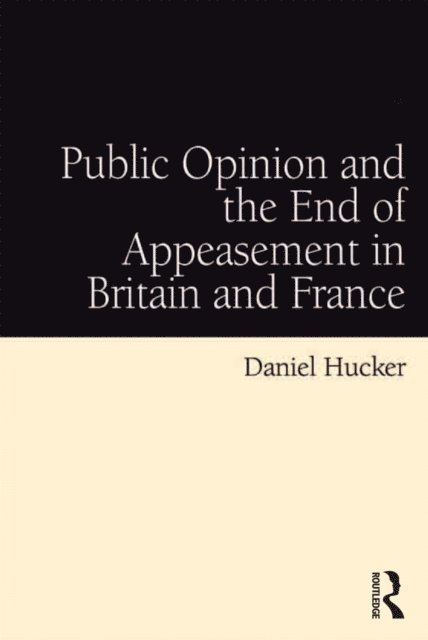
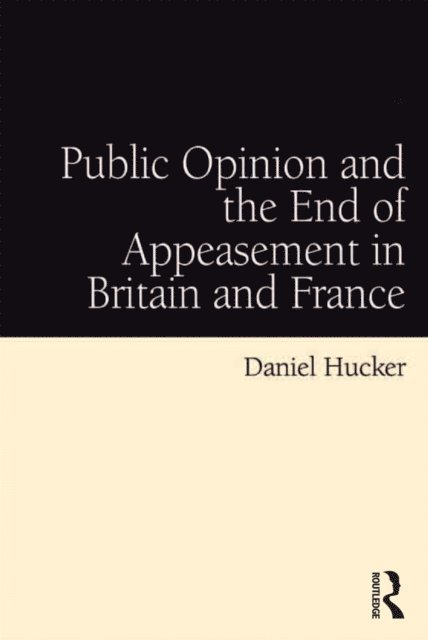
    Public Opinion and the End of Appeasement in Britain and France

    AvDaniel Hucker

    Häftad, Engelska, 2024

    646 kr

    Beställningsvara. Skickas inom 10-15 vardagar. Fri frakt över 249 kr.

    Fler format och utgåvor

    E-bok

    762 kr

    E-bok

    760 kr

    Inbunden

    2 506 kr

    Beskrivning

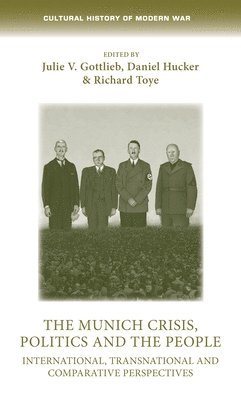
    The 1930s policy of appeasement is still fiercely debated by historians, critics and contemporary political commentators, more than 70 years after the signing of the 1938 Munich Agreement. What is less well-understood, however, is the role of public opinion on the formation of British and French policy in the period between Munich and the outbreak of the Second World War; not necessarily what public opinion was but how it was perceived to be by those in power and how this contributed to the policymaking process. It therefore fills a considerable gap in an otherwise vast literature, seeking to ascertain the extent to which public opinion can be said to have influenced the direction of foreign policy in a crucial juncture of British and French diplomatic history. Employing an innovative and unique methodological framework, the author distinguishes between two categories of representation: firstly, 'reactive' representations of opinion, the immediate and spontaneous reactions of the public to circumstances and events as they occur; and secondly, 'residual' representations, which can be defined as the remnants of previous memories and experiences, the more general tendencies of opinion considered characteristic of previous years, even previous decades. It is argued that the French government of Édouard Daladier was consistently more attuned to the evolution of 'reactive' representations than the British government of Neville Chamberlain and, consequently, it was the French rather than the British who first pursued a firmer policy towards the European dictatorships. This comparative approach reveals a hitherto hidden facet of the diplomatic prelude to the Second World War; that British policy towards France and French policy towards Britain were influenced by their respective perceptions of public opinion in the other country. A sophisticated analysis of a crucial period in international history, this book will be essential reading for scholars of the origins of World War II, the political scenes of late 1930s Britain and France, and the study of public opinion and its effects on policy.

    Produktinformation

    • Utgivningsdatum:2024-10-14
    • Mått:156 x 234 x 16 mm
    • Vikt:453 g
    • Format:Häftad
    • Språk:Engelska
    • Antal sidor:304
    • Förlag:Taylor & Francis Ltd
    • ISBN:9781032922850

    Utforska kategorier

    • Europas historia inom Historia och arkeologi

    Mer om författaren

    Dr Daniel Hucker, Teaching Associate, School of History, University of Nottingham, UK

    Recensioner i media

    'This is a richly researched and closely argued book in which issues, personality clashes, party factionalisms, and the evolution of opinion towards firm acceptance of the need to fight Nazism in 1939 are nicely finessed and treated with genuine sensitivity. Daniel Hucker avoids snap judgements, preferring instead to analyse and explain why and how French and British political leaders acted and reacted as they did when confronted with the increasingly desperate circumstances before them. It is an outstanding piece of work and is sure to make an impact.' Martin Thomas, University of Exeter, UK ’Daniel Hucker’s first book is a model of sustained, meticulous research... It is innovative in its recognition of possible connections between the mood of one country and the policy of another; and it is a welcome addition to a corpus of literature that transcends the once-dominant notions of French lethargy and submissiveness.’ English Historical Review 'Hucker has done the scholarly community a service by analysing French and British policymaking in such careful detail and in tandem.' French History 'Daniel Hucker’s monograph is a valuable addition to current literature. Meticulously researched, this work does far more than survey public opinion... [It] has an excellent bibliography and is rich in archival sources, both British and French. It is well written with strong, fluent analysis throughout... his work reveals the links between the unspoken assumptions shaping foreign policy and the diplomatic process itself. Hucker is thus able to illuminate the organic, multi-faceted nature of foreign policy and policy-making in the crucial months prior to the outbreak of World War II.' European History Quarterly 'The scope and depth of Hucker’s research ensures he avoids the easy trap of merely recreating those conclusions on public opinion that contemporary figures cared to record. His study is based upon a meticulous survey of available sources in both Britain and

    Innehållsförteckning

    • Introduction; Chapter 1 The Prelude to Munich; Chapter 2 The Aftermath of Munich, October–December 1938; Chapter 3 Beware the Ides of March, January–March 1939; Chapter 4 Repercussions of the Prague Coup; Chapter 5 Appeasement after Prague; Chapter 6 Public Opinion and the Triple Alliance Negotiations; Chapter 7 From the Nazi-Soviet Pact to War; Chapter 101 Conclusion;