• Fri frakt över 249 kr
  • •
  • Snabba leveranser
  • •
  • Billiga böcker
Kundservice

Du är på sajten för privatpersoner.

Företag, bibliotek eller offentlig verksamhet?

Du handlar på classic.bokus.com, där alla dina funktioner finns intakta.
Till classic.bokus.com
Bokus logotyp. Gå till startsidan.
  • Erbjudanden
  • Nyheter
  • Student
  • Topplistor
  • Barn & ungdom
  • Bokus Play
  • E-böcker
  • Pocketböcker
  • Spel & pussel

10% rabatt på allt med kod NYSTART10 →

Sidfot

Mina sidor

    Hjälp

    • Kundservice
    • Vanliga frågor och svar
    • Frakt och leverans
    • Retur vid ångerrätt
    • Reklamera vara
    • Betalning
    • Köpvillkor
    • Allmänna villkor
    • Information om webbplatsens tillgänglighet

    Om Bokus

    • Om oss
    • Pressrum
    • För studenter
    • För företag
    • För bibliotek och offentlig verksamhet
    • För leverantörer
    • Hållbarhet

    Populärt

    • Aktuella erbjudanden
    • Presentkort
    • Studentlitteratur
    • Nya böcker
    • Topplistor
    • Signerade böcker
    • Engelska böcker

    Inspiration

    • Boktips
    • BookTok
    • Populära bokserier
    • Barnbokskaraktärer
    • Populära författare
    Logotyp för Bokus
    Följ oss på Facebook (extern länk)Följ oss på Instagram (extern länk)Följ oss på YouTube (extern länk)Följ oss på TikTok (extern länk)
    bokus @ CookiesAnpassa cookiesIntegritetspolicyKöpvillkor
    Till Citymail hemsida (extern länk)Till Budbee hemsida (extern länk)Till Postnord hemsida (extern länk)Till Schenker hemsida (extern länk)Till Early Bird hemsida (extern länk)Till Walleys hemsida (extern länk)
    1. Samhälle och politik
    2. Samhälle och kultur
    3. Kultur och medier
    4. Referensverk och tvärvetenskap

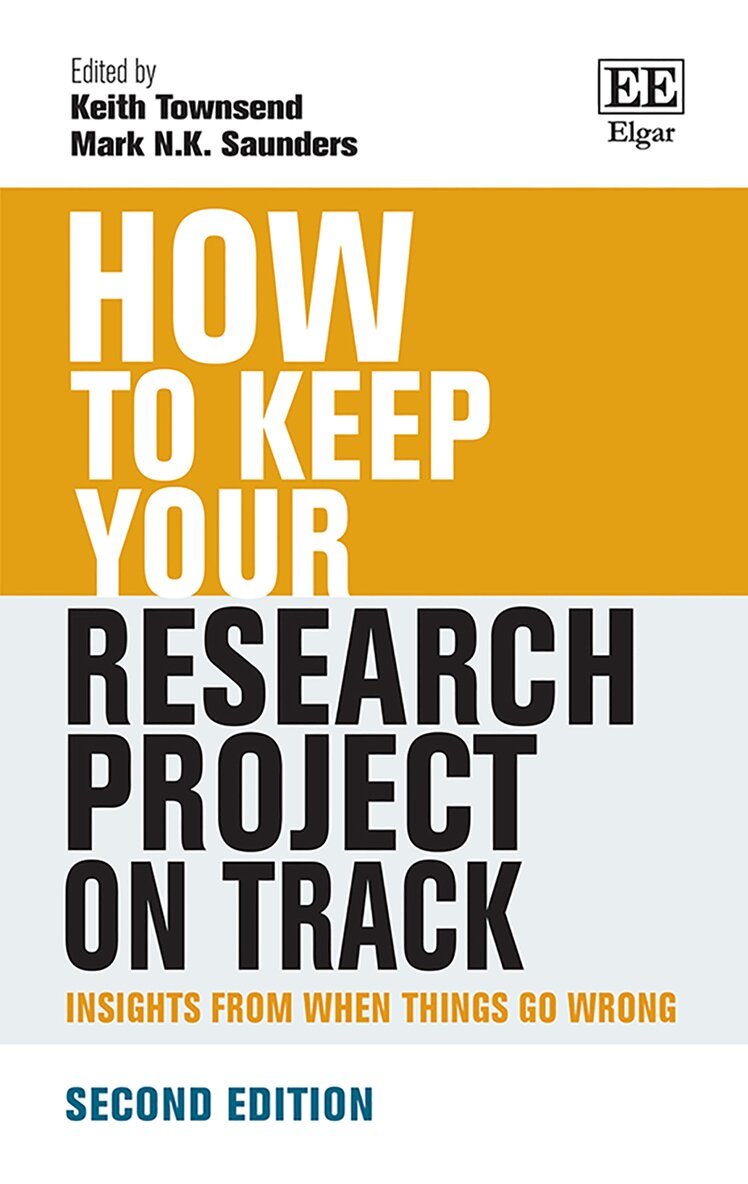
    How to Keep Your Research Project on Track

    Insights from When Things Go Wrong: Second Edition

    AvKeith Townsend,Mark N. Saunders

    Häftad, Engelska, 2025

    Del i serien How To Guides

    407 kr

    Beställningsvara. Skickas inom 5-8 vardagar. Fri frakt över 249 kr.

    Beskrivning

    Bringing together valuable insights from a range of research experts, PhD supervisors and examiners, this thoroughly revised second edition of How to Keep Your Research Project on Track details how to deal with the unexpected difficulties of research, and what to do when a project deviates from the plan. Keith Townsend and Mark N.K. Saunders give us essential insights for carrying out research, as well as developing resilience in academia.Key features of the second edition:Vignettes from experts who have had experience with difficult research projectsNine new chapters on topics such as the presence of AI generated content in research and the use of social mediaCrucial advice on each part of the research process, including writing proposals, gathering data, compiling analysis and undergoing peer reviewInsights into what can go wrong in research projects, for instance, issues with conflicting evidence and research study incentives, and how these can be addressed Engaging and accessible, this book is an important resource for early career scholars, PhD candidates and masters students. It will also provide more experienced academics with a fresh perspective on the research process.

    Produktinformation

    • Utgivningsdatum:2025-07-11
    • Mått:156 x 234 x undefined mm
    • Format:Häftad
    • Språk:Engelska
    • Serie:How To Guides
    • Upplaga:2
    • Förlag:Edward Elgar Publishing Ltd
    • ISBN:9781035374014

    Utforska kategorier

    • Referensverk och tvärvetenskap inom Samhälle och politik
    • Högskola och universitet inom Psykologi och pedagogik
    • Projektledning inom Ekonomi och Ledarskap

    Mer om författaren

    Edited by Keith Townsend, Professor of Human Resources and Employment Relations, Department of Employment Relations and Human Resources, Griffith University, Australia and Mark N.K. Saunders, Emeritus Professor, Birmingham Business School, University of Birmingham, UK

    Recensioner i media

    ‘If you ever thought doing academic research was a load of gobbledygook written from the back of a beer mat, these editors prove novel ideas can start from such a premise. This is the second edition of what is a vital guide for new, early career and experienced researchers in the social science and business fields. It charts real-world stories from problems of access, student-supervisor dynamics, finding time, dealing with writers-block, to what happens to you and a research project after you emigrate to another country. This is a highly engaging and enjoyable volume for all who do research.’

    Innehållsförteckning

    • Contents1 The more things change, the more things stay as they are! 1Keith Townsend and Mark N.K. SaundersPART I GETTING STARTED2 How to develop research projects 11Carol Atkinson3 On the path to enlightenment? Reviewing the literaturesystematically – or not 20Céline Rojon4 The PhD supervisor–candidate relationship 28Jillian Cavanagh, Hannah Meacham and Timothy Bartram5 ‘Finders, keepers, losers, weepers!’ A doctoral candidate’sreality of changing thesis advisors 36Polly Black6 Benefits, pitfalls, ethics, and realities of GenAI in research 43Jerome Kiley7 Awful #14: putting on my novice researcher’s shoes anddeveloping my research question 58Deisi Yunga-Godoy8 Reply all, tweets and social media: technological friendsfor developing a professional identity that need to betreated with care 62Hugh T.J. BainbridgePART II GETTING DATA9 Epistemological odyssey: a journey of self-discovery 65Neve Abgeller10 A tale of two surveys: reaching respondents using Webquestionnaires 71Mark N.K. Saunders11 Finding the truth amongst conflicting evidence 79Heather Short12 Dealing with the practical difficulties of case studies 89Kenneth Cafferkey and Hetal Doshi13 Is a pilot necessary? 99Polly Black14 Access confirmed? 101Wojciech Marek Kwiatkowski15 So, I guess we’re probably finished then 102Keith Townsend16 Your incentives are too lucrative: caution in rewardinginterview participants 103Catheryn Khoo17 Sales skills for researchers 105Colin Hughes18 Being flexible in interviews: make sure that you accountfor power imbalance 108Qian Yi LeePART III GETTING IT TOGETHER19 What precisely do you mean? Interpreting qualitative data 111Rebecca Loudoun and Keith Townsend20 Analysing quantitative data 119Sameer Qaiyum and Catherine L. Wang21 When the words just won’t come 126Dawn C. Duke22 Conducting research ‘with’ and not just ‘on’ organisations 135Carol Woodhams23 Where, oh where, is my golden thread? 143Vivienne Spooner and Helena Barnard24 I’m a paper person or maybe not? 152Ilenia Bregoli25 A mug of stress 154Rohit Talwar26 Excuse me … should that comma be there? Dealing withawkward questions 156Kenneth Cafferkey27 Finding the time to progress your research, and the big liethat you are part of! 158Jennifer KilroyPART IV GETTING FINISHED28 Authorship in action 162Kate L. Daunt and Aoife M. McDermott29 ‘Will I ever be good enough?’: Using feedback constructively 170Amanda Lee30 Grasping roses or nettles? Losing and finding ourselves inresearch projects 177Kiran Trehan, Alex Kevill and Jane Glover31 The problem with peer review … they say as if there’sonly one problem … 186Keith Townsend, Adrian Wilkinson, Andrew Timming andRebecca Loudoun32 My research iourney in the offline and online world ofsocial media 194Samreen Ashraf33 Scribble, leave it, type it, change it 204Mark N.K. Saunders34 ‘I’m over it …’ 207Peter J. Jordan35 The skill of bouncing back: a toolkit for developingresilience in academia 209Mollie Bryde-Evens and Rebecca Beech36 I have left the country, but the project continues 218Stefan Jooss37 To Dean, or not to Dean, that is the question 220Jenna Ward