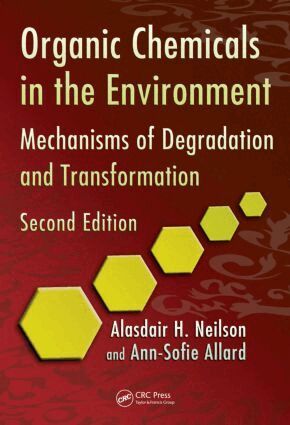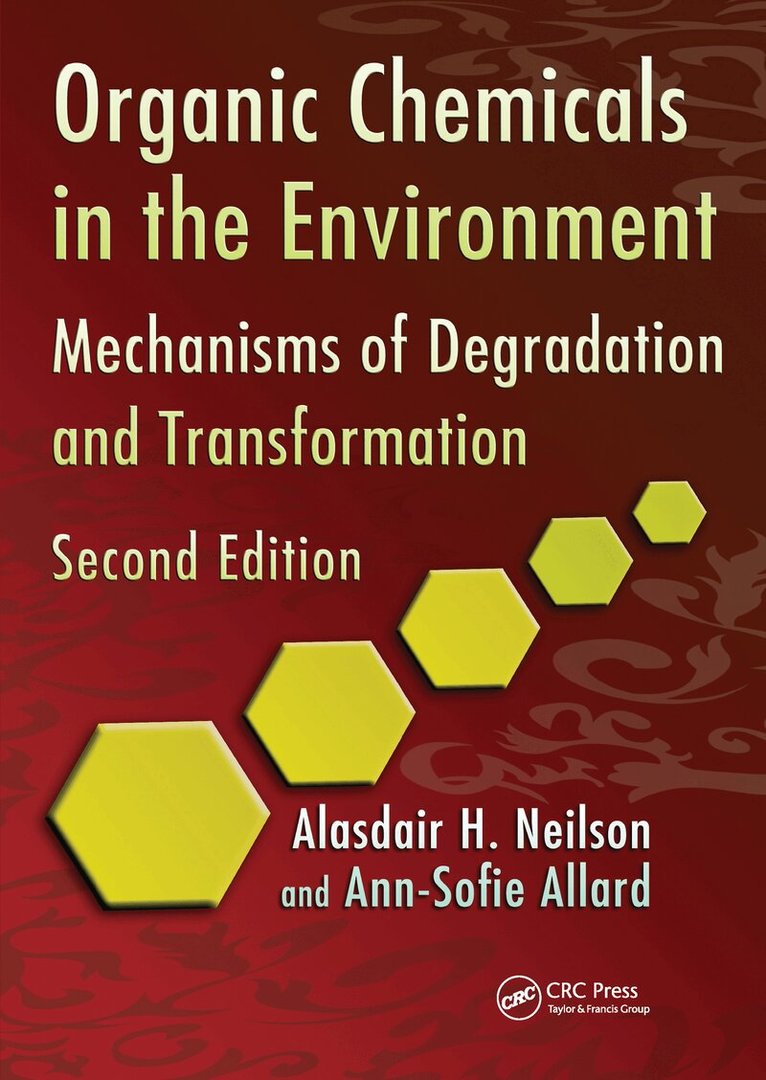
Organic Chemicals in the Environment
Mechanisms of Degradation and Transformation, Second Edition
AvAlasdair H. Neilson,Ann-Sofie Allard
906 kr
Läs direkt i Bokus Reader – eller ladda ned till din enhet
Du är på sajten för privatpersoner.
AvAlasdair H. Neilson,Ann-Sofie Allard
906 kr
Läs direkt i Bokus Reader – eller ladda ned till din enhet
Alasdair H. Neilson was Principal Scientist until retirement from IVL Swedish Environmental Research Institute in Stockholm. He studied chemistry at the University of Glasgow and took his Ph.D. in organic chemistry in Alexander Todd's laboratory at Cambridge University. He carried out further research at Cambridge University in organic chemistry, and in theoretical chemistry with Charles Coulson at Oxford University. He held academic positions in the universities of Glasgow and Sussex, and obtained industrial experience in the pharmaceutical industry. He consolidated his experience by turning to research in microbiology during a prolonged stay with Roger Stanier and Mike Doudoroff at the University of California, Berkeley. His interests have ranged widely and included studies on nitrogen fixation, carbon and nitrogen metabolism in algae, and various aspects of environmental science including biodegradation and biotransformation, chemical and microbiological reactions in contaminated sediments, and ecotoxicology. With his group of collaborators, these studies have resulted in publications in Applied and Environmental Microbiology, Journal of Chromatography, Environmental Science & Technology, and Ecotoxicology & Environmental Safety, and in chapters contributed to several volumes of The Handbook of Environmental Chemistry. He is a member of the American Chemical Society, the American Society for Microbiology, the American Society of Crystallography, and the American Association for the Advancement of Science (AAAS).Ann-Sofie Allard studied as a chemical microbiologist and is currently a Senior Microbiologist at IVL Swedish Environmental Research Institute in Stockholm. She has carried out research on a wide range of water quality issues including the distribution of Yersinia enterocolitica in Swedish freshwater systems, and processes for the removal of hormone disrupters. She has carried
"Now in its second edition, this large work is packed with useful and pertinent information concerning the potential fate of chemicals that have made their way, usually unintentionally, into the surrounding biosphere. … As usual with such books, the layout is neat and the print easy to read. Many chemical schemes and copious references after (and within) each chapter add to the work. Good quality paper, firm binding and an overall solid construction ensure that this book will remain durable for many years. For anyone with an interest in xenobiotics and environmental issues this book certainly is a useful reference source."—Steve Mitchell, Faculty of Medicine, Imperial College London, UK, 2013Praise for the First Edition:Broad and comprehensive, this book provides a cohesive treatment of the subject. It contains an extensive set of literature references and numerous illustrative figures.—J. Albaigés, CID-CSIC, Journal of Environmental Analytical Chemistry, Feb. 2008
Du är på sajten för privatpersoner.
AvAlasdair H. Neilson,Ann-Sofie Allard
906 kr
Läs direkt i Bokus Reader – eller ladda ned till din enhet
Alasdair H. Neilson was Principal Scientist until retirement from IVL Swedish Environmental Research Institute in Stockholm. He studied chemistry at the University of Glasgow and took his Ph.D. in organic chemistry in Alexander Todd's laboratory at Cambridge University. He carried out further research at Cambridge University in organic chemistry, and in theoretical chemistry with Charles Coulson at Oxford University. He held academic positions in the universities of Glasgow and Sussex, and obtained industrial experience in the pharmaceutical industry. He consolidated his experience by turning to research in microbiology during a prolonged stay with Roger Stanier and Mike Doudoroff at the University of California, Berkeley. His interests have ranged widely and included studies on nitrogen fixation, carbon and nitrogen metabolism in algae, and various aspects of environmental science including biodegradation and biotransformation, chemical and microbiological reactions in contaminated sediments, and ecotoxicology. With his group of collaborators, these studies have resulted in publications in Applied and Environmental Microbiology, Journal of Chromatography, Environmental Science & Technology, and Ecotoxicology & Environmental Safety, and in chapters contributed to several volumes of The Handbook of Environmental Chemistry. He is a member of the American Chemical Society, the American Society for Microbiology, the American Society of Crystallography, and the American Association for the Advancement of Science (AAAS).Ann-Sofie Allard studied as a chemical microbiologist and is currently a Senior Microbiologist at IVL Swedish Environmental Research Institute in Stockholm. She has carried out research on a wide range of water quality issues including the distribution of Yersinia enterocolitica in Swedish freshwater systems, and processes for the removal of hormone disrupters. She has carried
"Now in its second edition, this large work is packed with useful and pertinent information concerning the potential fate of chemicals that have made their way, usually unintentionally, into the surrounding biosphere. … As usual with such books, the layout is neat and the print easy to read. Many chemical schemes and copious references after (and within) each chapter add to the work. Good quality paper, firm binding and an overall solid construction ensure that this book will remain durable for many years. For anyone with an interest in xenobiotics and environmental issues this book certainly is a useful reference source."—Steve Mitchell, Faculty of Medicine, Imperial College London, UK, 2013Praise for the First Edition:Broad and comprehensive, this book provides a cohesive treatment of the subject. It contains an extensive set of literature references and numerous illustrative figures.—J. Albaigés, CID-CSIC, Journal of Environmental Analytical Chemistry, Feb. 2008
Du är på sajten för privatpersoner.
AvAlasdair H. Neilson,Ann-Sofie Allard
906 kr
Läs direkt i Bokus Reader – eller ladda ned till din enhet
Alasdair H. Neilson was Principal Scientist until retirement from IVL Swedish Environmental Research Institute in Stockholm. He studied chemistry at the University of Glasgow and took his Ph.D. in organic chemistry in Alexander Todd's laboratory at Cambridge University. He carried out further research at Cambridge University in organic chemistry, and in theoretical chemistry with Charles Coulson at Oxford University. He held academic positions in the universities of Glasgow and Sussex, and obtained industrial experience in the pharmaceutical industry. He consolidated his experience by turning to research in microbiology during a prolonged stay with Roger Stanier and Mike Doudoroff at the University of California, Berkeley. His interests have ranged widely and included studies on nitrogen fixation, carbon and nitrogen metabolism in algae, and various aspects of environmental science including biodegradation and biotransformation, chemical and microbiological reactions in contaminated sediments, and ecotoxicology. With his group of collaborators, these studies have resulted in publications in Applied and Environmental Microbiology, Journal of Chromatography, Environmental Science & Technology, and Ecotoxicology & Environmental Safety, and in chapters contributed to several volumes of The Handbook of Environmental Chemistry. He is a member of the American Chemical Society, the American Society for Microbiology, the American Society of Crystallography, and the American Association for the Advancement of Science (AAAS).Ann-Sofie Allard studied as a chemical microbiologist and is currently a Senior Microbiologist at IVL Swedish Environmental Research Institute in Stockholm. She has carried out research on a wide range of water quality issues including the distribution of Yersinia enterocolitica in Swedish freshwater systems, and processes for the removal of hormone disrupters. She has carried
"Now in its second edition, this large work is packed with useful and pertinent information concerning the potential fate of chemicals that have made their way, usually unintentionally, into the surrounding biosphere. … As usual with such books, the layout is neat and the print easy to read. Many chemical schemes and copious references after (and within) each chapter add to the work. Good quality paper, firm binding and an overall solid construction ensure that this book will remain durable for many years. For anyone with an interest in xenobiotics and environmental issues this book certainly is a useful reference source."—Steve Mitchell, Faculty of Medicine, Imperial College London, UK, 2013Praise for the First Edition:Broad and comprehensive, this book provides a cohesive treatment of the subject. It contains an extensive set of literature references and numerous illustrative figures.—J. Albaigés, CID-CSIC, Journal of Environmental Analytical Chemistry, Feb. 2008