• Fri frakt över 249 kr
  • •
  • Snabba leveranser
  • •
  • Billiga böcker
Kundservice

Du är på sajten för privatpersoner.

Företag, bibliotek eller offentlig verksamhet?

Du handlar på classic.bokus.com, där alla dina funktioner finns intakta.
Till classic.bokus.com
Bokus logotyp. Gå till startsidan.
  • Erbjudanden
  • Nyheter
  • Student
  • Topplistor
  • Barn & ungdom
  • Bokus Play
  • E-böcker
  • Pocketböcker
  • Spel & pussel

10% rabatt på allt med kod NYSTART10 →

Sidfot

Mina sidor

    Hjälp

    • Kundservice
    • Vanliga frågor och svar
    • Frakt och leverans
    • Retur vid ångerrätt
    • Reklamera vara
    • Betalning
    • Köpvillkor
    • Allmänna villkor
    • Information om webbplatsens tillgänglighet

    Om Bokus

    • Om oss
    • Pressrum
    • För studenter
    • För företag
    • För bibliotek och offentlig verksamhet
    • För leverantörer
    • Hållbarhet

    Populärt

    • Aktuella erbjudanden
    • Presentkort
    • Studentlitteratur
    • Nya böcker
    • Topplistor
    • Signerade böcker
    • Engelska böcker

    Inspiration

    • Boktips
    • BookTok
    • Populära bokserier
    • Barnbokskaraktärer
    • Populära författare
    Logotyp för Bokus
    Följ oss på Facebook (extern länk)Följ oss på Instagram (extern länk)Följ oss på YouTube (extern länk)Följ oss på TikTok (extern länk)
    bokus @ CookiesAnpassa cookiesIntegritetspolicyKöpvillkor
    Till Citymail hemsida (extern länk)Till Budbee hemsida (extern länk)Till Postnord hemsida (extern länk)Till Schenker hemsida (extern länk)Till Early Bird hemsida (extern länk)Till Walleys hemsida (extern länk)
    1. Naturvetenskap och teknik
    2. Teknik och industri
    3. Maskinteknik och material

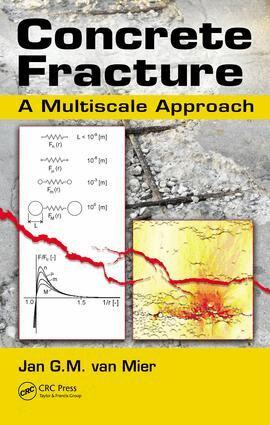
    Concrete Fracture

    A Multiscale Approach

    AvJan G.M. van Mier

    E-bok
    Engelska, 2012

    1 530 kr

    Läs direkt i Bokus Reader – eller ladda ned till din enhet

    Fler format och utgåvor

    Häftad

    1 285 kr

    Inbunden

    3 308 kr

    E-bok

    1 526 kr

    Beskrivning

    The study of fracture mechanics of concrete has developed in recent years to the point where it can be used for assessing the durability of concrete structures and for the development of new concrete materials. The last decade has seen a gradual shift of interest toward fracture studies at increasingly smaller sizes and scales. Concrete Fracture: A

    Produktinformation

    • Utgivningsdatum:2012-10-25
    • Språk:Engelska
    • Filformat:EPUB
    • Kopieringsskydd:LCP
    • ISBN:9781040196762
    • Förlag:Taylor & Francis Ltd

    Utforska kategorier

    • Maskinteknik och material inom Naturvetenskap och teknik
    • Byggnadsteknik inom Naturvetenskap och teknik

    Mer om författaren

    Jan G. M. van Mier received his engineering and Ph.D. degrees from Eindhoven University of Technology. After a postdoctorate year at the University of Colorado in Boulder, he moved to Delft University of Technology. As an associate professor at the Stevin Laboratory, in close cooperation with several Ph.D. students, he developed the Delft lattice model and conducted numerous experiments elucidating the fracture of concrete under a variety of conditions. In 1999, he was appointed "Antonie van Leeuwenhoek" professor at TU Delft, based on excellence in research, and developed and built the new microlab to immerse in fracture studies at smaller size/scales than before. In 2002, he moved to ETH Zurich as full professor and director of the Institute for Building Materials. In 2010, he became president of the International Association for Fracture Mechanics of Concrete and Concrete Structures (IA-FraMCoS).

    Innehållsförteckning

    • Introduction-Why a New Book on Fracture of Concrete? Classical Fracture Mechanics Approaches. Mechanics Aspects of Lattice Models. Lattice Geometry and the Structure of Cement and Concrete. Elastic Properties of Lattice with Particle Overlay. Fracture of Concrete in Tension. Combined Tensile and Shear Fracture of Concrete. Compressive Fracture. Size Effects. Four-Stage Fracture Model. Multiscale Modeling and Testing. Conclusions and Outlook. References. Appendix 1: Some Notes on Computational Efficiency. Appendix 2: Simple Results from Linear Elastic Fracture Mechanics. Appendix 3: Stability of Fracture Experiments. Appendix 4: Crack-Detection Techniques. Appendix 5: Active and Passive Confinement. Index.