• Fri frakt över 249 kr
  • •
  • Snabba leveranser
  • •
  • Billiga böcker
Kundservice

Du är på sajten för privatpersoner.

Företag, bibliotek eller offentlig verksamhet?

Du handlar på classic.bokus.com, där alla dina funktioner finns intakta.
Till classic.bokus.com
Bokus logotyp. Gå till startsidan.
  • Erbjudanden
  • Nyheter
  • Student
  • Topplistor
  • Barn & ungdom
  • Bokus Play
  • E-böcker
  • Pocketböcker
  • Spel & pussel

10% rabatt på allt med kod NYSTART10 →

Sidfot

Mina sidor

    Hjälp

    • Kundservice
    • Vanliga frågor och svar
    • Frakt och leverans
    • Retur vid ångerrätt
    • Reklamera vara
    • Betalning
    • Köpvillkor
    • Allmänna villkor
    • Information om webbplatsens tillgänglighet

    Om Bokus

    • Om oss
    • Pressrum
    • För studenter
    • För företag
    • För bibliotek och offentlig verksamhet
    • För leverantörer
    • Hållbarhet

    Populärt

    • Aktuella erbjudanden
    • Presentkort
    • Studentlitteratur
    • Nya böcker
    • Topplistor
    • Signerade böcker
    • Engelska böcker

    Inspiration

    • Boktips
    • BookTok
    • Populära bokserier
    • Barnbokskaraktärer
    • Populära författare
    Logotyp för Bokus
    Följ oss på Facebook (extern länk)Följ oss på Instagram (extern länk)Följ oss på YouTube (extern länk)Följ oss på TikTok (extern länk)
    bokus @ CookiesAnpassa cookiesIntegritetspolicyKöpvillkor
    Till Citymail hemsida (extern länk)Till Budbee hemsida (extern länk)Till Postnord hemsida (extern länk)Till Schenker hemsida (extern länk)Till Early Bird hemsida (extern länk)Till Walleys hemsida (extern länk)
    1. Naturvetenskap och teknik
    2. Geovetenskap
    3. Miljövetenskap och miljöpolitik
    • Nyhet

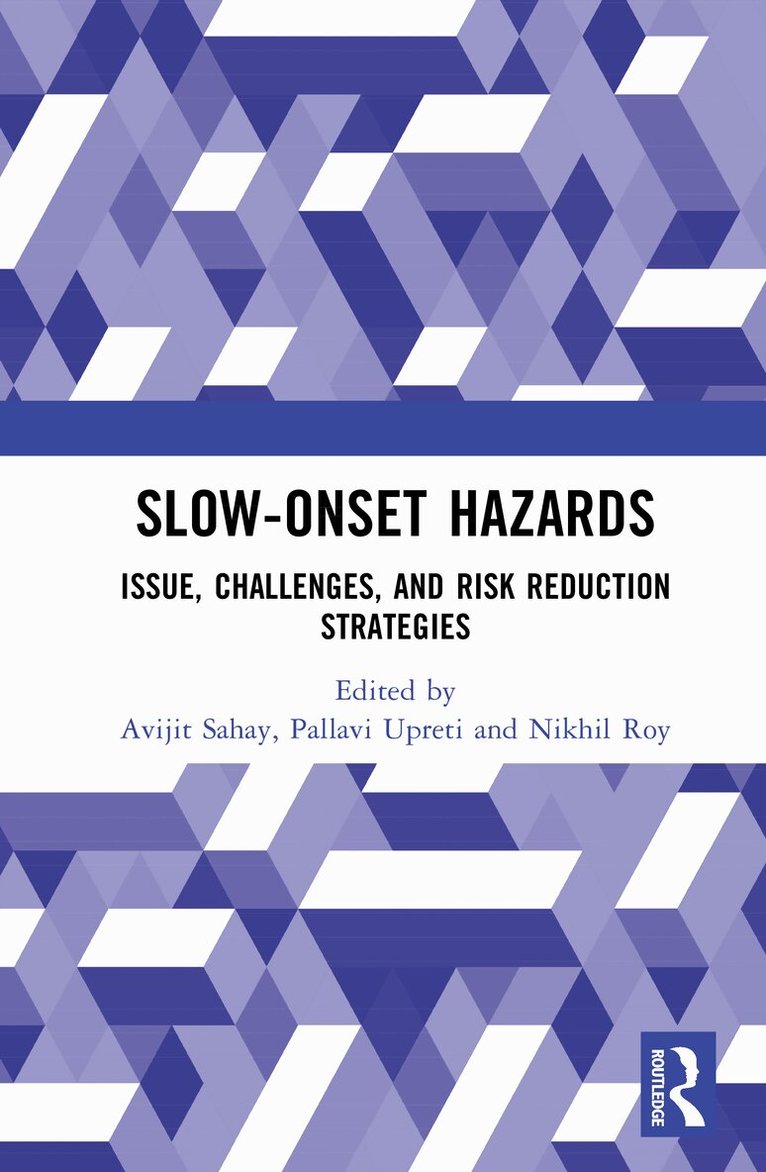
    Slow-Onset Hazards

    Issue, Challenges, and Risk Reduction Strategies

    AvAvijit Sahay,Pallavi Upreti

    Inbunden, Engelska, 2026

    2 422 kr

    Beställningsvara. Skickas inom 10-15 vardagar. Fri frakt över 249 kr.

    Beskrivning

    This book provides a comprehensive understanding of slow-onset hazards, combining scientific analysis, policy perspectives, and practical adaptive strategies.With contributions from researchers across India, South Africa, Germany, the United States, and Serbia, this book offers a holistic perspective on the management of slow-onset hazards. It presents insights into how droughts, desertification, and rising sea levels unfold, their socio-economic impacts, and the measures needed to address them. Through carefully selected international case studies, this book highlights both challenges and solutions, offering lessons that can be applied across diverse contexts. Its interdisciplinary approach, which bridges science, policy, and practice, ensures that students, researchers, policymakers, and environmental advocates gain not only knowledge but also actionable strategies to anticipate, adapt to, and mitigate long-term environmental threats.This book is intended for undergraduates and postgraduate researchers, as well as those working in geography, geology, sociology, environmental science, public policy, and disaster management. It will also appeal to trainees of administrative jobs, planners, and practitioners working on addressing environmental challenges and policy implementation.

    Produktinformation

    • Utgivningsdatum:2026-08-10
    • Mått:156 x 234 x 18 mm
    • Vikt:670 g
    • Format:Inbunden
    • Språk:Engelska
    • Antal sidor:260
    • Förlag:Taylor & Francis Ltd
    • ISBN:9781041028994

    Utforska kategorier

    • Miljövetenskap och miljöpolitik inom Naturvetenskap och teknik

    Mer om författaren

    Avijit Sahay is currently an Assistant Professor and Head (In-charge) of the Department of Geography, Doon University, Dehradun. His works on Majuli Island have been presented in international conferences and published in national and international journals.Pallavi Upreti is an Assistant Professor in the Department of Geography, Doon University, Dehradun, and has been engaged in the field of Himalayan studies since 2014 in identifying the changing Himalayan landscape due to climate change-induced factors coupled with anthropogenic activities.Nikhil Roy is an Assistant Professor in the Department of Geography at Mariani College under Dibrugarh University, Assam. His work spans riverbank erosion, disaster management, cultural landscapes, and regional development, with publications in reputed international and national journals.

    Innehållsförteckning

    • Introduction: Bridging the Gaps: Recognizing Slow-Onset Hazards in Policy and Practice 1. Covariation-Mining in Complex Systems: A New Approach to System Dynamics Simulation for Sustainability Applications 2. Unveiling Silent Disasters: The Impact of Heatwaves and Droughts in Germany and the Progress in Shaping Policy Strategies 3. Slow Violence, Environmental Decay and the Struggle for Social Justice in Merebank, South Durban, South Africa: Continuities Between the Apartheid and Post-Apartheid Eras 4. Long-Term Remote Sensing Based Methods for Monitoring Air Pollution in the Balkan Countries 5. Eco-Physiological Responses of Avicennia Germinans and Rhizophora Racemosa to Climate Variability and Anthropogenic Stress in Benin 6. Mitochondrial Fragmentation: A Potential Health Hazard in the Chronic Kidney Diseases With Aging 7. Slow-Onset Climate Variability and Its Impacts on Livelihoods and Agriculture: A South Asian Perspective 8. Dynamics of Fluvial Regime and Its Impact on the Population Displacement in the Gangetic Plain of West Bengal and Jharkhand 9. Fluoride Presence and Gradual Accumulation in Ground Water: Emerging Potential Health Hazards in Semi-Arid Regions of India 10. Systematic Review of Global Applicability of Revised Universal Soil Loss Equation (RUSLE) Model in Soil Erosion Studies 11. Morphological Progression of Ravines and Gully Erosion in Semi-Arid India: Implications for Gradual Soil Degradation and Agrarian Livelihoods 12. From Pixel to Protection: A Systematic Review on Watershed Prioritization for Soil Conservation 13. Channel Shifts and the Impact of Avulsion on Majuli Island and the Need for Recognizing Slow-Onset Disasters