• Fri frakt över 249 kr
  • •
  • Snabba leveranser
  • •
  • Billiga böcker
Kundservice

Du är på sajten för privatpersoner.

Företag, bibliotek eller offentlig verksamhet?

Du handlar på classic.bokus.com, där alla dina funktioner finns intakta.
Till classic.bokus.com
Bokus logotyp. Gå till startsidan.
  • Erbjudanden
  • Nyheter
  • Student
  • Topplistor
  • Barn & ungdom
  • Bokus Play
  • E-böcker
  • Pocketböcker
  • Spel & pussel

10% rabatt på allt med kod: NYSTART10 →

Sidfot

Mina sidor

    Hjälp

    • Kundservice
    • Vanliga frågor och svar
    • Frakt och leverans
    • Retur vid ångerrätt
    • Reklamera vara
    • Betalning
    • Köpvillkor
    • Allmänna villkor
    • Information om webbplatsens tillgänglighet

    Om Bokus

    • Om oss
    • Pressrum
    • För studenter
    • För företag
    • För bibliotek och offentlig verksamhet
    • För leverantörer
    • Hållbarhet

    Populärt

    • Aktuella erbjudanden
    • Presentkort
    • Studentlitteratur
    • Nya böcker
    • Topplistor
    • Signerade böcker
    • Engelska böcker

    Inspiration

    • Boktips
    • BookTok
    • Populära bokserier
    • Barnbokskaraktärer
    • Populära författare
    Logotyp för Bokus
    Följ oss på Facebook (extern länk)Följ oss på Instagram (extern länk)Följ oss på YouTube (extern länk)Följ oss på TikTok (extern länk)
    bokus @ CookiesAnpassa cookiesIntegritetspolicyKöpvillkor
    Till Citymail hemsida (extern länk)Till Budbee hemsida (extern länk)Till Postnord hemsida (extern länk)Till Schenker hemsida (extern länk)Till Early Bird hemsida (extern länk)Till Walleys hemsida (extern länk)
    1. Djur och Natur
    2. Naturböcker
    3. Växtböcker
    • Nyhet

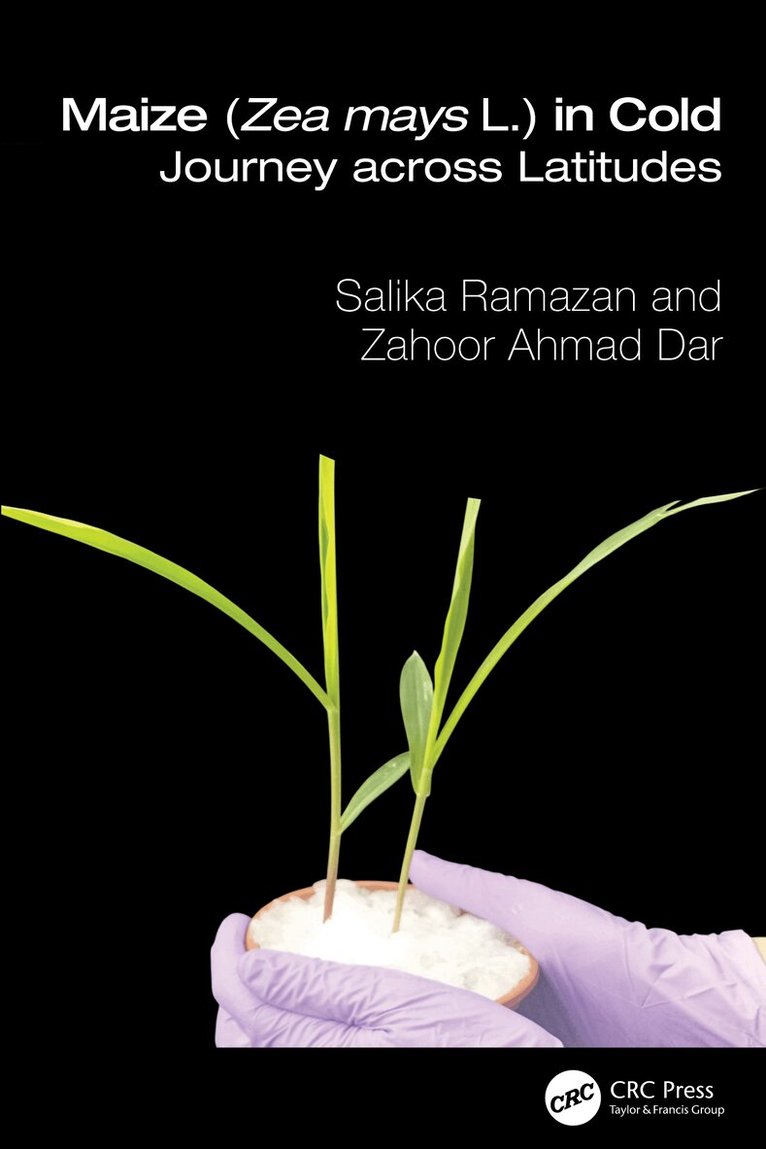
    Maize (Zea mays L.) in the Cold

    Journey across Latitudes

    AvSalika Ramazan,Zahoor Ahmad Dar

    Inbunden, Engelska, 2026

    1 763 kr

    Beställningsvara. Skickas inom 10-15 vardagar. Fri frakt över 249 kr.

    Beskrivning

    Maize (Zea mays L.) in the Cold: Journey across Latitudes presents a compelling exploration of how one of the world’s most vital crops has expanded from its tropical origins to endure and thrive in cold and temperate regions. As agriculture increasingly faces the challenges of climate variability and low-temperature extremes, this book offers a timely and comprehensive scientific account of maize’s resilience to chilling stress.Structured across seven in-depth chapters, the book takes readers through the core biology of maize, its latitudinal journey from the tropics to cooler climates, and a focused examination of what constitutes low temperature (LT) stress in maize. It further explores the physiological, biochemical, and genetic adjustments maize undergoes to cope with cold, and highlights emerging trends and scientific advancements aimed at improving maize performance under such stress, including seed priming, molecular interventions, and breeding strategies.Intended for researchers, maize breeders, plant biologists, agronomists, and postgraduate students, this volume also offers valuable insights for agricultural planners and policymakers working in cold-prone agro-climatic zones.Dr. Salika Ramazan, a low temperature stress biologist with a decade-long association with maize, brings together field expertise and academic depth to narrate the untold story of maize’s adaptation across latitudes. Her work connects the scientific understanding of cold stress biology with practical innovations to strengthen maize production under challenging climates.

    Produktinformation

    • Utgivningsdatum:2026-07-13
    • Mått:156 x 234 x 14 mm
    • Vikt:590 g
    • Format:Inbunden
    • Språk:Engelska
    • Antal sidor:218
    • Förlag:Taylor & Francis Ltd
    • ISBN:9781041061519

    Utforska kategorier

    • Växtböcker inom Djur och Natur
    • Botanik inom Naturvetenskap och teknik
    • Geovetenskap inom Naturvetenskap och teknik

    Mer om författaren

    Dr. Salika Ramazan is a plant biologist with a Master’s degree in Botany and a decade-long research focus on low temperature stress biology in maize. She has qualified multiple national-level competitive exams, including CSIR-NET JRF, ASRB-NET, and JK-SET, reflecting her academic excellence and research aptitude.Her work combines stress physiology, proteomics, and agricultural biotechnology to uncover how maize adapts to cold-prone environments, particularly in temperate and high-altitude regions. Dr. Ramazan has published her research in reputed international journals such as BMC Plant Biology, Photosynthesis Research, Acta Physiologiae Plantarum, and Physiology and Molecular Biology of Plants. Currently, she is pursuing postdoctoral research as a WISE Fellow, supported by the Department of Science and Technology (DST), Government of India. Her ongoing research continues to bridge the gap between molecular insights and practical approaches for enhancing maize resilience under cold stress.This book reflects her deep commitment to the advancement of maize cold stress research and her contribution to climate-resilient crop science.Dr. Zahoor Ahmed Dar is presently working as Professor in SKUAST-K and is associated with AICRP – Maize Srinagar Centre as Incharge. He is involved in development of 27 varieties in maize released at National and State Level. He and his team are credited with developing first QPM hybrid along with first drought tolerant and first forage maize for the union territory of J&K. He has been associated with 30 externally funded projects from various funding agencies like DBT, DST,MoA, PPVFRA, UGC, NABARD, IFPRI etc. He has developed 500 inbred lines which are in various stages of selfing, 24 populations, 12 pools and 6 bi-parental populations in normal and QPM. He has deposited 90 maize accessions in the National Gene Bank at NBPGR and developed 20 Genetic Stocks for various traits; He has established heterotic groupings with contributing lines from Institute like VPKAS, Almora, IIMR, Ludhiana and CIMMYT. He has published more than 300 papers in reputed journals.

    Innehållsförteckning

    • 1 Introduction2 Biology of Maize2.1. Taxonomy, Origin, and Evolution2.2. Botanical features and Reproductive Biology2.3. Ecological and Environmental Interactions2.4. Maize cultivation: A Global Scenario2.5. Maize cultivation: Indian Perspective2.6. Biochemistry of Maize Kernel2.7. Maize in pharmacology3 Journey from Tropics to Temperate- An overview4 Abiotic Stresses and Maize4.1Drought Stress tolerance in maize: Present status and future prospects4.2 Low Temperature Stress tolerance: Impacts and improvement4.3 Salinity Stress: Effects and Management strategies4.4 Heat Stress: Physiological, genetic, and molecular insights4.5 Heavy Metals Stress: Effects on growth and yield4.6 Impacts of Climate Change and its Mitigation Strategies5 What is ‘Low Temperature’ for maize?6 Adjustments of Maize to Low Temperature Stress6.1 Morphological and Anatomical Behavior6.2 Physiological Responses6.2.1 Antioxidant Defense System6.2.2 Accumulation of Osmolytes/ Biochemicals6.2.3 Role of Plant Hormones6.2.4 Photosynthesis and Photoinhibition6.3 Molecular Responses6.3.1 Genomics6.3.2 Transcriptomics6.3.3 Proteomics6.3.4 Post-Transcriptional and Post-Translational modifications7 Trends, Advances, and Improvements in Low-Temperature Tolerance of Maize7.1 Conventional/Molecular Breeding7.2 Transgenic/ Genetic Engineering Approaches8 Conclusions and Future Prospects