• Fri frakt över 249 kr
  • •
  • Snabba leveranser
  • •
  • Billiga böcker
Kundservice

Du är på sajten för privatpersoner.

Företag, bibliotek eller offentlig verksamhet?

Du handlar på classic.bokus.com, där alla dina funktioner finns intakta.
Till classic.bokus.com
Bokus logotyp. Gå till startsidan.
  • Erbjudanden
  • Nyheter
  • Student
  • Topplistor
  • Barn & ungdom
  • Bokus Play
  • E-böcker
  • Pocketböcker
  • Spel & pussel

10% rabatt på allt med kod: NYSTART10 →

Sidfot

Mina sidor

    Hjälp

    • Kundservice
    • Vanliga frågor och svar
    • Frakt och leverans
    • Retur vid ångerrätt
    • Reklamera vara
    • Betalning
    • Köpvillkor
    • Allmänna villkor
    • Information om webbplatsens tillgänglighet

    Om Bokus

    • Om oss
    • Pressrum
    • För studenter
    • För företag
    • För bibliotek och offentlig verksamhet
    • För leverantörer
    • Hållbarhet

    Populärt

    • Aktuella erbjudanden
    • Presentkort
    • Studentlitteratur
    • Nya böcker
    • Topplistor
    • Signerade böcker
    • Engelska böcker

    Inspiration

    • Boktips
    • BookTok
    • Populära bokserier
    • Barnbokskaraktärer
    • Populära författare
    Logotyp för Bokus
    Följ oss på Facebook (extern länk)Följ oss på Instagram (extern länk)Följ oss på YouTube (extern länk)Följ oss på TikTok (extern länk)
    bokus @ CookiesAnpassa cookiesIntegritetspolicyKöpvillkor
    Till Citymail hemsida (extern länk)Till Budbee hemsida (extern länk)Till Postnord hemsida (extern länk)Till Schenker hemsida (extern länk)Till Early Bird hemsida (extern länk)Till Walleys hemsida (extern länk)
    1. Naturvetenskap och teknik
    2. Matematik och naturvetenskap
    3. Biologi
    4. Marinbiologi

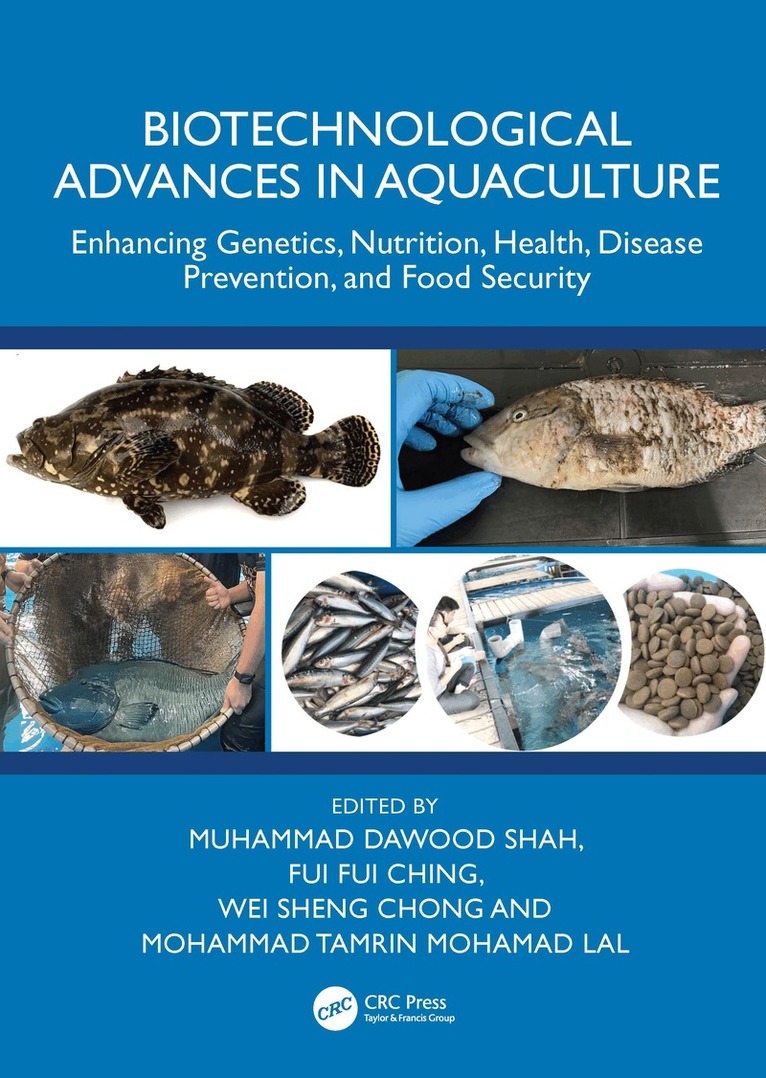
    Biotechnological Advances in Aquaculture

    Enhancing Genetics, Nutrition, Health, Disease Prevention, and Food Security

    AvMuhammad Dawood Shah,Fui Fui Ching

    Inbunden, Engelska, 2026

    2 954 kr

    Slutsåld

    Beskrivning

    This book provides a comprehensive exploration of the latest biotechnological innovations transforming the aquaculture industry. Divided into five main sections, Biotechnological Advances in Aquaculture: EnhancingGenetics, Nutrition, Health, Disease Prevention, and Food Security begins with an introduction to sustainability and innovative management strategies for aquaculture. It looks at genetic and molecular advances, such as selective breeding, gene editing, and cryopreservation, which improve the characteristics of aquatic animals. The nutrition and feed development section explores sustainable feed alternatives, including probiotics and algae-derived innovations to improve fish health and reduce reliance on traditional resources. Next, the section on health and disease prevention highlights breakthroughs in the development of vaccines, probiotics, and plant-derived immunostimulants to combat disease in aquaculture. Finally, case studies and prospects emphasize the role of biotechnology in conserving endangered species and ensuring food security.With contributions from leading experts, this book offers actionable insights and practical solutions to the challenges facing aquaculture. It will be an indispensable resource for students and researchers who want to understand the integration of biotechnology to promote sustainable aquaculture practices, innovation, and resilience in global seafood production.

    Produktinformation

    • Utgivningsdatum:2026-10-07
    • Mått:210 x 280 x undefined mm
    • Format:Inbunden
    • Språk:Engelska
    • Antal sidor:396
    • Förlag:Taylor & Francis Ltd
    • ISBN:9781041132950

    Utforska kategorier

    • Marinbiologi inom Naturvetenskap och teknik
    • Biokemisk teknik inom Naturvetenskap och teknik
    • Agronomi och lantbruk inom Naturvetenskap och teknik

    Mer om författaren

    Dr. Muhammad Dawood Shah is a Senior Lecturer at the Borneo Marine Research Institute, Universiti Malaysia Sabah (UMS), Malaysia. He obtained his MSc and PhD in Biotechnology from the Biotechnology Research Institute, UMS, in 2011 and 2016, respectively. During his postgraduate studies, he received the Excellence Award for outstanding MSc research and was recognized as the Best Postgraduate Student. Dr. Dawood’s research focuses on marine biotechnology, natural products, aquaculture health, and bioactive compounds. He has published more than 65 peer-reviewed scientific articles in reputable international journals and authored three books. His work has contributed significantly to marine natural product discovery and aquatic health research in the region. He is an active researcher and innovator, having received 8 Gold medals and 6 Silver medals at national and international innovation and research exhibitions. He has also secured three intellectual property filings related to his research innovations. In addition, he was a recipient of awards at the Malaysia Technology Expo and the Malaysia–Croatia Technology Exchange for his innovative research outputs. Dr. Dawood is frequently invited as an international speaker, reviewer, and session chair at conferences and academic forums. He has presented his work widely through oral and poster presentations at international conferences and symposia. He actively collaborates with national and international research partners and has established strong research networks across Asia and beyond. His research outputs have also been featured in print and media platforms, highlighting the impact of his work on marine biotechnology and aquaculture research. He continues to supervise postgraduate students and lead collaborative research projects aimed at advancing sustainable marine resources and biotechnology innovation.Ching Fui Fui is an Associate Professor at the Borneo Marine Research Institute (BMRI), Universiti Malaysia Sabah (UMS). She earned his PhD in Aquaculture in 2012 from Kindai University, Japan, following a Master’s degree and a Bachelor’s degree in the same field from UMS. Her academic expertise focuses on fish reproduction, larval physiology and fish husbandry. Her research emphasizes enhancement of reproductive and growth performance of many commercially important tropical aquaculture species including groupers, snappers, seabass, eel, marble goy, catfish and many more. She has successfully secured and led multiple research grants from national and international organizations and also a consultants for several high impact aquaculture projects in Japan, Indonesia and Malaysia. Dr. Ching has currently published over 66 SCOPUS/WOS indexed scientific papers in peer-reviewed journals, contributing to knowledge in aquaculture. She has also served as a keynote and plenary speaker at both local and international conferences and fosters collaborations with leading institutions across Asia, including Japan, China, Indonesia, Singapore, Brunei and Thailand. Her long-term research goal is to strengthen food security by advancing sustainable aquaculture systems, emphasizing seed production and affordable aquaculture technologies.Wei Sheng Chong is a senior lecturer at the Borneo Marine Research Institute (BMRI), Universiti Malaysia Sabah (UMS), Malaysia. He obtained his PhD in Remote Sensing from the Institute of Oceanography and Environment, Universiti Malaysia Terengganu (UMT). His research focuses on the application of advanced technologies in marine and aquaculture sciences, including unmanned aerial vehicle (UAV) and satellite remote sensing, marine habitat assessment, and ecosystem-based management approaches that support sustainable aquaculture and food security. Dr. Chong has been actively involved in national and international research collaborations and has published in reputable peer-reviewed journals and edited books. He has received several awards for academic excellence, innovation, and research contributions, and is a certified remote pilot and professional technologist. As one of the editors of this book, Dr. Chong contributes to the integration of multidisciplinary perspectives and the translation of biotechnological and technological innovations into practical applications for aquaculture sustainability, environmental resilience, and responsible marine resource use, particularly in tropical regions.Mohammad Tamrin Mohamad Lal is an Associate Professor at the Borneo Marine Research Institute (BMRI), Universiti Malaysia Sabah (UMS). He earned his PhD in Marine Biotechnology in 2016, following a Master’s degree in Aquaculture and a Bachelor’s degree in Biotechnology, all from UMS. His academic expertise centers on microbiology, fish diseases, and aquaculture health management. With more than a decade of academic and research experience, Dr. Tamrin has established his career in aquatic animal health, marine microbiology, and sustainable aquaculture biotechnology. His research emphasizes innovative approaches to disease prevention and treatment, particularly through beneficial microbes, probiotics, postbiotics, and bacteriophages as sustainable alternatives to antibiotics. He has successfully secured and led multiple research grants. Dr. Tamrin has published over 45 SCOPUS/WOS indexed scientific papers in peer-reviewed journals, contributing to knowledge in aquatic disease management, microbial genetics, marine biotechnology, and sustainable aquaculture practices. He actively presents at local and international conferences and fosters collaborations with leading institutions across Southeast Asia, including Brawijaya University, Padjadjaran University, and Prince of Songkhla University. His long-term research goal is to enhance sustainable aquaculture through microbiome-based disease prevention strategies.

    Innehållsförteckning

    • Part 1: Introduction and Sustainability in Aquaculture 1. Introduction to Biotechnology in Marine Aquaculture for Food Security 2. Biotechnological Innovations in Aquaculture: Advancing Genetics, Nutrition, Health, and Food Security 3. Environmental Sustainability for Aquaculture 4. Innovative Fisheries Management Strategies Towards Sustainable Seafood Production Part 2: Genetics and Molecular Advances 5. Molecular Advancement in Selective Breeding for Aquaculture Sustainability 6. Nanotechnology Applications in Aquaculture: Innovations for Enhanced 7.Development and Application of Nanovaccines for RNA Virus Control in Sustainable Grouper Aquaculture Part 3: Nutrition and Feed Development 8. Applications of Plant-Derived Products in Aquaculture for Fish Health Management 9. Brine Shrimp Artemia: A Promising Alternative Protein Source to Fish Meal in Aquafeed 10. Recent Innovations in Sustainable and Cost-Effective AquaFeeds for Food Security 11. Seaweed-Derived Innovations for Enhancing Nutrition and Health in Aquaculture 12. Integrating Probiotics into Aquaculture Nutrition: A Pathway Towards Sustainable Aquaculture 13. Seafood Safety as a Determinant of Food Security: The Malaysian Perspective 14. Aquaculture Post-Harvest Biotechnology and Food Security Part 4: Health and Disease Prevention 15. Biotechnological Advances in Understanding CD4⁺ T Cell Subsets and Immunological Memory in Teleost Fish: Implications for Vaccination Strategies in Aquaculture 16. Exploring the role of probiotics in disease prevention and enhancing productivity in aquaculture 17. Immunostimulants: Its Source, Benefits, And Recent Development To Augment The Fish Health and Well-Being 18. Biotechnological Strategies for Disease Prevention in Aquaculture Systems 19. Postbiotics as Sustainable Disease Prevention Approaches in Aquaculture: A Pathway to Enhanced Food Security Part 5: Case Studies and Future Directions 20. Biotechnological Advancements for Species at Risk: Case Study of Napoleon Wrasse (Cheilinus undulatus) 21. Intensive culture of the Malaysian giant freshwater prawn Macrobrachium rosenbergii in Brazil: advances, challenges, and opportunities 22. Biological Control of Harmful Algal Blooms Using Macroalgae As a Sustainable Approach.