• Fri frakt över 249 kr
  • •
  • Snabba leveranser
  • •
  • Billiga böcker
Kundservice

Du är på sajten för privatpersoner.

Företag, bibliotek eller offentlig verksamhet?

Du handlar på classic.bokus.com, där alla dina funktioner finns intakta.
Till classic.bokus.com
Bokus logotyp. Gå till startsidan.
  • Erbjudanden
  • Nyheter
  • Student
  • Topplistor
  • Barn & ungdom
  • Bokus Play
  • E-böcker
  • Pocketböcker
  • Spel & pussel

10% studentrabatt med kod TERM26

Sidfot

Mina sidor

    Hjälp

    • Kundservice
    • Vanliga frågor och svar
    • Frakt och leverans
    • Retur vid ångerrätt
    • Reklamera vara
    • Betalning
    • Köpvillkor
    • Allmänna villkor
    • Information om webbplatsens tillgänglighet

    Om Bokus

    • Om oss
    • Pressrum
    • För studenter
    • För företag
    • För bibliotek och offentlig verksamhet
    • För leverantörer
    • Hållbarhet

    Populärt

    • Aktuella erbjudanden
    • Presentkort
    • Studentlitteratur
    • Nya böcker
    • Topplistor
    • Signerade böcker
    • Engelska böcker

    Inspiration

    • Boktips
    • BookTok
    • Populära bokserier
    • Barnbokskaraktärer
    • Populära författare
    Logotyp för Bokus
    Följ oss på Facebook (extern länk)Följ oss på Instagram (extern länk)Följ oss på YouTube (extern länk)Följ oss på TikTok (extern länk)
    bokus @ CookiesAnpassa cookiesIntegritetspolicyKöpvillkor
    Till Citymail hemsida (extern länk)Till Budbee hemsida (extern länk)Till Postnord hemsida (extern länk)Till Schenker hemsida (extern länk)Till Early Bird hemsida (extern länk)Till Walleys hemsida (extern länk)
    1. Historia och arkeologi
    2. Historia
    3. Europas historia

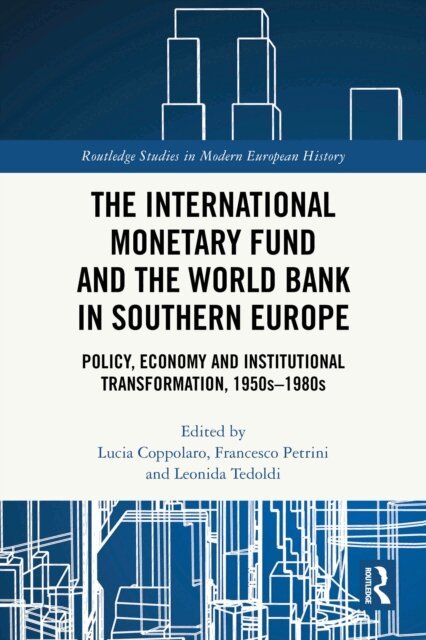
    International Monetary Fund and the World Bank in Southern Europe

    Policy, Economy and Institutional Transformation, 1950s-1980s

    AvLucia Coppolaro,Francesco Petrini

    Inbunden, Engelska, 2026

    Del i serien Routledge Studies in Modern European History

    2 506 kr

    Beställningsvara. Skickas inom 10-15 vardagar. Fri frakt över 249 kr.

    Beskrivning

    Offering an interdisciplinary analysis of the International Monetary Fund (IMF) and World Bank’s (WB) interventions in Southern Europe during a transformative period in the 20th century and focusing on Southern Europe as its geographical frame, this volume brings together leading scholars from international history, economics and economic history to examine how these international financial institutions influenced, and were influenced by, economic and political developments in the region.Written by specialists in the field, the volume presents national case studies in order to analyze the role of the IMF/WB in Southern Europe during key historical moments such as post-World War II reconstruction, the economic boom of the 1950s and 1960s, the crises of the 1970s, the collapse of the Bretton Woods system and the transitions from authoritarian regimes to democracy. It examines both the institutional evolution of the IMF and the WB, and the role of member states, thereby providing a more comprehensive understanding of how these organizations operated within a regional and international context.The International Monetary Fund and the World Bank in Southern Europe: Policy, Economy, and Institutional Transformation, 1950s–1980s is for a broad academic audience, including scholars, researchers, and students in the fields of history, economics, international political economy, international relations and political science.

    Produktinformation

    • Utgivningsdatum:2026-06-09
    • Mått:156 x 234 x 14 mm
    • Vikt:400 g
    • Format:Inbunden
    • Språk:Engelska
    • Serie:Routledge Studies in Modern European History
    • Antal sidor:226
    • Förlag:Taylor & Francis Ltd
    • ISBN:9781041164678

    Utforska kategorier

    • Europas historia inom Historia och arkeologi
    • Internationella relationer inom Samhälle och politik

    Mer om författaren

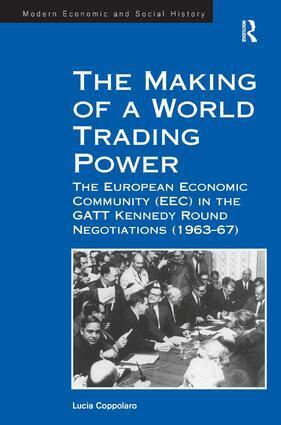
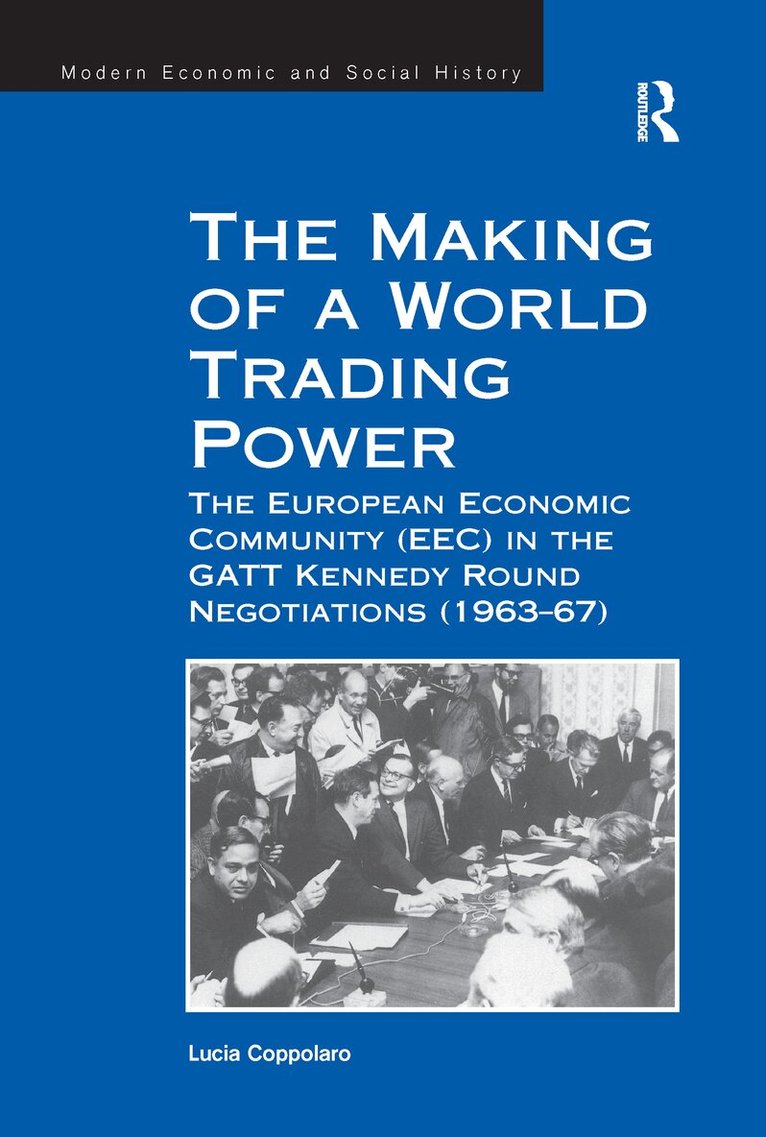
    Lucia Coppolaro is Associate Professor of International History at the University of Padova. Her research focuses on international trade, the history of international economic institutions and European integration. She has published on the European Economic Community’s role in the General Agreement on Tariffs and Trade negotiations and the evolution of the European Investment Bank. Her recent publications in include Deciphering the European Investment Bank: History, Politics, and Economics (co-edited with Helen Kavvadia, Routledge, 2022); The Making of a World Trading Power: The European Economic Community in the GATT Kennedy Round Negotiations (1963–1967) (Routledge, 2013).Francesco Petrini is Associate professor in History of International Relations at the University of Padua. His research interests comprise European integration history, Italy’s contemporary history and international economic history. His latest book is about Italy and the external constraint (La sferza del cambio. Il vincolo esterno nella storia dell’Italia repubblicana, Milano, 2025).Leonida Tedoldi is Full Professor of History of International Relations at the University of Bergamo. His research focuses on the history of European and international institutions, democratic transitions and the role of international organizations in postwar political transformations. He has published on constitutional developments, parliamentary history and the influence of external actors on domestic political change. His publications include 'The Constitutive Process of European Central Bank: Issues and Problems of the Institutional Aspects' in Instituta. Journal of History of European and International Institutions, 2023 and 'The “Commission de Coordination' (Cocor) of the ECSC Special Council of Ministers', in Ventunesimo secolo, n. 53, 2023.

    Innehållsförteckning

    • Introduction 1. Competing Visions, Fragmented Strategies: The World Bank’s Loans in Southern Italy (1946-1959) 2. Learning from Early Mistakes: The World Bank’s Design and Evaluation of Cassa per il Mezzogiorno Programs, 1950-1959 3. Passing the baton: The International Bank for Reconstruction and Development and the European Investment Bank in the 1950s and 1960s 4. Italian governments and International Monetary Fund, between the 1940s and 1970s: the Political Role of International Loans 5. The IMF loans to Italy: between international constraints, economic distress, and political challenges (1974-1977) 6. Conditional lending in the Cold War era: Italy, the IMF, and the stand-by arrangement of April 1977 7. The International Monetary Fund and transition to democracy in Portugal (1975-1979) 8. Turkish Democracy, the International Financial Institutions, and the 1980 Military Coup 9. Stabilizing Greece: the IMF’s Long Engagement, 1947-1980