• Fri frakt över 249 kr
  • •
  • Snabba leveranser
  • •
  • Billiga böcker
Kundservice

Du är på sajten för privatpersoner.

Företag, bibliotek eller offentlig verksamhet?

Du handlar på classic.bokus.com, där alla dina funktioner finns intakta.
Till classic.bokus.com
Bokus logotyp. Gå till startsidan.
  • Erbjudanden
  • Nyheter
  • Student
  • Topplistor
  • Barn & ungdom
  • Bokus Play
  • E-böcker
  • Pocketböcker
  • Spel & pussel

10% rabatt på allt med kod: NYSTART10 →

Sidfot

Mina sidor

    Hjälp

    • Kundservice
    • Vanliga frågor och svar
    • Frakt och leverans
    • Retur vid ångerrätt
    • Reklamera vara
    • Betalning
    • Köpvillkor
    • Allmänna villkor
    • Information om webbplatsens tillgänglighet

    Om Bokus

    • Om oss
    • Pressrum
    • För studenter
    • För företag
    • För bibliotek och offentlig verksamhet
    • För leverantörer
    • Hållbarhet

    Populärt

    • Aktuella erbjudanden
    • Presentkort
    • Studentlitteratur
    • Nya böcker
    • Topplistor
    • Signerade böcker
    • Engelska böcker

    Inspiration

    • Boktips
    • BookTok
    • Populära bokserier
    • Barnbokskaraktärer
    • Populära författare
    Logotyp för Bokus
    Följ oss på Facebook (extern länk)Följ oss på Instagram (extern länk)Följ oss på YouTube (extern länk)Följ oss på TikTok (extern länk)
    bokus @ CookiesAnpassa cookiesIntegritetspolicyKöpvillkor
    Till Citymail hemsida (extern länk)Till Budbee hemsida (extern länk)Till Postnord hemsida (extern länk)Till Schenker hemsida (extern länk)Till Early Bird hemsida (extern länk)Till Walleys hemsida (extern länk)
    1. Ekonomi och Ledarskap
    2. Företagsekonomi
    3. Entreprenörskap

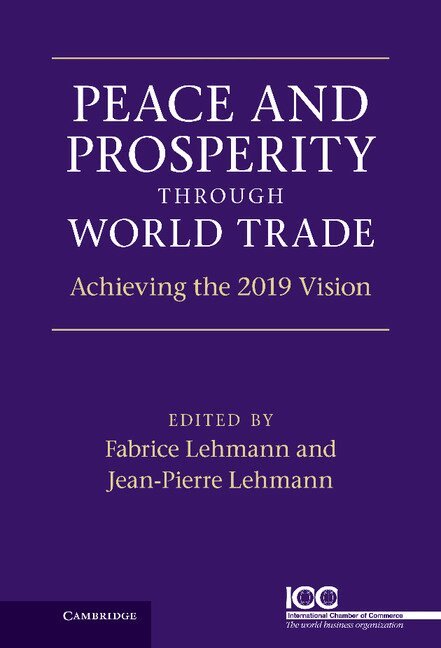
    Peace and Prosperity through World Trade

    Achieving the 2019 Vision

    AvJean-Pierre Lehmann,Fabrice Lehmann

    Inbunden, Engelska, 2010

    1 250 kr

    Beställningsvara. Skickas inom 10-15 vardagar. Fri frakt över 249 kr.

    Beskrivning

    The International Chamber of Commerce (ICC) was created in 1919 by business leaders who described themselves as 'merchants of peace' and whose motto was 'world peace through world trade'. Since then a number of initiatives, including the founding of the WTO in 1995, have provided the proper regulatory conditions for a dramatic increase in world trade. This has generated unprecedented growth and allowed many countries to enjoy great gains in wealth and welfare. Yet despite these gains we are still far from achieving the ICC's goal of world peace through world trade. This 2010 book provides a broad overview of the forces that shape international trade and global interdependence, showing business leaders and entrepreneurs how we can address the shortcomings of the multilateral trading system. Most importantly, it shows how we can turn international trade into one of the key global instruments to achieve peace and prosperity in the twenty-first century.

    Produktinformation

    • Utgivningsdatum:2010-09-30
    • Mått:152 x 229 x 19 mm
    • Vikt:700 g
    • Format:Inbunden
    • Språk:Engelska
    • Antal sidor:336
    • Förlag:Cambridge University Press
    • ISBN:9781107000421

    Utforska kategorier

    • Entreprenörskap inom Ekonomi och Ledarskap

    Mer om författaren

    Jean-Pierre Lehmann is Professor of International Political Economy and Founding Director of the Evian Group at IMD, Lausanne. Following an academic and consulting career primarily in Asia and Europe, he founded the Evian Group in 1995 and joined IMD in 1997. He frequently participates in global policy forums and is a compulsive writer of articles and briefs on numerous issues related to international economic and political affairs and global governance. Fabrice Lehmann is Research Associate and Editor with the Evian Group at IMD, Lausanne. In this capacity, he has drafted numerous reports for a global audience on the ongoing Doha Round of trade negotiations at the WTO, as well as the UNFCCC climate change negotiations, with special attention to the linkages between these negotiations.

    Recensioner i media

    'Compiled by The Evian Group on the occasion of the 90th anniversary of the International Chamber of Commerce, this clear and accessible book walks the reader through the complex dynamics of international trade. It reminds us that much of the global interconnection that we have achieved today was charted by the world's 'merchants of peace': traders, who brought societies ever closer together, by promoting the movement of goods, services and people across the globe. In analysing the challenges that they face in today's turbulent economic times, the book confirms the centrality of trade to peaceful international relations.' Pascal Lamy, Director General, World Trade Organization

    Innehållsförteckning

    • List of illustrations; List of contributors; Foreword; Preface: the ICC vision; Historical overview; Editorial note; Part I. Global Systemic Transformations: Editorial introduction; 1. Trade in the new Asian hemisphere; 2. US allegiance to the multilateral trading system: from ambivalence to shared leadership; 3. Trade for development: the case of China; 4. Trade in the US-China relationship; 5. Unravelling India and strengthening external engagement for sustainable growth; 6. Japan's contribution to an open trading system; 7. Rebalancing Korean trade policy: from bilateral to multilateral free trade; 8. Vietnam: a rising Asian tiger?; 9. The European compact on trade still stands; 10. Synergies with the Russian Federation; 11. Reasons for an optimistic future view of trade and Latin America; 12. Is the Brazilian giant finally awakening?; 13. The Arab region and the GCC in tomorrow's trade; 14. Growing African trade amid global economic turmoil; Part II. Governance of Global Trade: Editorial introduction; 15. Securing the global trade regime: the demand for global governance; 16. Trade and the future of the WTO; 17. WTO reform: time to start is now; 18. 'Murky protectionism' and the WTO; 19. Preferential trade agreements: imagining a world with less discrimination; 20. The G20 after the Great Recession: rebalancing trade; 21. The missing piece: global imbalances and the exchange rate regime; 22. Trading knowledge fairly: intellectual property rules for global prosperity and environmental sustainability; 23. Trade and subsidies: undermining the trading system with public funds; 24. Trading labour: a dilemma for migration regimes; Part III. Poverty and Global Inequities: Editorial introduction; 25. Trade and poverty: an old debate rekindled; 26. Trade policy as an instrument of social justice; 27. Trade, employment and global responsibilities; 28. Misconceptions about the WTO, trade, development and aid; 29. Two hundred years after Jefferson; 30. Trade, coercive forces and national governance; 31. Gender equality in trade; 32. Trading health for comfort; 33. Unlocking entrepreneurial potential; 34. Trade and security: a vital link to sustainable development in a troubled world; Part IV. Long View on Interlocking Crises: Editorial introduction; 35. Trade and sustainable development: the ends must shape the means; 36. Trade and climate change: the linkage; 37. Destructive trade winds: trade, consumption and resource constraints; 38. Trade and energy: a new clean energy deal; 39. Agriculture and international trade; 40. Water scarcity: how trade can make a difference; 41. Water resources: a national security issue for the Middle East; 42. Trade, technology transfer and institutional catch-up; 43. A frail reed: the geopolitics of climate change; Part V. Global Business Responsibilities: Editorial introduction; 44. Responsible leadership; 45. For great leadership; 46. A lesson on trade, regulation and competition policy?; 47. International trade and business ethics; 48. Who's driving 21st century innovation? Who should?; 49. Responsible sourcing; 50. Trade, international capital flows and risk management; 51. Trade, corporate strategies and development; 52. How can trade lead to inclusive growth?; 53. Trade and human rights: friends or foes?; 54. Trade: the spirit and rule of law; Conclusion; Index.