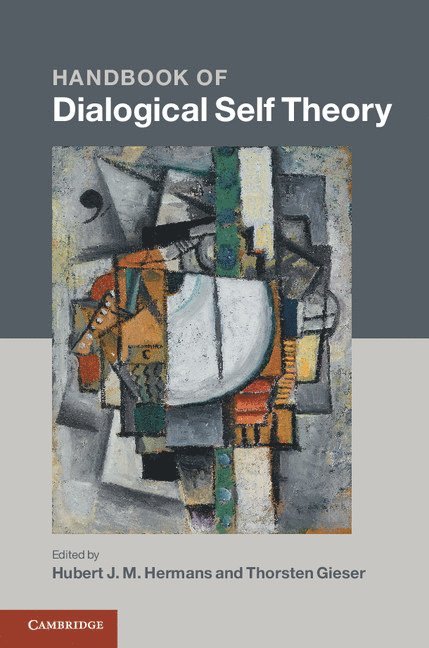
Inbunden, Engelska, 2011
Handbook of Dialogical Self Theory
Av Hubert J. M. Hermans, Thorsten Gieser
1448 kr
Tillfälligt slut
Beskrivning
Produktinformation
- Utgivningsdatum: 2011-11-24
- Mått: 158 x 235 x 22 mm
- Vikt: 930 g
- Format: Inbunden
- Språk: Engelska
- Antal sidor: 518
- Förlag: Cambridge University Press
- ISBN: 9781107006515
Utforska kategorier
Mer om författaren
Hubert J. M. Hermans studied psychology at the University of Nijmegen, The Netherlands. His dissertation (1967) was on motivation and achievement and resulted in two psychological tests: the Achievement Motivation Test for Adults and the Achievement Motivation Test for Children. In 1973 he became Associate Professor of Psychology, and in 1980 Full Professor, at the University of Nijmegen. As a reaction to the static and impersonal nature of psychological tests, he developed the Self-Confrontation Method. Application of this method in practice led to the establishment of the Dutch Association for SCM Consultants which counted 300 members in 2010. In the 1990s, he developed Dialogical Self Theory (DST), inspired by the American pragmatism of William James and the dialogical school of the Russian literary scholar Mikhail Bakhtin. Since 2002 he has been president of the International Society for Dialogical Science (ISDS) and since 2006 editor-in-chief of the International Journal for Dialogical Science (IJDS). He is the initiator of the biennial International Conferences on the Dialogical Self and his theories and methods are applied worldwide. He is co-author of Dialogical Self Theory (2010). Nine special issues of scientific psychological journals are devoted to his work. Thorsten Gieser received his MA in Social Anthropology and Religious Studies from the University of Heidelberg, Germany and attained his PhD in Social Anthropology at the University of Aberdeen, UK. He is an independent scholar and Fellow of the Royal Anthropological Institute with a particular interest in the cultural phenomenology of intersubjective experience, perception, embodiment and empathy.
Recensioner i media
'This is an incredibly engaging and comprehensive text that builds on the evolving dialogical self theory, applies the model to several fascinating and diverse global cases and still finds room to explain in thoughtful detail how to utilize these ideas in improving people's lives. What you have in the Handbook of Dialogical Self Theory is a comprehensive guide to the theoretical understanding, analysis, and practice of dialogical self theory with diverse case examples and multiple illustrations of its usefulness and practicality in a complex and changing world.' Jack S. Kahn, California School of Professional Psychology, Alliant International University
Betyg & recensioner
0 recensioner
Inga recensioner tillgängliga.