• Fri frakt över 249 kr
  • •
  • Snabba leveranser
  • •
  • Billiga böcker
Kundservice

Du är på sajten för privatpersoner.

Företag, bibliotek eller offentlig verksamhet?

Du handlar på classic.bokus.com, där alla dina funktioner finns intakta.
Till classic.bokus.com
Bokus logotyp. Gå till startsidan.
  • Erbjudanden
  • Nyheter
  • Student
  • Topplistor
  • Barn & ungdom
  • Bokus Play
  • E-böcker
  • Pocketböcker
  • Spel & pussel

Må bättre, för mindre! Upp till 50% rabatt på hälsoböcker

Sidfot

Mina sidor

    Hjälp

    • Kundservice
    • Vanliga frågor och svar
    • Frakt och leverans
    • Retur vid ångerrätt
    • Reklamera vara
    • Betalning
    • Köpvillkor
    • Allmänna villkor
    • Information om webbplatsens tillgänglighet

    Om Bokus

    • Om oss
    • Pressrum
    • För studenter
    • För företag
    • För bibliotek och offentlig verksamhet
    • För leverantörer
    • Hållbarhet

    Populärt

    • Aktuella erbjudanden
    • Presentkort
    • Studentlitteratur
    • Nya böcker
    • Topplistor
    • Signerade böcker
    • Engelska böcker

    Inspiration

    • Boktips
    • BookTok
    • Populära bokserier
    • Barnbokskaraktärer
    • Populära författare
    Logotyp för Bokus
    Följ oss på Facebook (extern länk)Följ oss på Instagram (extern länk)Följ oss på YouTube (extern länk)Följ oss på TikTok (extern länk)
    bokus @ CookiesAnpassa cookiesIntegritetspolicyKöpvillkor
    Till Citymail hemsida (extern länk)Till Budbee hemsida (extern länk)Till Postnord hemsida (extern länk)Till Schenker hemsida (extern länk)Till Early Bird hemsida (extern länk)Till Walleys hemsida (extern länk)
    1. Juridik
    2. Internationell rätt
    3. Folkrätt

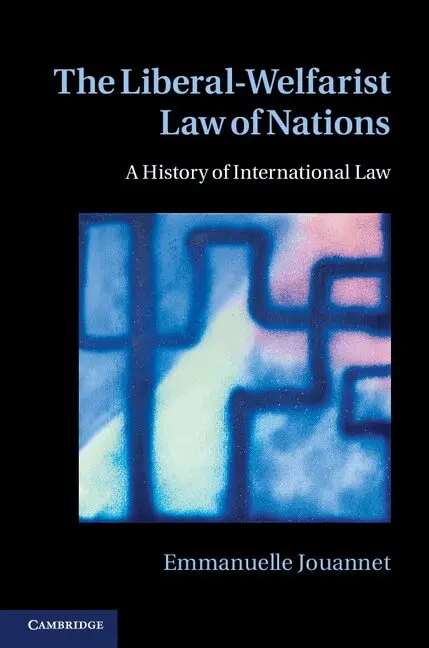
    The Liberal-Welfarist Law of Nations

    A History of International Law

    AvEmmanuelle Jouannet

    Inbunden, Engelska, 2012

    1 302 kr

    Beställningsvara. Skickas inom 10-15 vardagar. Fri frakt över 249 kr.

    Fler format och utgåvor

    Häftad

    426 kr

    Beskrivning

    Although portrayed as a liberal law of co-existence of and co-operation between states, international law has always been a welfarist law, too. Emerging in eighteenth-century Europe, it soon won favour globally. Not only did it minister to the interests of states and their concern for stability, but it was also an interventionist law designed to ensure the happiness and well-being of peoples. Hence international law initially served as a secularised eschatological model, replacing the role of religion in ensuring the proper ordering of mankind, which was held to be both one and divided. That initial vision still drives our post-Cold War globalised world. Contemporary international law is neither a strictly welfarist law nor a strictly liberal law, but is in fact a liberal-welfarist law. In the conjunction of these two purposes lies one of the keys to its meaning and a partial explanation for its continuing ambivalence.

    Produktinformation

    • Utgivningsdatum:2012-01-26
    • Mått:160 x 235 x 20 mm
    • Vikt:640 g
    • Format:Inbunden
    • Språk:Engelska
    • Antal sidor:326
    • Förlag:Cambridge University Press
    • ISBN:9781107018945
    • Översättare:Christopher Sutcliffe

    Utforska kategorier

    • Folkrätt inom Juridik

    Mer om författaren

    Emmanuelle Jouannet is a Professor of International Law at the Sorbonne, where she currently directs the interdisciplinary programme 'International Law and Justice in a Global World'.

    Innehållsförteckning

    • Introduction; Part I. The Modern Law of Nations: 1. The law of nations of the Moderns: a new discipline; 2. The liberal purpose of the modern law of nations: liberty, equality and security for states; 3. State interests and self-esteem; 4. The modern law of nations between free-enterprise and protectionism; 5. The welfarist purpose of the modern law of nations: the happiness of the people and the advancement of states; 6. Cooperation and assistance to states between liberalism and welfarism; 7. The liberal-welfarist law of nations: a code of good conduct to discipline European states; 8. Goodness, freedom and justice; Conclusion; Part II. Classical International Law: 9. A modern commentator turned classical: the Vattelian moment; 10. The triumph of the liberal purpose of international law; 11. Liberal international law outflanked. A welfarist purpose for the rest of the world; 12. Intellectual and political explanations and justifications for the change; 13. Classical international law in the age of free-enterprise: between free-trade and protectionism; 14. Liberal vision, dogmatic foundation and the appeal of liberalism; 15. Concerns about social and economic inequality. The emergence of a new welfarist purpose; 16. The emergence of concerns for human rights; Conclusion; Part III. Contemporary International Law: 17. Continuities and discontinuities of the classical model; 18. The two liberal purposes of contemporary international law; 19. The dilemmas of the new liberal purpose (I): democracy, human rights and the rule of law; 20. The dilemmas of the new liberal purpose (II): humanitarian interventions, identities and cultures; 21. The status report and general prospects for the new liberal and democratic purpose; 22. The economic liberalism of contemporary international law: between Keynesian objectives and the triumph of free trade; 23. The general advancement of the welfarist purpose: characteristics and difficulties; 24. The specific advancement of the welfarist purpose: Third World(s) and development; Conclusion.