• Fri frakt över 249 kr
  • •
  • Snabba leveranser
  • •
  • Billiga böcker
Kundservice

Du är på sajten för privatpersoner.

Företag, bibliotek eller offentlig verksamhet?

Du handlar på classic.bokus.com, där alla dina funktioner finns intakta.
Till classic.bokus.com
Bokus logotyp. Gå till startsidan.
  • Erbjudanden
  • Nyheter
  • Student
  • Topplistor
  • Barn & ungdom
  • Bokus Play
  • E-böcker
  • Pocketböcker
  • Spel & pussel

10% rabatt på allt med kod: NYSTART10 →

Sidfot

Mina sidor

    Hjälp

    • Kundservice
    • Vanliga frågor och svar
    • Frakt och leverans
    • Retur vid ångerrätt
    • Reklamera vara
    • Betalning
    • Köpvillkor
    • Allmänna villkor
    • Information om webbplatsens tillgänglighet

    Om Bokus

    • Om oss
    • Pressrum
    • För studenter
    • För företag
    • För bibliotek och offentlig verksamhet
    • För leverantörer
    • Hållbarhet

    Populärt

    • Aktuella erbjudanden
    • Presentkort
    • Studentlitteratur
    • Nya böcker
    • Topplistor
    • Signerade böcker
    • Engelska böcker

    Inspiration

    • Boktips
    • BookTok
    • Populära bokserier
    • Barnbokskaraktärer
    • Populära författare
    Logotyp för Bokus
    Följ oss på Facebook (extern länk)Följ oss på Instagram (extern länk)Följ oss på YouTube (extern länk)Följ oss på TikTok (extern länk)
    bokus @ CookiesAnpassa cookiesIntegritetspolicyKöpvillkor
    Till Citymail hemsida (extern länk)Till Budbee hemsida (extern länk)Till Postnord hemsida (extern länk)Till Schenker hemsida (extern länk)Till Early Bird hemsida (extern länk)Till Walleys hemsida (extern länk)
    1. Historia och arkeologi
    2. Arkeologi
    3. Arkeologiska perioder och områden

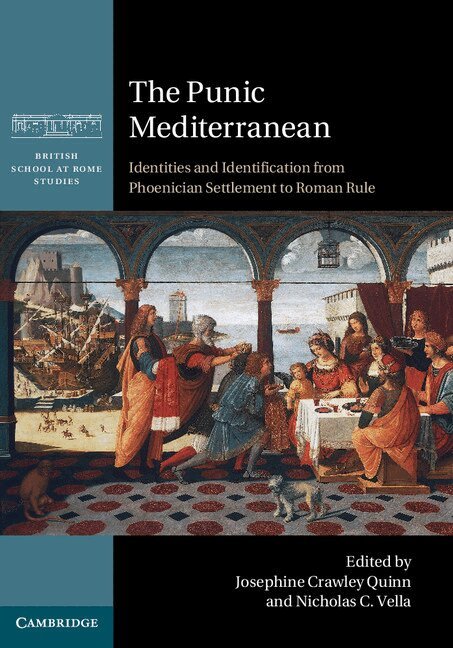
    The Punic Mediterranean

    Identities and Identification from Phoenician Settlement to Roman Rule

    AvJosephine Crawley Quinn,Nicholas C. Vella

    Inbunden, Engelska, 2014

    Del i serien British School at Rome Studies

    1 665 kr

    Beställningsvara. Skickas inom 10-15 vardagar. Fri frakt över 249 kr.

    Beskrivning

    The role of the Phoenicians in the economy, culture and politics of the ancient Mediterranean was as large as that of the Greeks and Romans, and deeply interconnected with that 'classical' world, but their lack of literature and their oriental associations mean that they are much less well-known. This book brings state-of-the-art international scholarship on Phoenician and Punic studies to an English-speaking audience, collecting new papers from fifteen leading voices in the field from Europe and North Africa, with a bias towards the younger generation. Focusing on a series of case-studies from the colonial world of the western Mediterranean, it asks what 'Phoenician' and 'Punic' actually mean, how Punic or western Phoenician identity has been constructed by ancients and moderns, and whether there was in fact a 'Punic world'.

    Produktinformation

    • Utgivningsdatum:2014-12-04
    • Mått:172 x 250 x 25 mm
    • Vikt:950 g
    • Format:Inbunden
    • Språk:Engelska
    • Serie:British School at Rome Studies
    • Antal sidor:414
    • Förlag:Cambridge University Press
    • ISBN:9781107055278

    Utforska kategorier

    • Arkeologiska perioder och områden inom Historia och arkeologi

    Mer om författaren

    Josephine Crawley Quinn is University Lecturer in Ancient History at the University of Oxford and a Fellow and Tutor of Worcester College, and works on Mediterranean history and archaeology. She has a particular interest in ancient North Africa, but has published articles on topics from Roman imperialism to Athenian sculpture to Carthaginian child sacrifice to Edwardian education, and she recently co-edited another volume of essays on The Hellenistic West with Jonathan Prag. She co-directs, with Andrew Wilson and Elizabeth Fentress, the excavations at Utica (Tunisia) as well as, with Jonathan Prag, the Oxford Centre for Phoenician and Punic Studies. She is currently writing a book on Phoenicianism from Homer to the Arab Spring. Nicholas C. Vella is Senior Lecturer and Head of the Department of Classics and Archaeology at the University of Malta. His research interests are varied and include the historiography of antiquarianism and archaeological practice in the Mediterranean, later Mediterranean prehistory, and Phoenician and Punic ritual practices. He has co-edited Debating Orientalization (2006) with Corinna Riva, and has recently published another collection of essays on the Maltese Bronze Age with Davide Tanasi. He supervised the University of Malta excavations at the Phoenician sanctuary site of Tas-Silġ in Malta between 1996 and 2005, and has co-edited the final report that is forthcoming with Peeters (Leuven). He co-directed the excavations of a small Punic shrine in Gozo (Malta) between 2005 and 2010, and is co-director of a field-walking project in Malta.

    Recensioner i media

    'This stimulating, informative, and timely volume advances our understanding of the Phoenicians' place in the western Mediterranean, and reminds us that the Greeks and Romans should not be thought of as the only owners of the 'Classical' past.' Carolina López-Ruiz, Bryn Mawr Classical Review

    Innehållsförteckning

    • Introduction Josephine Crawley Quinn and Nicholas C. Vella; Part I. Contexts: 1. Phoinix and Poenus: usage in antiquity Jonathan R. W. Prag; 2. The invention of the Phoenicians Nicholas C. Vella; 3. Punic identities and modern perceptions in the western Mediterranean Peter van Dommelen; 4. Phoenicity, Punicities Sandro Filippo Bondì; 5. Death among the Punics Carlos Gómez Bellard; 6. Coins and their use in the Punic Mediterranean Suzanne Frey-Kupper; Part II. Case Studies: 7. Defining Punic Carthage Boutheina Maraoui Telmini, Roald Docter, Babette Bechtold, Fethi Chelbi and Winfred van de Put; 8. Punic identity in North Africa: the funerary world Habib Ben Younès and Alia Krandel-Ben Younès; 9. A Carthaginian perspective on the altars of the Philaeni Josephine Crawley Quinn; 10. Numidia and the Punic world Virginie Bridoux; 11. Punic Mauretania? Emanuele Papi; 12. Punic after Punic times? The case of the so-called 'Libyphoenician' coins of southern Iberia Alicia Jiménez; 13. More than neighbours: Punic-Iberian connections in southeast Iberia Carmen Aranegui Gascó and Jaime Vives-Ferrándiz Sánchez; 14. Identifying Punic Sardinia: local communities and cultural identities Andrea Roppa; 15. Phoenician identities in Hellenistic times: strategies and negotiations Corinne Bonnet; Afterword Andrew Wallace-Hadrill.