Inbunden, Engelska, 2017
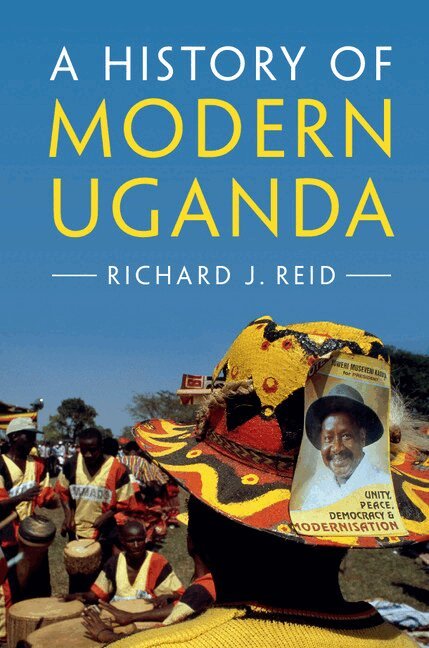
A History of Modern Uganda
1608 kr
Beställningsvara. Skickas inom 5-8 vardagar. Fri frakt över 249 kr.
Fler format och utgåvor
Beskrivning
Produktinformation
- Utgivningsdatum: 2017-03-02
- Mått: 158 x 235 x 27 mm
- Vikt: 720 g
- Format: Inbunden
- Språk: Engelska
- Antal sidor: 328
- Förlag: Cambridge University Press
- ISBN: 9781107067202
Utforska kategorier
Mer om författaren
Richard J. Reid is Head of the Department of History and Professor of the History of Africa at the School of Oriental and African Studies, University of London. He is the author of several books, including Frontiers of Violence in Northeast Africa (2011) and Warfare in African History (Cambridge, 2012).
Recensioner i media
'An exceptional book, which seeks to restore the nation as a focus of historical enquiry in Africa. Reid reframes Uganda's history, moving away from standard narratives of ethnic and sectarian division, and identifying alternative unifying themes - the political creativity, and inequity, stimulated by violence; migration as a source of uneasy integration at best, deepening chauvinism at worst; and the enduring significance of the precolonial period. This reflective, erudite study sheds new light on the uneven creation of a nation, formed through the organic, internal, autogenerative processes of political and social affiliation, as much as the externally-imposed architecture of borders and flags.' Shane Doyle, Director of the Leeds University Centre for African Studies (LUCAS)
Betyg & recensioner
0 recensioner
Inga recensioner tillgängliga.