• Fri frakt över 249 kr
  • •
  • Snabba leveranser
  • •
  • Billiga böcker
Kundservice

Du är på sajten för privatpersoner.

Företag, bibliotek eller offentlig verksamhet?

Du handlar på classic.bokus.com, där alla dina funktioner finns intakta.
Till classic.bokus.com
Bokus logotyp. Gå till startsidan.
  • Erbjudanden
  • Student
  • Topplistor
  • Barn & ungdom
  • Bokus Play
  • E-böcker
  • Ljudböcker
  • Pocketböcker
  • Spel och pussel

Pocketfynda! Hundratals böcker för 49 kr/st →

Sidfot

Mina sidor

    Hjälp

    • Kundservice
    • Vanliga frågor och svar
    • Frakt och leverans
    • Retur vid ångerrätt
    • Reklamera vara
    • Betalning
    • Köpvillkor
    • Allmänna villkor
    • Information om webbplatsens tillgänglighet

    Om Bokus

    • Om oss
    • Pressrum
    • För studenter
    • För företag
    • För bibliotek och offentlig verksamhet
    • För leverantörer
    • Hållbarhet

    Populärt

    • Aktuella erbjudanden
    • Presentkort
    • Studentlitteratur
    • Nya böcker
    • Topplistor
    • Signerade böcker
    • Engelska böcker

    Inspiration

    • Boktips
    • BookTok
    • Barnbokskaraktärer
    • Populära författare
    Logotyp för Bokus
    Följ oss på Facebook (extern länk)Följ oss på Instagram (extern länk)Följ oss på YouTube (extern länk)Följ oss på TikTok (extern länk)
    bokus @ CookiesAnpassa cookiesIntegritetspolicyKöpvillkor
    Till Citymail hemsida (extern länk)Till Budbee hemsida (extern länk)Till Postnord hemsida (extern länk)Till Schenker hemsida (extern länk)Till Early Bird hemsida (extern länk)Till Walleys hemsida (extern länk)
    1. Historia och arkeologi
    2. Historia
    3. Europas historia

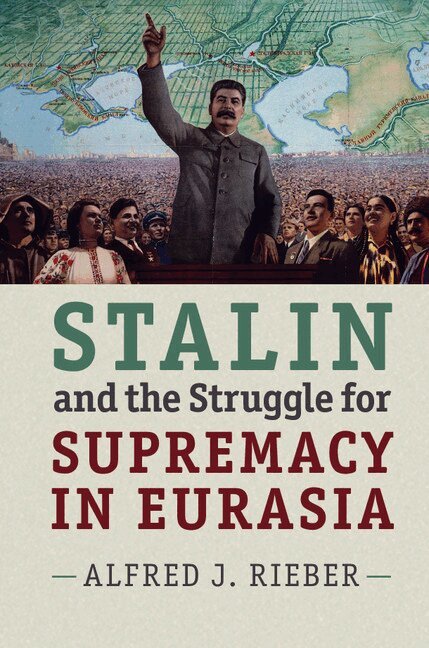
    Stalin and the Struggle for Supremacy in Eurasia

    AvAlfred J. Rieber

    Inbunden, Engelska, 2015

    1 250 kr

    Beställningsvara. Skickas inom 7-10 vardagar. Fri frakt över 249 kr.

    Fler format och utgåvor

    Häftad

    357 kr

    E-bok

    455 kr

    E-bok

    455 kr

    Beskrivning

    This is a major new study of the successor states that emerged in the wake of the collapse of the great Russian, Habsburg, Iranian, Ottoman and Qing Empires and of the expansionist powers who renewed their struggle over the Eurasian borderlands through to the end of the Second World War. Surveying the great power rivalry between the Soviet Union, Nazi Germany and Imperial Japan for control over the Western and Far Eastern boundaries of Eurasia, Alfred J. Rieber provides a new framework for understanding the evolution of Soviet policy from the Revolution through to the beginning of the Cold War. Paying particular attention to the Soviet Union, the book charts how these powers adopted similar methods to the old ruling elites to expand and consolidate their conquests, ranging from colonisation and deportation to forced assimilation, but applied them with a force that far surpassed the practices of their imperial predecessors.

    Produktinformation

    • Utgivningsdatum:2015-08-27
    • Mått:158 x 235 x 26 mm
    • Vikt:740 g
    • Format:Inbunden
    • Språk:Engelska
    • Antal sidor:429
    • Förlag:Cambridge University Press
    • ISBN:9781107074491
    • Utmärkelser:Pushkin House Prize 2016

    Utforska kategorier

    • Europas historia inom Historia och arkeologi

    Mer om författaren

    Alfred J. Rieber spent thirty years as Professor of History and ten years as Chair at the University of Pennsylvania before moving to Budapest in 1995 to chair and reorganise the History Department at the Central European University. Since then he has taught hundreds of students from the Eurasian borderlands. His first visit to the Soviet Union came in January 1956 followed by his participation in the first year of the cultural exchange at Moscow State University (1958–59). Over the past fifty years, he has continued his scholarly visits and travels throughout Eurasia, going as far east as the Buryat Mongol Republic. His publications include works on Soviet foreign policy, Russian social history and the comparative history of frontiers. His American and European doctoral students have published widely in the history of the Eurasian borderlands. Professor Rieber's work on frontiers has been translated into Russian, Polish and Ukrainian and he has won two teaching awards in the USA and two in Hungary, as well as a Prize from the American Philosophical Society. His scholarship has been supported by fellowships from the Ford Foundation, the Guggenheim Foundation, the National Council for Soviet and East European Studies, the National Endowment for the Humanities, St Antony's College, Oxford and the Inter-University Committee on Travel Grants.

    Recensioner i media

    'In this thorough study, Rieber analyzes the struggle for control of Eurasia's borderlands from the collapse of the Romanov, Habsburg, Ottoman, Qing, and Persian empires through the end of WWII. He focuses on Stalin, emphasizing the ways in which the Soviet leader's foreign policy echoed approaches of his imperial predecessors. Stalin was a 'man of the borderlands', shaped by his experiences growing up in Transcaucasia and building a revolutionary state on the ruins of a multiethnic empire … 'Stalin's pragmatism', writes Rieber, 'was the pragmatism of a Marxist-Leninist tempered by his grasp of the historical foundations of Russia's status as a great power'. Summing up: highly recommended. Upper-division undergraduates and above.' M. A. Soderstrom, Choice

    Innehållsförteckning

    • Introduction; 1. Stalin: man of the borderlands; 2. Borderlands in Civil War and intervention; 3. The borderland thesis: the West; 4. The borderland thesis: the East; 5. Stalin in command; 6. Borderlands on the eve; 7. Civil wars in the borderlands; 8. War aims: the outer perimeter; 9. War aims: the inner perimeter; 10. Friendly governments in the outer perimeter; Conclusion: a transient hegemony; Index.