• Fri frakt över 249 kr
  • •
  • Snabba leveranser
  • •
  • Billiga böcker
Kundservice

Du är på sajten för privatpersoner.

Företag, bibliotek eller offentlig verksamhet?

Du handlar på classic.bokus.com, där alla dina funktioner finns intakta.
Till classic.bokus.com
Bokus logotyp. Gå till startsidan.
  • Erbjudanden
  • Nyheter
  • Student
  • Topplistor
  • Barn & ungdom
  • Bokus Play
  • E-böcker
  • Pocketböcker
  • Spel & pussel

10% rabatt på allt med kod: NYSTART10 →

Sidfot

Mina sidor

    Hjälp

    • Kundservice
    • Vanliga frågor och svar
    • Frakt och leverans
    • Retur vid ångerrätt
    • Reklamera vara
    • Betalning
    • Köpvillkor
    • Allmänna villkor
    • Information om webbplatsens tillgänglighet

    Om Bokus

    • Om oss
    • Pressrum
    • För studenter
    • För företag
    • För bibliotek och offentlig verksamhet
    • För leverantörer
    • Hållbarhet

    Populärt

    • Aktuella erbjudanden
    • Presentkort
    • Studentlitteratur
    • Nya böcker
    • Topplistor
    • Signerade böcker
    • Engelska böcker

    Inspiration

    • Boktips
    • BookTok
    • Populära bokserier
    • Barnbokskaraktärer
    • Populära författare
    Logotyp för Bokus
    Följ oss på Facebook (extern länk)Följ oss på Instagram (extern länk)Följ oss på YouTube (extern länk)Följ oss på TikTok (extern länk)
    bokus @ CookiesAnpassa cookiesIntegritetspolicyKöpvillkor
    Till Citymail hemsida (extern länk)Till Budbee hemsida (extern länk)Till Postnord hemsida (extern länk)Till Schenker hemsida (extern länk)Till Early Bird hemsida (extern länk)Till Walleys hemsida (extern länk)
    1. Historia och arkeologi
    2. Historia
    3. Europas historia

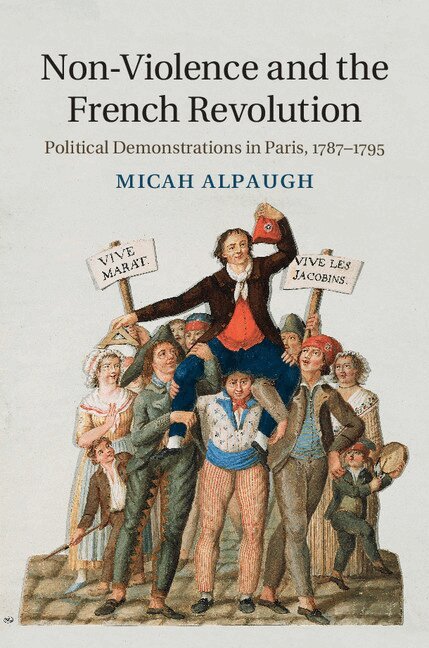
    Non-Violence and the French Revolution

    Political Demonstrations in Paris, 1787-1795

    AvMicah Alpaugh

    Inbunden, Engelska, 2014

    1 430 kr

    Beställningsvara. Skickas inom 10-15 vardagar. Fri frakt över 249 kr.

    Beskrivning

    Historians of the French Revolution have traditionally emphasised the centrality of violence to revolutionary protest. However, Micah Alpaugh reveals instead the surprising prevalence of non-violent tactics to demonstrate that much of the popular action taken in revolutionary Paris was not in fact violent. Tracing the origins of the political demonstration to the French Revolutionary period, he reveals how Parisian protesters typically tried to avoid violence, conducting campaigns predominantly through peaceful marches, petitions, banquets and mass-meetings, which only rarely escalated to physical force in their stand-offs with authorities. Out of over 750 events, no more than twelve percent appear to have resulted in physical violence at any stage. Rewriting the political history of the people of Paris, Non-Violence and the French Revolution sheds new light on our understanding of Revolutionary France to show that revolutionary sans-culottes played a pivotal role in developing the democratically oriented protest techniques still used today.

    Produktinformation

    • Utgivningsdatum:2014-10-23
    • Mått:155 x 237 x 23 mm
    • Vikt:550 g
    • Format:Inbunden
    • Språk:Engelska
    • Antal sidor:302
    • Förlag:Cambridge University Press
    • ISBN:9781107082793

    Utforska kategorier

    • Europas historia inom Historia och arkeologi

    Mer om författaren

    Micah Alpaugh is Assistant Professor of History at the University of Central Missouri, after also having taught at the University of Pennsylvania, Mount Allison University and University of California, Irvine. Winner of a national dissertation award from French Historical Studies, he has also published articles in the Journal of Social History, French History, Annales historiques de la Révolution française, and European History Quarterly.

    Recensioner i media

    'Micah Alpaugh offers an important new perspective on the complex urban culture of eighteenth-century Paris, and on the French Revolution. Reading beyond the traditional narrative of violent confrontations, he shows us persuasively that such clashes were the exception rather than the rule, and that overt confrontation often came after the failure of authorities to respond to popular concerns expressed through the full panoply of a surprisingly modern culture of democratic engagement.' David Andress, University of Portsmouth

    Innehållsförteckning

    • Introduction; 1. Marching in Paris, from the Old Regime to the Revolution; 2. Political demonstrations and the politics of escalation in 1789; 3. From rapprochement to radicalism, 1790–1; 4. War, collaborative protest, and the 1792 Republican movement; 5. Fraternal protest in a time of terror, August 1792–September 1793; 6. Reasserting collective action: 1794–5; 7. Moderate and conservative marches in Revolutionary Paris; Conclusion; Appendix: Parisian protests, 1787–95; Bibliography; Index.