• Fri frakt över 249 kr
  • •
  • Snabba leveranser
  • •
  • Billiga böcker
Kundservice

Du är på sajten för privatpersoner.

Företag, bibliotek eller offentlig verksamhet?

Du handlar på classic.bokus.com, där alla dina funktioner finns intakta.
Till classic.bokus.com
Bokus logotyp. Gå till startsidan.
  • Erbjudanden
  • Nyheter
  • Student
  • Topplistor
  • Barn & ungdom
  • Bokus Play
  • E-böcker
  • Pocketböcker
  • Spel & pussel

10% rabatt på allt med kod NYSTART10 →

Sidfot

Mina sidor

    Hjälp

    • Kundservice
    • Vanliga frågor och svar
    • Frakt och leverans
    • Retur vid ångerrätt
    • Reklamera vara
    • Betalning
    • Köpvillkor
    • Allmänna villkor
    • Information om webbplatsens tillgänglighet

    Om Bokus

    • Om oss
    • Pressrum
    • För studenter
    • För företag
    • För bibliotek och offentlig verksamhet
    • För leverantörer
    • Hållbarhet

    Populärt

    • Aktuella erbjudanden
    • Presentkort
    • Studentlitteratur
    • Nya böcker
    • Topplistor
    • Signerade böcker
    • Engelska böcker

    Inspiration

    • Boktips
    • BookTok
    • Populära bokserier
    • Barnbokskaraktärer
    • Populära författare
    Logotyp för Bokus
    Följ oss på Facebook (extern länk)Följ oss på Instagram (extern länk)Följ oss på YouTube (extern länk)Följ oss på TikTok (extern länk)
    bokus @ CookiesAnpassa cookiesIntegritetspolicyKöpvillkor
    Till Citymail hemsida (extern länk)Till Budbee hemsida (extern länk)Till Postnord hemsida (extern länk)Till Schenker hemsida (extern länk)Till Early Bird hemsida (extern länk)Till Walleys hemsida (extern länk)
    1. Psykologi och pedagogik
    2. Psykologi

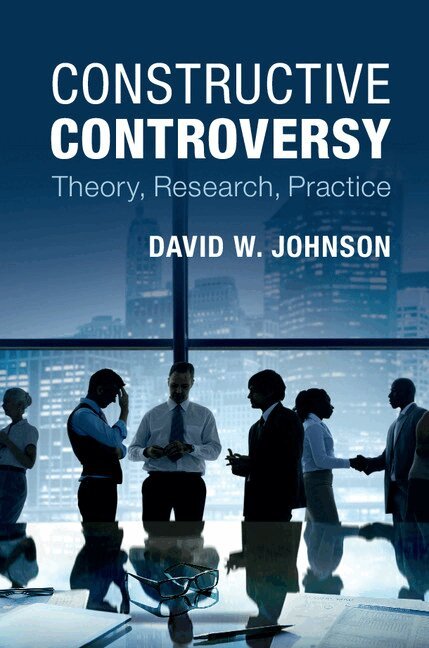
    Constructive Controversy

    Theory, Research, Practice

    AvDavid W. Johnson

    Inbunden, Engelska, 2015

    802 kr

    Beställningsvara. Skickas inom 10-15 vardagar. Fri frakt över 249 kr.

    Fler format och utgåvor

    Häftad

    456 kr

    E-bok

    554 kr

    E-bok

    552 kr

    Beskrivning

    Why do people make decisions based on their own perspective without considering alternative points of view? Do differences of opinion enhance or obstruct critical thinking? Is it wise to seek out people who disagree with you and listen to their objections to your conclusions? Focusing on the theory, research, and application of constructive controversy, this book analyses the nature of disagreement among members of decision-making groups, project teams, academic study groups, and other groups that are involved in solving problems. Johnson demonstrates that this theory is one of the most effective methods of enhancing creativity and innovation, decision making, teaching, and political discourse. The book includes entertaining and intriguing examples of how constructive controversy has been used in a variety of historical periods to advance creativity, achieve innovations, and guide democracies. It will be welcomed by students in the fields of social psychology, management/business studies, education, and communication studies.

    Produktinformation

    • Utgivningsdatum:2015-06-18
    • Mått:159 x 235 x 17 mm
    • Vikt:490 g
    • Format:Inbunden
    • Språk:Engelska
    • Antal sidor:255
    • Förlag:Cambridge University Press
    • ISBN:9781107089815

    Utforska kategorier

    • Psykologi inom Psykologi och pedagogik

    Mer om författaren

    David W. Johnson is Emeritus Professor of Educational Psychology at the University of Minnesota.

    Recensioner i media

    'This book is a must-read for any scholar and practitioner who is interested in constructive controversy. It provides a breathtaking journey in the history of one of the most powerful mechanisms in social interaction, and a wealth of insights on how to foster informed political decisions, accompany accurate professional choices, and elicit diversified learning.' Fabrizio Butera, University of Lausanne

    Innehållsförteckning

    • 1. Need for constructive controversy?; 2. The nature of constructive controversy; 3. Theory of constructive controversy; 4. The processes of constructive controversy and concurrence seeking; 5. The outcomes of constructive controversy; 6. Conditions mediating the effects of constructive controversy; 7. Constructive controversy and decision making; 8. Constructive controversy in education; 9. Constructive controversy and political discourse in democracies; 10. Constructive controversy, creativity, and innovation; 11. Constructive controversy and building and maintaining peace; 12. Conclusions.