• Fri frakt över 249 kr
  • •
  • Snabba leveranser
  • •
  • Billiga böcker
Kundservice

Du är på sajten för privatpersoner.

Företag, bibliotek eller offentlig verksamhet?

Du handlar på classic.bokus.com, där alla dina funktioner finns intakta.
Till classic.bokus.com
Bokus logotyp. Gå till startsidan.
  • Erbjudanden
  • Nyheter
  • Student
  • Topplistor
  • Barn & ungdom
  • Bokus Play
  • E-böcker
  • Pocketböcker
  • Spel & pussel

10% rabatt på allt med kod: NYSTART10 →

Sidfot

Mina sidor

    Hjälp

    • Kundservice
    • Vanliga frågor och svar
    • Frakt och leverans
    • Retur vid ångerrätt
    • Reklamera vara
    • Betalning
    • Köpvillkor
    • Allmänna villkor
    • Information om webbplatsens tillgänglighet

    Om Bokus

    • Om oss
    • Pressrum
    • För studenter
    • För företag
    • För bibliotek och offentlig verksamhet
    • För leverantörer
    • Hållbarhet

    Populärt

    • Aktuella erbjudanden
    • Presentkort
    • Studentlitteratur
    • Nya böcker
    • Topplistor
    • Signerade böcker
    • Engelska böcker

    Inspiration

    • Boktips
    • BookTok
    • Populära bokserier
    • Barnbokskaraktärer
    • Populära författare
    Logotyp för Bokus
    Följ oss på Facebook (extern länk)Följ oss på Instagram (extern länk)Följ oss på YouTube (extern länk)Följ oss på TikTok (extern länk)
    bokus @ CookiesAnpassa cookiesIntegritetspolicyKöpvillkor
    Till Citymail hemsida (extern länk)Till Budbee hemsida (extern länk)Till Postnord hemsida (extern länk)Till Schenker hemsida (extern länk)Till Early Bird hemsida (extern länk)Till Walleys hemsida (extern länk)
    1. Filosofi och religion
    2. Filosofi
    3. Filosofiska discipliner

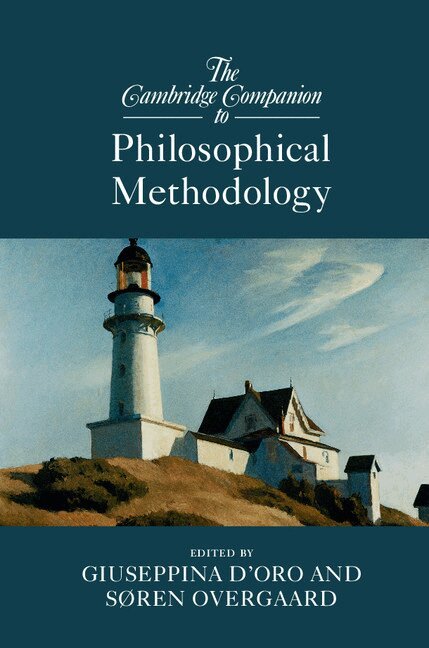
    The Cambridge Companion to Philosophical Methodology

    AvGiuseppina D'Oro,Søren Overgaard

    Inbunden, Engelska, 2017

    Del i serien Cambridge Companions to Philosophy

    1 325 kr

    Beställningsvara. Skickas inom 10-15 vardagar. Fri frakt över 249 kr.

    Beskrivning

    The Cambridge Companion to Philosophical Methodology offers clear and comprehensive coverage of the main methodological debates and approaches within philosophy. The chapters in this volume approach the question of how to do philosophy from a wide range of perspectives, including conceptual analysis, critical theory, deconstruction, experimental philosophy, hermeneutics, Kantianism, methodological naturalism, phenomenology, and pragmatism. They explore general conceptions of philosophy, centred on the question of what the point of philosophising might be; the method of conceptual analysis and its recent naturalistic critics and competitors; perspectives from continental philosophy; and also a variety of methodological views that belong neither to the mainstream of analytic philosophy, nor to continental philosophy as commonly conceived. Together they will enable readers to grasp an unusually wide range of approaches to methodological debates in philosophy.

    Produktinformation

    • Utgivningsdatum:2017-02-16
    • Mått:160 x 235 x 25 mm
    • Vikt:890 g
    • Format:Inbunden
    • Språk:Engelska
    • Serie:Cambridge Companions to Philosophy
    • Antal sidor:486
    • Förlag:Cambridge University Press
    • ISBN:9781107121522

    Utforska kategorier

    • Filosofiska discipliner inom Filosofi och religion

    Mer om författaren

    Søren Overgaard is Associate Professor of Philosophy at the University of Copenhagen. His recent publications include Wittgenstein and Other Minds (2007) and An Introduction to Metaphilosophy (2013). Giuseppina D'Oro is Reader in Philosophy at Keele University. Her recent publications include Collingwood and the Metaphysics of Experience (2002), Collingwood's An Essay on Philosophical Method (2005) and Reasons and Causes: Causalism and Anti-Causalism in the Philosophy of Action (2013).

    Recensioner i media

    'What sets this Companion apart from other recent work on philosophical methodology is its perspective. The essays in this timely volume focus on three metaphilosophical domains - conceptual analysis in analytic philosophy, Continental methodologies, and methodologies lying at the analytic/Continental divide. … This excellent resource will be valuable to those interested in either metaphilosophy overall or one particular methodology. … Summing Up: Highly recommended. Lower-division undergraduates through faculty.' J. McBain, CHOICE

    Innehållsförteckning

    • Introduction Søren Overgaard and Giuseppina D'Oro; Part I. Visions Of Philosophy: 1. Doing philosophy Alessandra Tanesini; 2. Philosophy as rational systematization Nicholas Rescher; 3. Sense-making from a human point of view Adrian Moore; 4. Disagreement in philosophy: an optimistic perspective Herman Cappelen; Part II. Conceptual Analysis and the Naturalistic Challenge: 5. Impure conceptual analysis Hans-Johann Glock; 6. What can we do, when we do metaphysics? Amie L. Thomasson; 7. Armchair metaphysics revisited: the three grades of involvement in conceptual analysis Frank Jackson; 8. A naturalistic methodology Hilary Kornblith; 9. What is negative experimental philosophy good for? Joanathan M. Weinberg; Part III. Between Analysis and the Continent: 10. Life-changing metaphysics: rational anthropology and its Kantian methodology Robert Hanna; 11. Collingwood's idealist metaontology: between therapy and armchair science Giuseppina D'oro; 12. Pragmatism and the limits of metaphilosophy Robert B. Talisse; 13. Metaphysical quietism and everyday life David Macarthur; 14. The metaphilosophy of the analytic-continental divide: from history to hope Robert Piercey; Part IV. Continental Perspectives: 15. Phenomenological method and the achievement of recognition: who's been waiting for phenomenology? David R. Cerbone; 16. Existentialist methodology and perspective: writing the first person Jack Reynolds and Patrick Stokes; 17. Hermeneutics and the question of method Kristin Gjesdal; 18. Critical theory's philosophy Fabian Freyenhagen; 19. An extension of deconstructionist methodology Leonard R. Lawlor; 20. Pathological experience: a challenge for transcendental constitution theory? Jean-Luc Petit.