• Fri frakt över 249 kr
  • •
  • Snabba leveranser
  • •
  • Billiga böcker
Kundservice

Du är på sajten för privatpersoner.

Företag, bibliotek eller offentlig verksamhet?

Du handlar på classic.bokus.com, där alla dina funktioner finns intakta.
Till classic.bokus.com
Bokus logotyp. Gå till startsidan.
  • Erbjudanden
  • Nyheter
  • Student
  • Topplistor
  • Barn & ungdom
  • Bokus Play
  • E-böcker
  • Pocketböcker
  • Spel & pussel

10% rabatt på allt med kod: NYSTART10 →

Sidfot

Mina sidor

    Hjälp

    • Kundservice
    • Vanliga frågor och svar
    • Frakt och leverans
    • Retur vid ångerrätt
    • Reklamera vara
    • Betalning
    • Köpvillkor
    • Allmänna villkor
    • Information om webbplatsens tillgänglighet

    Om Bokus

    • Om oss
    • Pressrum
    • För studenter
    • För företag
    • För bibliotek och offentlig verksamhet
    • För leverantörer
    • Hållbarhet

    Populärt

    • Aktuella erbjudanden
    • Presentkort
    • Studentlitteratur
    • Nya böcker
    • Topplistor
    • Signerade böcker
    • Engelska böcker

    Inspiration

    • Boktips
    • BookTok
    • Populära bokserier
    • Barnbokskaraktärer
    • Populära författare
    Logotyp för Bokus
    Följ oss på Facebook (extern länk)Följ oss på Instagram (extern länk)Följ oss på YouTube (extern länk)Följ oss på TikTok (extern länk)
    bokus @ CookiesAnpassa cookiesIntegritetspolicyKöpvillkor
    Till Citymail hemsida (extern länk)Till Budbee hemsida (extern länk)Till Postnord hemsida (extern länk)Till Schenker hemsida (extern länk)Till Early Bird hemsida (extern länk)Till Walleys hemsida (extern länk)
    1. Juridik
    2. Rättsvetenskap
    3. Rättshistoria

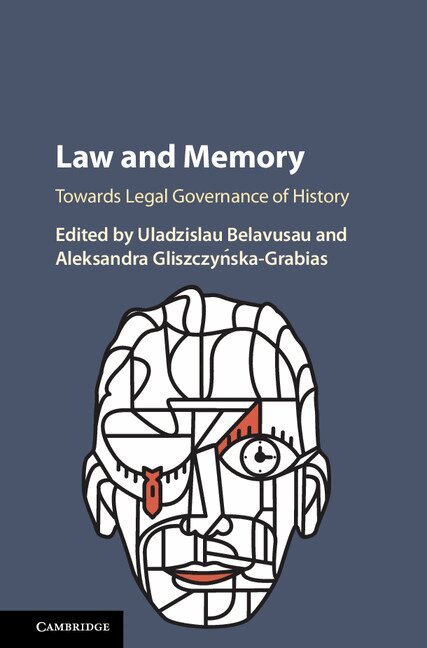
    Law and Memory

    Towards Legal Governance of History

    AvUladzislau Belavusau,Aleksandra Gliszczyńska-Grabias

    Inbunden, Engelska, 2017

    1 697 kr

    Beställningsvara. Skickas inom 10-15 vardagar. Fri frakt över 249 kr.

    Beskrivning

    Legal governance of memory has played a central role in establishing hegemony of monumental history, and has forged national identities and integration processes in Europe and beyond. In this book, a range of contributors explore both the nature and role of legal engagement into historical memory in selected national law, European and international law. They also reflect on potential conflicts between legal governance, political pluralism, and fundamental rights, such as freedom of expression. In recent years, there have been numerous monumental commemoration practices and judicial trials about correlated events all over the world, and this is a prime opportunity to undertake an important global comparative scrutiny of memory laws. Against the background of mass re-writing of history in different parts of the world, this book revisits a fascinating subject of memory laws from the standpoint of comparative law and transitional justice.

    Produktinformation

    • Utgivningsdatum:2017-10-19
    • Mått:158 x 235 x 28 mm
    • Vikt:780 g
    • Format:Inbunden
    • Språk:Engelska
    • Antal sidor:458
    • Förlag:Cambridge University Press
    • ISBN:9781107188754

    Utforska kategorier

    • Rättshistoria inom Juridik

    Mer om författaren

    Uladzislau Belavusau is Senior Researcher in European Law at the T. M. C. Asser Institute (the Hague), Universiteit van Amsterdam. Aleksandra Gliszczyńska-Grabias is Senior Researcher in Human Rights at the Institute of Law Studies of the Polish Academy of Sciences.

    Recensioner i media

    'The law commonly drifts between an obligation to forget and a duty to remember, vigorously endorsed and imposed through the policing of legal truths. The editors of this book offer a spectacular walk down memory lane and a unique must-have to anyone interested in how law shapes historical imagination, populated with selected victims and imposed heroes of the past.' Dimitry Kochenov, Chair in EU Constitutional Law at the University of Groningen, Faculty of Law

    Innehållsförteckning

    • Acknowledgements; Contributors; Introduction: memory laws: mapping a new subject in comparative law and transitional justice Uladzislau Belavusau and Aleksandra Gliszcyńska-Grabias; Part I. International Law: 1. The UN Human Rights Committee's view of the past Antoon De Baets; 2. The role of international criminal tribunals in shaping the historical accounts of genocides Marina Aksenova; 3. The 'right to truth' in international law: the 'last utopia'? Patricia Naftali; Part II. European Law (Council of Europe and European Union): 4. Kononov vs Latvia as the ontological security struggle over remembering the Second World War Maria Mälksoo; 5. Testing the 'uniqueness': denial of the Holocaust vs denial of other crimes before the European Court of Human Rights Paolo Lobba; 6. Legislating history: the European Union and the denial of international crimes Luigi Cajani; Part III. National Perspectives within European Union: 7. Challenging historical facts and national truths: an analysis of cases from France and Greece Ioanna Tourkochoriti; 8. Legal silences and the memory of Francoism in Spain Alfons Aragoneses; 9. Politics of public knowledge in dealing with the past: postcommunist experiences and some lessons from the Czech Republic Jiří Přibáň; 10. Adjudication in deportation cases of Latvia and international law Ieva Miluna; 11. Judging the conducător: fascism, communism and legal discontinuity in post-war Romania Cosmin Sebastian Cercel; 12. Dealing with the past in and around the fundamental law in Hungary Miklós Könczöl; 13. On the politics of resentment, mis-memory and constitutional fidelity. The demise of the Polish overlapping consensus? Tomasz Tadeusz Koncewicz; Part IV. Perspectives beyond European Union: 14. Defending Stalinism by means of criminal law: Russia, 1995–2014 Nikolay Koposov; 15. Cutting the umbilical cord: the narrative of the national past and future in Ukrainian de-communization policy Lina Klymenko; 16. Banning genocide denial – should geography matter? Robert A. Kahn; 17. 'From banning Nakba to bridging narratives': the collective memory of 1948 and transitional justice for Israelis and Palestinians Jeremie Bracka; 18. Historical revisionism and the settler state: the Canadian experience Michael Morden; 19. Defense of democracy and the preservation of collective memory through criminal legislation: the challenges of reconciliation in Peru Salvador Herencia Carrasco; Epilogue: beyond 'memory laws': towards a general theory of law and historical discourse Eric Heinze; Index.